





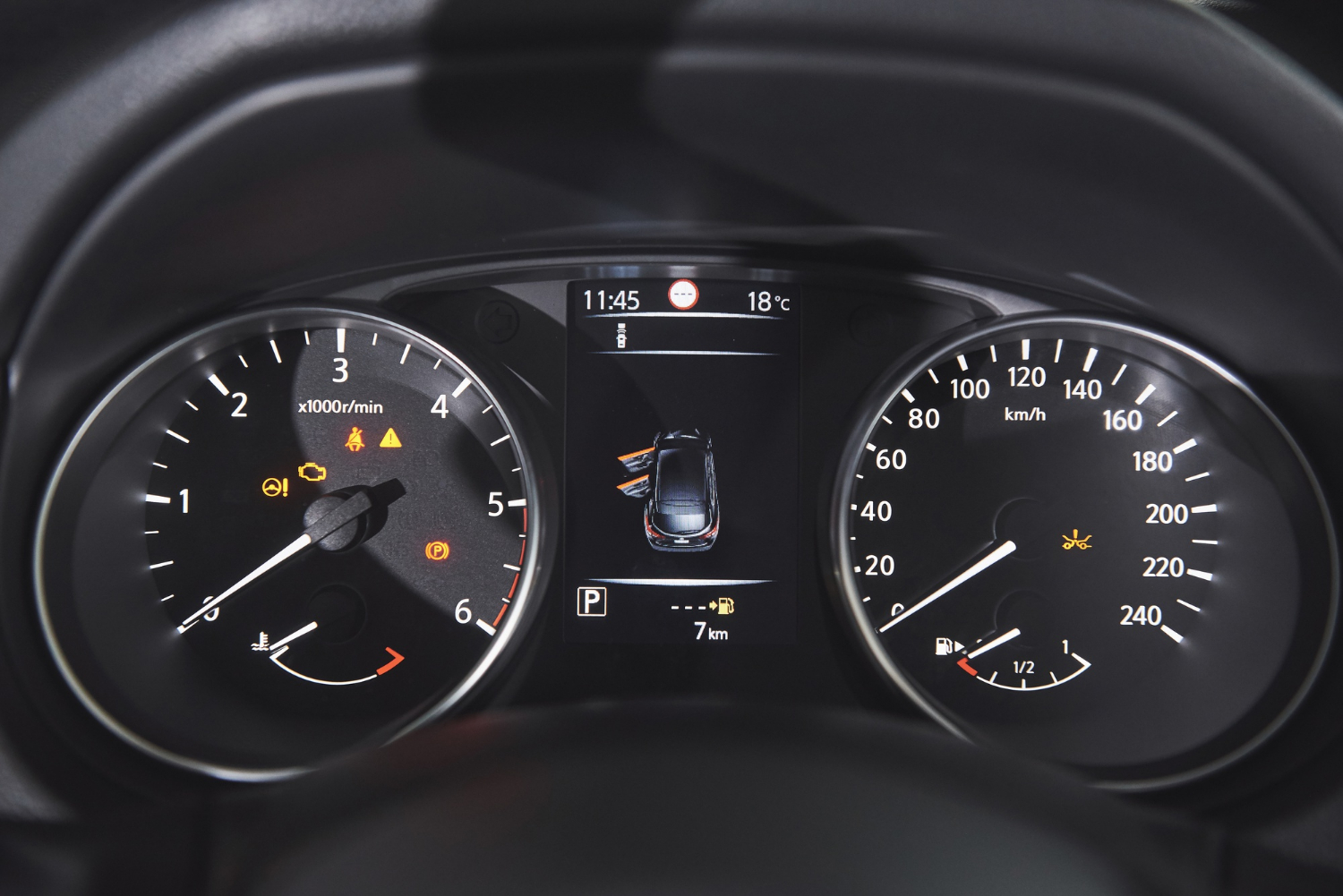
The first clues come from comparing the mileage reading against the entries in the service book and the roadworthiness test reports: if the recorded readings do not match the current odometer reading, or if entries are unusually far apart, that is a warning sign. Physical signs of wear — heavily worn pedal pads, a worn steering wheel or a sagging driver's seat — can indicate a significantly higher actual mileage on a vehicle with supposedly low mileage. In the digital storage of modern vehicles — control units, the OBD system and sometimes the navigation device — mileage information is occasionally stored that can be compared against the odometer reading. Important: none of these methods is proof and none provides a detection guarantee. They are clues that have to be assessed together.
Spotting Odometer Fraud: What the Service Book, Wear and OBD Data Reveal
A manipulated odometer reading is a real risk when buying a used car. Anyone who checks the right places — service book entries, HU reports, pedal pads, the steering wheel and digital storage — can uncover many discrepancies before signing. But no method offers a guarantee. Here is what works and where the limits lie.
How do I spot odometer fraud on a used car?
Why odometer fraud is a risk when buying a used car
The displayed mileage significantly influences the market value, insurance classification and the assessment of a vehicle's state of wear. An odometer reading shown as too low disguises the actual degree of wear and leads buyers to pay more than the vehicle is worth — and possibly to face expensive repairs sooner than expected.
Manipulating digital odometers is technically possible and does happen. Anyone buying a vehicle should therefore never accept the displayed reading uncritically, but should combine several inspection methods.
Important up front: None of the following methods provides an absolute detection guarantee. They provide clues — individually or in combination. Assessing them requires experience and, for digital methods, suitable diagnostic equipment.
Method 1: Service book and maintenance records
The service book is the most accessible and often most informative source. Check at every entry:
- Mileage at the time of service: Are the values consistently rising? Are there unexplained gaps or jumps backwards?
- Time intervals and mileage intervals: Large gaps in time without service entries can mean that the vehicle was used intensively during this period — or that entries are missing in order to disguise the true mileage.
- Date and stamp: Do the date, the workshop that carried out the work and the mileage plausibly match? Missing stamps or handwritten entries without a receipt are weaker evidence.
- Invoices: If workshop invoices are available, does the mileage documented there match the service book entry and the current odometer reading?
A complete, plausible service book is a good sign — but not proof. Service books can be forged; stamps can be imitated.
Method 2: Roadworthiness test (HU) reports
Every HU report contains the mileage at the time of the test. If several HU reports are available — usually every two years for passenger cars — this produces a time series that can be compared against the current odometer reading.
- Does the mileage increase between two HU reports and the current reading result in a plausible annual driving distance?
- Has the vehicle covered more kilometres between two tests than in comparable previous years?
If HU reports are missing, the seller should be able to explain where the vehicle was tested and why no record is available. Missing HU documentation is not proof of manipulation, but a reason for heightened attention.
Method 3: Physical wear — pedals, steering wheel, driver's seat
The vehicle itself leaves traces of actual use — regardless of the displayed odometer reading. The following points are suitable as supplementary clues:
Pedal pads The rubber covers of the brake, clutch and accelerator pedals wear down with every press. On a vehicle with supposedly low mileage, the pedals should still show a recognisable profile and embossing. Heavily worn, smooth or even cracked pads are striking when the odometer reading is low.
Steering wheel The steering wheel is one of the most frequently touched surfaces in the vehicle. A heavily worn or shiny steering wheel — especially in the grip areas at 9 and 3 o'clock — does not match a vehicle with supposedly few kilometres. Wear on the switch buttons on the steering wheel is also an indication.
Driver's seat The seat padding, especially the seat cushion cover on the entry side and at the side bolster, shows clear signs of wear at high mileage. The seat cover material at the contact point with the driver's door (scratches from getting in) also provides clues.
Limitation: Wear can be masked — new pedal pads, a retrofitted steering wheel or a renewed seat cover can hide signs of wear. A completely new-looking interior on a supposedly little-used vehicle can therefore itself be a warning sign.
Your car gets X-rayed. More than 100 points. Systematic.
Paint measurement & accident detection
Using digital ultrasonic paint-thickness measurement, we expose filler, repaints and hidden accident damage down to the millimetre.
Comparison against the manufacturer's target values at 12+ measuring points.
OBD diagnostics
Reading out all fault memories and plausibility check of the mileage.
Detects odometer tampering, control-unit faults and deleted warnings.
Engine & drivetrain
Visual and acoustic inspection of engine, transmission and drivetrain.
Leaks, belt tension, smoothness and transmission behaviour under real conditions.
Market-value analysis
Based on the repairs factored in, we calculate the actual market value.
Data basis: ~50,000 comparable listings from the last 90 days.
Method 4: Digital storage and OBD diagnosis
Modern vehicles store mileage readings in various control units — engine ECU, transmission control unit, ABS control unit, airbag control unit and other systems. These values are not always adjusted together during an odometer manipulation; discrepancies between different control units can indicate manipulation.
What an OBD diagnostic device can provide:
- Stored mileage readings in individual control units
- Fault codes that may have arisen in connection with a change to the odometer reading
- Service interval data that is calculated internally on the basis of mileage
Limitation: Not every OBD device reads all control units completely. Professional readout requires vehicle-specific software. Anyone who wants to interpret the values correctly needs experience with the respective model.
Navigation systems and infotainment: Some permanently installed navigation systems internally store driven routes or geodata that can indicate the actual use. This information is harder to read out and is not captured by default during an OBD diagnosis.
What VIN reports can and cannot do
Digital vehicle history reports (VIN reports) aggregate information from various sources: reported roadworthiness tests with mileage, reported accidents, registration history and, in part, import information. They can document mileage readings from past HU tests and thereby provide a time series that can be compared against the current reading.
However, VIN reports only capture reported events. Purely privately settled accidents, workshop visits without an official report and odometer data from periods that are not recorded remain invisible. A clean VIN report is therefore not a free pass.
Where the limits of all methods lie
Depending on the vehicle, the manipulation method and the available documentation, odometer fraud cannot always be proven or ruled out completely. Professionally executed manipulations that adjust several control units consistently and prepare the vehicle's surroundings accordingly can cause difficulties even for experienced inspectors.
What a careful inspection provides is an assessment of plausibility: the more clues fit together — service book, HU records, wear pattern, OBD data — the more reliable the assessment. Anyone relying solely on a single indicator exposes themselves to an avoidable risk.
Odometer fraud and legal consequences
Deliberately manipulating and concealing an altered mileage reading is fraud in Germany (§ 263 StGB) and can have civil and criminal consequences. A buyer who can prove manipulation after the purchase is in principle entitled to withdraw from the contract or claim damages — although proof after the fact is difficult once the purchase has already been completed.
That is why the rule is: checking before the purchase is far easier than suing after the purchase.
Have the mileage checked professionally
checkdenwagen carries out the plausibility check of the mileage reading as a fixed part of every on-site inspection. The inspector evaluates the service book and HU reports, assesses the physical wear of the vehicle interior, and — as far as possible with the diagnostic device used — reads out mileage data from relevant control units. The findings are documented in the written photo report.
Found the car you want? Have it inspected before you buy.
Our inspector comes straight to the seller — fixed price from 289 €, report within 24 h.
Frequently asked questions about odometer fraud
There is no single reliable indicator. More dependable is the combination of several clues: mileage discrepancies between the service book and the current reading, HU (German roadworthiness test) reports with implausible time series, heavy wear on the pedals and steering wheel despite supposedly low mileage, as well as discrepancies in the OBD data of different control units.
Is the odometer reading really correct? Have it checked before you buy.
checkdenwagen assesses the service book, wear and digital data — directly at the seller, for a fixed price.