





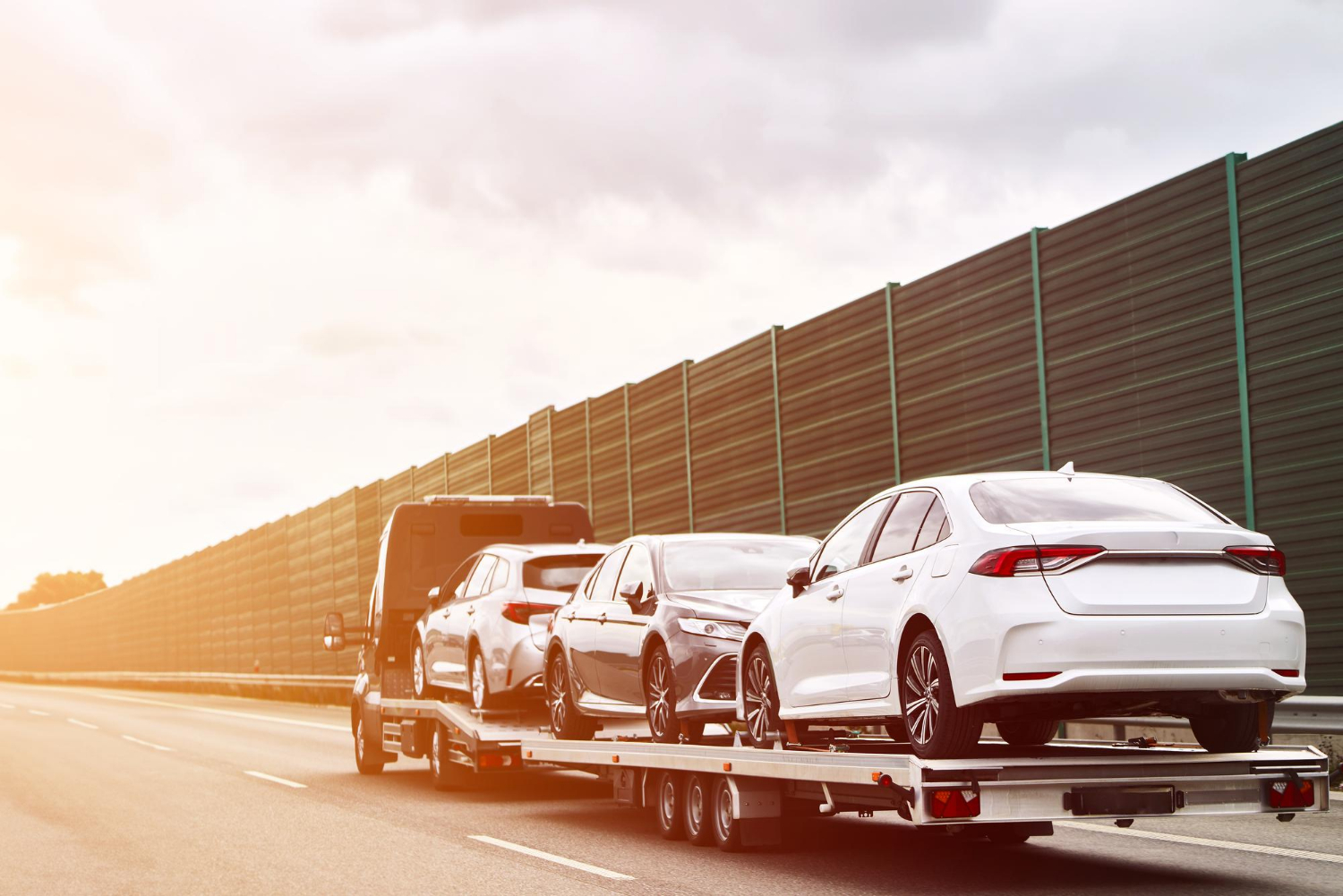
You list the vehicle so that it also reaches foreign buyers, agree on price and payment method, and complete the handover only against secured payment. For the drive across the border the buyer usually needs an Ausfuhrkennzeichen (export plate) with suitable insurance; you deregister the vehicle in Germany and hand over the complete papers — Zulassungsbescheinigung Teil I and II (vehicle registration certificate parts 1 and 2) and, if available, the Übereinstimmungsbescheinigung (COC, Certificate of Conformity). Record the handover condition in writing. On VAT and the export proof, only the responsible tax office (Finanzamt) and customs office (Zollamt) give binding information. Because a remote buyer often cannot see the car in person, an independent condition report builds trust and documents the condition in which you hand it over.
Selling your car across the border: how to run the export cleanly
Some vehicles bring more abroad than at home — a diesel banned from German city centres, an estate car with towing capacity or a model in strong demand across the border. But between the listing and the secure payment lie the export plate, deregistration, the right papers and a remote buyer who has to trust you and the car. This guide walks you through the process step by step.
How do I sell my car abroad?
Why selling abroad pays off for some vehicles
Not every car brings more across the border — but for certain vehicles the foreign market is a more honest price-setter than the German one. The reason is always the same: supply and demand are distributed differently on the other side of the border than here. Where a model has fallen out of fashion in Germany or been held back by regulation, it can stay in demand elsewhere.
The clearest case is older diesels. Driving bans in German city centres and the debate around low-emission zones push down the resale value here of vehicles that are technically flawless but carry an older emission standard. In countries without comparable zones, that same economical, long-distance-capable diesel remains a sought-after everyday car. Selling across the border often gets exactly these vehicles a price that the German market no longer pays.
A second case is models and specifications with strong foreign demand: sturdy estate cars with high towing capacity, off-road-capable vehicles, large vans or certain engine variants that are more popular in another market than here. Vehicles in good original condition with a complete history also appeal to buyers who cannot find a comparable offer in their own country. The effort of a cross-border sale pays off when the price difference is greater than the extra work of paperwork, deregistration and the somewhat more complex approach to buyers.
Against selling abroad, on the other hand, speaks everything that does not recoup the extra effort: a common model that you can move just as quickly and at a comparable price at home, or a vehicle whose value is so low that transport and formalities are not worth it for either side. So first assess soberly whether your particular car belongs to one of the cases with genuine foreign demand — otherwise the classic domestic sale is the easier route.
Finding buyers abroad and setting the price
Selling across the border starts with reach: a foreign buyer will only find your car if your listing is visible and understandable to them. Many cross-border sales run through commercial buyers and export dealers who purchase deliberately in Germany — alongside the large vehicle marketplaces that are searched by prospects from several countries.
When setting the price, a different logic applies than for a purely domestic sale. Research what your model costs in the destination countries, not just in Germany — especially for vehicles whose price is depressed here by driving bans, the achievable price lies above the German quotation. Set the price so that it takes into account the buyer's extra effort with deregistration, export plate and transport, but does not give away the foreign advantage entirely. A realistic, well-justified price with a provable history sells faster than an excessive demand that remote buyers will not even enquire about.
With a commercial export dealer it is quick and straightforward, often they pick up the vehicle themselves and take care of the export — but the price is usually lower, because the dealer factors in their own margin. Selling directly to a private individual abroad can earn you more, but you bear responsibility yourself for deregistration, paperwork and payment safety. Weigh these two routes honestly against each other before you commit.
A common mistake is to advertise a deliberately cheap "bargain" in order to generate enquiries. Above all it attracts fraudsters and dubious intermediaries who push for a quick, insecure process. Sober pricing, clean photos, honest disclosure of defects and a complete set of papers are the better basis — they deter the wrong prospects and attract the right ones.
The Ausfuhrkennzeichen (export plate) and deregistration in Germany
Once the sale is settled, the vehicle has to be prepared legally for leaving the country. Two things interlock here: deregistration in Germany and the plate the buyer uses to drive across the border. Anyone who knows the sequence and who is responsible avoids remaining liable after the sale for a car that is long since on the road abroad.
For the transfer abroad there is typically the Ausfuhrkennzeichen (export plate, also called a customs plate), issued by the German registration office. It is valid for a limited time and requires suitable insurance for the export period. Whether the buyer or the seller applies for and pays for the plate is best clarified in the sales contract; it is usual for the buyer to take it out in their own name, because they are taking over the vehicle and bringing it to the destination country. Alternatively, many buyers have the car picked up by transporter, in which case no transfer plate is needed at all.
| Route across the border | When it makes sense | Plate |
|---|---|---|
| Buyer drives it themselves | roadworthy vehicle, manageable distance | Ausfuhrkennzeichen (export plate) with insurance for the export period |
| Transporter | not roadworthy, long distance, high value | no transfer plate needed |
| Commercial export dealer | quick handling wanted | dealer arranges the export themselves |
For you as the seller, deregistration in Germany is the decisive protection. As long as the vehicle is registered to you, you are liable for tax and insurance and carry a residual risk if something happens with the car. So deregister it at the registration office and have the deregistration confirmed in writing — the buyer needs this confirmation anyway to register the car in the destination country. Never hand over the car without a settled deregistration and without secured payment.
A point of distinction: this article describes the seller's side, that is, exporting out of Germany. How, conversely, a vehicle is brought into Germany from abroad and registered here — with a short-term plate, a German Hauptuntersuchung (roadworthiness test) and the requirements of the registration office — is covered by the guides on buying a car abroad and on registering a vehicle from abroad. For you as the exporter, what counts is: the final registration is done by the buyer in the destination country according to its rules.
The right papers: Teil I, Teil II and COC
A cross-border sale stands or falls on complete papers. If a document is missing, the buyer may not be able to register the vehicle in the destination country — and in the worst case you are stuck with a half-completed sale. So gather the documents in full before you even list the car.
The two central documents are the Zulassungsbescheinigung Teil I (vehicle registration certificate part 1, the former Fahrzeugschein / registration document) and Teil II (part 2, the former Fahrzeugbrief / vehicle title). Teil II is the proof of ownership and must be handed over as the original — without it the buyer cannot register the car anywhere. Teil I sets out the technical data and the last registration. Both belong with the sale; keep copies for your own records, but only hand over the originals against secured payment.
For registration elsewhere in the EU, the Übereinstimmungsbescheinigung — the COC (Certificate of Conformity) — is often decisive. It confirms that the vehicle corresponds to a type approved across the EU, and spares the buyer a laborious individual approval in the destination country. Many vehicles received the COC on first delivery; if it has been lost, it can usually be reordered from the manufacturer or importer — that takes time and costs money, which is why you should check early whether yours is available. An existing COC is a genuine selling point to a foreign buyer.
| Document | Meaning in a sale abroad |
|---|---|
| Zulassungsbescheinigung Teil II | proof of ownership, original indispensable for the buyer |
| Zulassungsbescheinigung Teil I | technical data and last registration |
| COC / Übereinstimmungsbescheinigung (Certificate of Conformity) | considerably eases registration in the EU destination country |
| Service booklet and invoices | prove the history, strengthen the remote buyer's trust |
| Deregistration confirmation | proves release, protects you from continued liability |
Round out the set of papers with everything that documents the history: service booklet, workshop invoices, HU report, tyre and accessory documents. Especially in a remote sale, where the buyer cannot inspect the car at leisure, complete documentation is the difference between a hesitant and a decisive buyer. A sales contract that records the vehicle, chassis number, price, payment method and the condition "sold as seen" is a strict must.
Your car gets X-rayed. More than 100 points. Systematic.
Paint measurement & accident detection
Using digital ultrasonic paint-thickness measurement, we expose filler, repaints and hidden accident damage down to the millimetre.
Comparison against the manufacturer's target values at 12+ measuring points.
OBD diagnostics
Reading out all fault memories and plausibility check of the mileage.
Detects odometer tampering, control-unit faults and deleted warnings.
Engine & drivetrain
Visual and acoustic inspection of engine, transmission and drivetrain.
Leaks, belt tension, smoothness and transmission behaviour under real conditions.
Market-value analysis
Based on the repairs factored in, we calculate the actual market value.
Data basis: ~50,000 comparable listings from the last 90 days.
Handover, transport and the proof of condition
The moment of handover is trickier in a sale abroad than at home, because buyer and car are quickly out of reach afterwards. You have to solve two questions cleanly: how does the vehicle get to the buyer, and how do you establish the condition it was in when you handed it over — so that nobody can later claim it was different.
For transport you have three options. If the buyer picks the car up themselves and drives it across the border on an Ausfuhrkennzeichen (export plate), that is the simplest route — provided the vehicle is roadworthy and the insurance for the export period is in place. If the buyer has it picked up by transporter, you do not need a transfer plate, but you should keep a handover record documenting the condition at loading. With a commercial export dealer, they take over pickup and export completely; here what counts above all is that payment and the handover of papers are cleanly interlocked.
The most important protection for you is a documented handover condition. Record in the sales contract and in a brief handover record the mileage, the visible signs of use and the technical state in which you hand the car over. Photograph the vehicle all around on the day of handover. That protects you from the situation where a buyer abroad later complains about defects that were either already visible at inspection or arose only after the handover — a dispute that is especially arduous across the border.
This is where the strongest anchor of trust in a remote sale comes in: an independent condition report. A buyer who buys the car from a distance and may never have seen it in person has to believe you and what you say. A neutral inspector who assesses the vehicle on-site and documents its condition over 100 points takes the gut feeling out of that trust and replaces it with a verifiable report — as a party with no interest in the sale. That speeds up the deal with a serious buyer and at the same time gives you the documented handover condition you need in the event of a dispute.
Payment safety and fraud protection in a remote sale
In a sale abroad you as the seller carry a particular risk: once the car is across the border, it is effectively gone — reversing the deal would be laborious to hopeless. So it applies without compromise that the payment must be with you in full and secured before keys, papers and vehicle change hands. Performing first without an incoming payment is the most expensive mistake for a remote seller.
The typical fraud scams in cross-border sales aim precisely at getting you to perform first or to trust a forged receipt. The supposed foreign buyer who proposes an invented "escrow service" or a shipping company that only delivers against a fee after your payment; the deliberately inflated transfer with a request to refund the difference to a "transporter"; forged payment confirmations by email or screenshot that fake an incoming payment that does not exist. None of these constructions is genuine — a real incoming payment shows up only in your own account.
The secure process follows the same principle as any used-car sale: money for car, step by step, no handover before secured payment. The details of the payment methods — cash payment at the bank branch, an instant transfer with a live-confirmed arrival in your genuine account, why a classic transfer lets payment and handover fall apart, and how to spot forged receipts — are covered in detail in the guide to a secure payment process. For a sale abroad, what is described there applies with added force, because the distance makes every mistake irreversible.
On VAT and the export proof, only this much, because responsibility is decisive here: whether and how a tax-free export supply applies in a sale abroad, which records you have to keep for the tax office (Finanzamt) and what the customs office (Zollamt) requires for an export to a country outside the EU depends on the individual case — private or commercial, EU or non-EU. Binding information is given solely by the responsible tax office and customs office. Do not take fixed tax or fee amounts from the internet at face value; clarify your specific case directly with the authorities before you complete the sale.
Found the car you want? Have it inspected before you buy.
Our inspector comes straight to the seller — fixed price from 289 €, report within 24 h.
Common questions about selling a car abroad
Above all for vehicles that are in stronger demand abroad than in Germany. The clearest case is older diesels, whose value here is pushed down by driving bans and low-emission zones but which stay sought-after in countries without comparable rules. Sturdy estate cars with towing capacity, off-roaders, large vans or certain engine variants with foreign demand can also fetch more across the border. For common models that you can sell just as quickly and for just as much at home, the extra effort rarely pays off.
Selling across the border? Document the condition.
An independent condition report builds trust with a remote buyer and records how you hand the car over. checkdenwagen comes to the vehicle — from €289 incl. VAT and travel, report within 24 hours.