





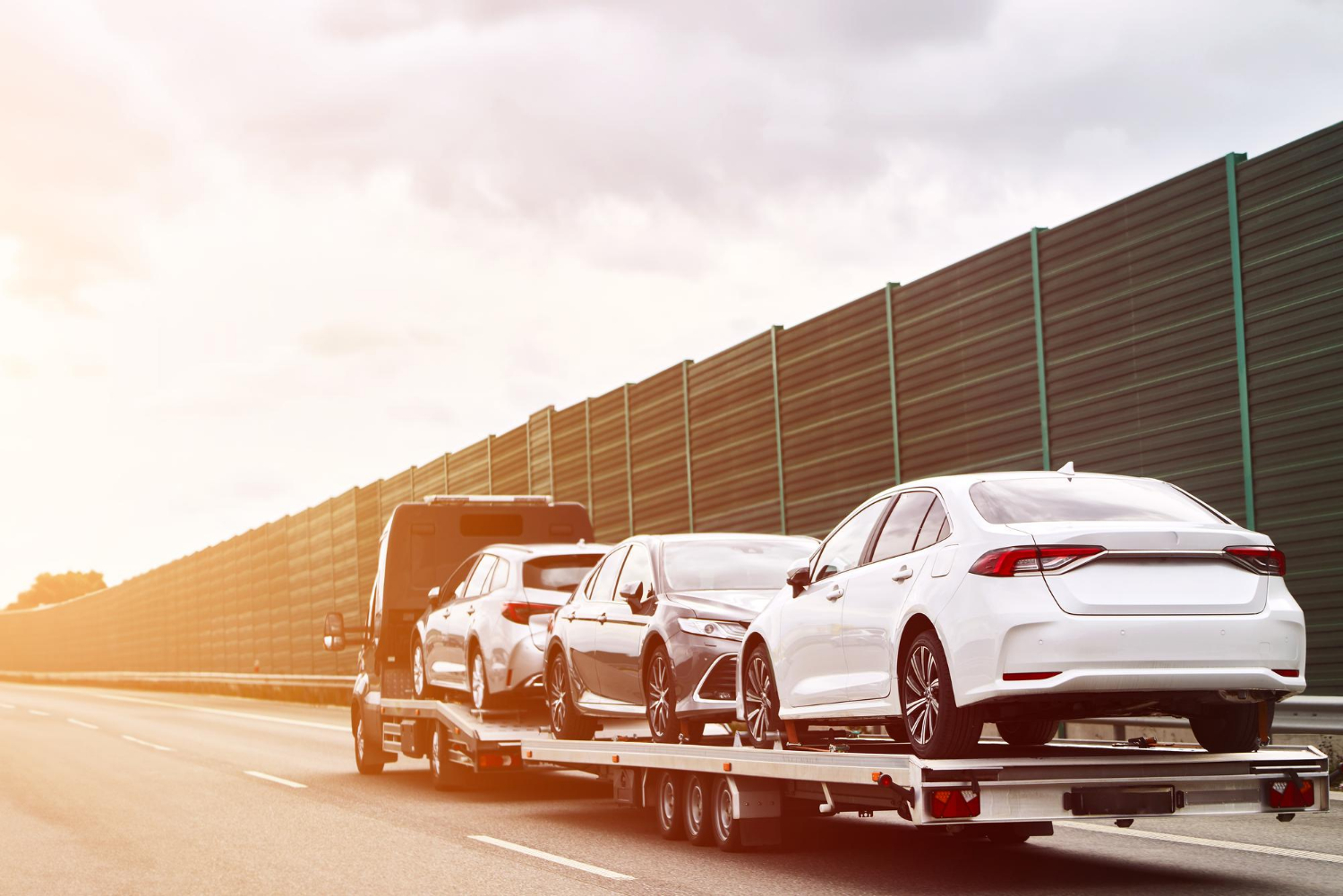
Within the European Union, buying a vehicle in another member state is generally possible and legal. Four aspects are decisive: first, the pre-purchase inspection of the vehicle, because problems with condition or documents are harder to spot from a distance; second, transporting the vehicle to Germany, which has to be organised with an export plate or a transfer; third, registration in Germany, for which certain documents from the country of origin are required; and fourth, tax questions, in particular regarding VAT on new cars and when buying from commercial sellers in other EU states. Anyone who wants to spare themselves this complexity should honestly weigh the effort against the possible price difference — and have the vehicle's condition assessed by an independent inspector before the purchase, before any transport and processing costs arise.
Buying a Car Abroad: EU Import, Registration and Tax Explained
Vehicles from the Netherlands, Belgium, Spain or other EU countries can offer attractive price differences — but anyone who imports must factor in transport, registration and tax particulars. This page explains the most important steps without glossing over the complexity.
What do I need to consider when buying a car elsewhere in the EU?
Why importing from abroad can be attractive — and when it pays off
Certain EU countries have structurally lower used-car prices than Germany: differences in vehicle taxes, demand situations and market size can mean that identical models are offered more cheaply in the Netherlands, Belgium, Poland or Spain.
However, this only pays off if the price difference is greater than the sum of: travel costs or the cost of an on-site pre-purchase inspection, transfer or transport costs to Germany, registration fees and possible technical modifications (headlight adjustment for German right-hand traffic, number-plate holders, etc.).
As a rule of thumb: below a price difference of roughly €1,000 to €2,000, the effort usually isn't worth it once you honestly factor in all the incidental costs. With high-priced vehicles the picture can be different.
The pre-purchase inspection: the most important step before importing
What is already risky in Germany — buying a vehicle without an inspection — is even riskier when buying abroad. Returns and complaints are more cumbersome and expensive across borders. A vehicle that turns out to be defective after being transported to Germany generates considerable additional costs.
Anyone who wants to buy a vehicle abroad should therefore plan an independent pre-purchase inspection before deciding — either through a local independent service or through checkdenwagen.de, which also arranges cross-border inspections on request.
Registration in Germany: which documents you need
After the purchase and transport, the vehicle must be registered in Germany. For this, the registration office usually requires:
- The foreign vehicle title (within the EU, usually a standardised document)
- Proof of a passed general inspection (or a new HU at a German TÜV/DEKRA centre)
- Proof that the registration in the country of origin has been cancelled
- The purchase contract
- The ID card or passport of the new owner
In some EU countries the vehicle documents differ in structure and language; it may be necessary to attach a certified translation. Your local registration office can advise on the exact requirements.
Tax: what applies to an EU import?
When buying a used car between private individuals within the EU, double VAT generally does not arise. When buying from a commercial dealer in another EU country to a private individual in Germany, the VAT of the country of origin may be included in the price; under certain circumstances acquisition tax must be paid in Germany. The tax office can advise on this in individual cases.
For vehicle tax (Kfz-Steuer) in Germany, the engine displacement and the emissions class of the vehicle apply — regardless of where the vehicle was originally registered.
Your car gets X-rayed. More than 100 points. Systematic.
Paint measurement & accident detection
Using digital ultrasonic paint-thickness measurement, we expose filler, repaints and hidden accident damage down to the millimetre.
Comparison against the manufacturer's target values at 12+ measuring points.
OBD diagnostics
Reading out all fault memories and plausibility check of the mileage.
Detects odometer tampering, control-unit faults and deleted warnings.
Engine & drivetrain
Visual and acoustic inspection of engine, transmission and drivetrain.
Leaks, belt tension, smoothness and transmission behaviour under real conditions.
Market-value analysis
Based on the repairs factored in, we calculate the actual market value.
Data basis: ~50,000 comparable listings from the last 90 days.
All articles: Import & export
Buying a car elsewhere in the EU: the guide
Read article
Learn moreImporting a car from Spain: step by step
Read article
Learn moreRegistering a car from abroad in Germany
Read article
Learn moreSelling a car abroad: process and paperwork
Read article
Learn moreEU type approval and COC when importing
Read article
Learn moreVAT and margin scheme when buying a car
Read article
Learn moreImporting a car from Italy: step by step
Read article
Learn moreCOC papers: the EU certificate of conformity
Read article
Learn moreRegistering a car with a COC: step by step
Read article
Learn moreExport plates: application, cost and deadlines
Read article
Learn moreFrequently asked questions about buying a car abroad
Yes, within the EU this is generally legal and free of customs duty. You buy the vehicle in the other member state, drive or transport it to Germany and register it here. For registration you need the original documents from the country of origin, and the vehicle must be deregistered there before you register it in Germany. For the exact steps, your local vehicle registration office (Zulassungsstelle) is the right point of contact.
Have your vehicle inspected in Germany or abroad — before the purchase, not after
An independent on-site check by checkdenwagen.de from €289 incl. VAT and travel — so you know what you're buying before transport and registration costs arise.