





Importing a vehicle from Spain to Germany is duty-free within the EU and generally legal. The most important steps are: first, inspecting the vehicle on-site at the seller in Spain before any binding costs arise; second, obtaining the original Spanish documents (Permiso de Circulación, Ficha Técnica and the COC or proof of individual approval); third, deregistration in Spain and transport to Germany; and fourth, registration in Germany, for which the Spanish documents have to be provided in a specific form. On the tax side: when buying privately in Spain, no further VAT is generally due in Germany; when buying from a Spanish dealer, different rules may apply — the tax office (Finanzamt) provides a binding answer.
Independent · On-site · Own report · Fixed price
Importing a Car from Spain: Step by Step to German Plates
Spanish used cars have a good reputation: the dry, warm climate is kind to the bodywork and underbody, and prices for well-kept vehicles can be below German levels. Anyone importing one, however, needs to know how Spanish vehicle documents are structured, what applies to the ITV (the Spanish equivalent of the TÜV test) and which steps are necessary for registration in Germany.
4.9
Google · 39+ reviews
100+
Checked points
How does importing a car from Spain to Germany work?
Spain as a buying market: what makes the market interesting
Spain is one of the EU markets that can be interesting for used-car buyers from Germany for several reasons:
Climate advantage: Spain's dry, warm climate means less road salt, less humidity and therefore often less underbody corrosion. Vehicles from Andalusia, Valencia or the Canary Islands are often significantly more rust-free than comparable examples from northern Germany or Poland.
Pricing situation: For certain vehicle segments — especially older diesels, well-kept estates and mid-size saloons — Spanish prices can be lower than the German market. That said: this is not universally the case, and the advantage has to be weighed against all the additional costs.
Specific models: Some vehicles that were more popular in Spain than in Germany are easier to find there — for instance certain SEAT models or French makes in their original configuration.
The Spanish vehicle documents: what you need
Spanish vehicles have two main documents — both are relevant for German registration:
Permiso de Circulación: This is the Spanish vehicle registration document (comparable to the German Zulassungsbescheinigung Teil I). It contains vehicle data, the registration number and owner information. This document is required by the German registration office as proof of the previous registration.
Ficha Técnica Vehículo (FTV): This is the technical data sheet, comparable to the German vehicle title (Zulassungsbescheinigung Teil II). It contains technical vehicle data, the VIN and the engine type. For registration in Germany it should be provided in the original.
COC (Certificate of Conformity): If a COC is available, it makes registration in Germany considerably easier. It certifies conformity with an EU-wide approved type and avoids a costly individual approval. Many Spanish vehicles have a COC — but it is not guaranteed, especially for older examples.
Clarify before buying: are the Permiso de Circulación and Ficha Técnica available in the original? Does the chassis number (VIN) in the documents match the VIN on the vehicle?
The ITV: Spain's roadworthiness test — and what it means in Germany
In Spain, the roadworthiness test is called the ITV (Inspección Técnica de Vehículos). It is carried out by private or public ITV stations and is similar in principle to the German HU — but not identical.
The ITV is not automatically recognised for registration in Germany. To register an imported Spanish vehicle in Germany, a new roadworthiness test (HU) by a German testing organisation (TÜV, DEKRA, GTÜ or KÜS) generally has to be carried out.
This means: even if a Spanish vehicle has just passed its ITV, it still has to undergo the HU in Germany. These costs have to be factored into the price comparison.
Deregistration in Spain: necessary steps
Before the vehicle can be brought to Germany, it has to be deregistered in Spain. This is done at the responsible Spanish traffic authority (Dirección General de Tráfico, DGT).
The seller usually initiates the deregistration. As the buyer, you should insist on receiving confirmation of deregistration — this document is required for German registration to prove that the vehicle is no longer registered in Spain.
A common pitfall: the seller hands over the vehicle without completing the deregistration. In that case, problems with the German registration can arise later. Insist on the original deregistration confirmation.
Your car gets X-rayed. More than 100 points. Systematic.
Paint measurement & accident detection
Using digital ultrasonic paint-thickness measurement, we expose filler, repaints and hidden accident damage down to the millimetre.
Comparison against the manufacturer's target values at 12+ measuring points.
OBD diagnostics
Reading out all fault memories and plausibility check of the mileage.
Detects odometer tampering, control-unit faults and deleted warnings.
Engine & drivetrain
Visual and acoustic inspection of engine, transmission and drivetrain.
Leaks, belt tension, smoothness and transmission behaviour under real conditions.
Market-value analysis
Based on the repairs factored in, we calculate the actual market value.
Data basis: ~50,000 comparable listings from the last 90 days.
Transport to Germany: options and costs
There are several ways to bring the vehicle from Spain to Germany:
Drive it yourself: With a Spanish temporary plate or a German export plate, the vehicle can be driven over yourself. The route from Spain to Germany is between 1,500 and over 2,000 kilometres depending on the destination — which means travel time, fuel costs and wear.
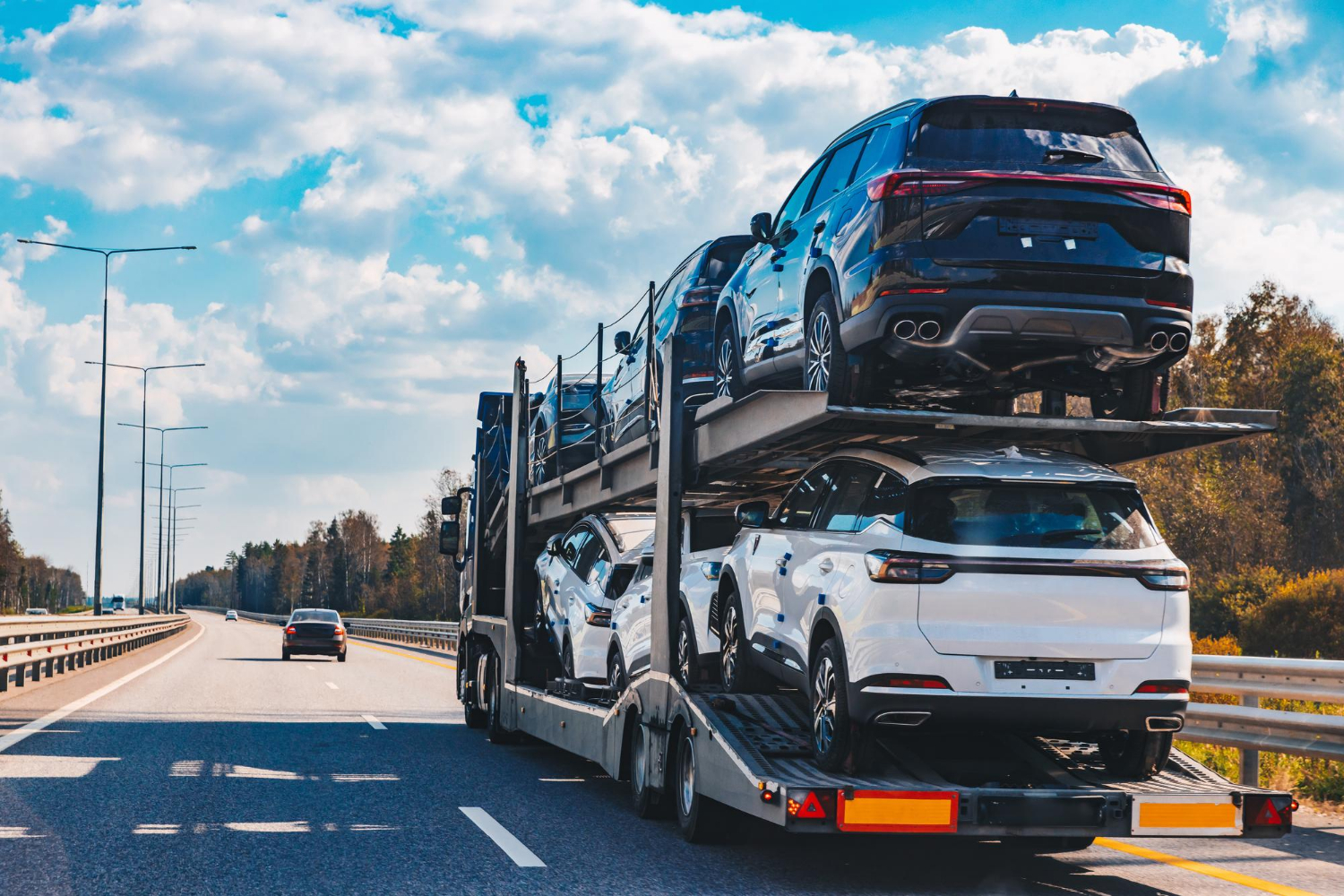
Transport company: A car transporter collects the vehicle in Spain and delivers it to Germany. This is more expensive than driving it yourself, but more convenient and easier on the vehicle. Costs vary depending on the route, vehicle size and provider.
Combined solution: fly to Spain, inspect and drive the car back yourself; or have the vehicle transported and travel yourself by flight or train. Which option is more economical depends on the route and personal priorities.
Taxes when importing from Spain: what applies
When buying a used car privately in Spain, the rule is generally: Spanish VAT (IVA) is not included in the price (private individuals do not charge VAT), and in Germany no additional acquisition tax is due on a private used-goods purchase.
When buying from a Spanish dealer, Spanish IVA (currently 21%, subject to change) is generally included in the price. Depending on the constellation, tax peculiarities may apply in Germany. For a binding answer regarding your own situation, your local tax office (Finanzamt) is the right point of contact.
Note: vehicle tax (Kfz-Steuer) in Germany is based on the engine displacement and CO₂ emissions of the vehicle — regardless of where it was originally registered.
Typical pitfalls when importing from Spain
Missing or incomplete documents: Spanish vehicle documents are issued in Spanish. The registration office may require a certified translation. Clarify before buying whether all original documents are available.
ITV entry does not match vehicle data: For older vehicles that have changed owner several times, discrepancies can occur between the vehicle data in the Ficha Técnica and the actual vehicle. Always check the VIN on the vehicle against all documents.
Odometer manipulation: Spanish markets, too, are not immune to odometer fraud. An independent on-site check assesses the plausibility of the mileage based on service-booklet entries and the wear pattern.
Canary Islands: Vehicles from the Canary Islands (Las Palmas, Tenerife) are indeed registered in Spain, but are treated differently for tax purposes than mainland vehicles. Caution is also advised regarding the climate advantage — salty air near the coast can cause corrosion despite the warmth. Have such vehicles inspected particularly thoroughly.
Hidden prior damage: A sun-pampered exterior sometimes conceals a repaired accident damage or technical defects that were less noticeable in the warm climate. Without an on-site inspection, the risk is hard to assess.
Found the car you want? Have it inspected before you buy.
Our inspector comes straight to the seller — fixed price from 289 €, report within 24 h.
Frequently asked questions about importing from Spain
Spanish vehicles often come with a climate advantage: the warm, dry climate means less underbody corrosion than in the more humid countries of Central Europe. For certain segments, prices can be lower than in Germany. However, all the additional costs of importing (transport, German HU roadworthiness test, registration, any required documents) have to be factored in against this.
Found a car in Spain? Have it independently inspected before you buy.
checkdenwagen comes to the seller — fixed price from €289 incl. VAT and travel. Spain on request.