



In the registration procedure, the COC is the technical data source: the Zulassungsstelle (vehicle registration office) transfers the vehicle data from it into the register and issues Zulassungsbescheinigung Teil I and Teil II (German registration certificate parts I and II). The office responsible is the one for your place of residence, or for the registered office of the company the vehicle is being registered to. In addition you have to bring a valid ID showing a German registered address, proof of your right of disposal such as a purchase contract or invoice, an electronic insurance confirmation (eVB number), a SEPA direct debit mandate for Kraftfahrzeugsteuer (vehicle tax), and unstamped number plates. For a used vehicle, proof of a Hauptuntersuchung (German roadworthiness test) is added; if the car was already registered abroad, its foreign registration certificate and proof of deregistration as well. With complete documents, processing at the counter usually takes under an hour, the administrative fees run to a double-digit euro figure, plus plates and, where applicable, the Hauptuntersuchung. If the wheels, suspension or add-on parts deviate from the approved specification, the deviation has to be inspected and entered in the papers beforehand. A purely online registration via the i-Kfz portal is generally ruled out here, because it requires security codes from German vehicle papers that a vehicle awaiting first registration does not yet have.
Registering a car with COC papers
The COC alone will not get you through the Zulassungsstelle: it only supplies the technical data record. Alongside it, the counter wants proof of insurance, a tax mandate and, for used vehicles, proof of a Hauptuntersuchung. Here is the process in the order you have to work through it.
How does registering a vehicle with COC papers in Germany work?
What the Zulassungsstelle does with your COC — and where you file the application
The COC (Certificate of Conformity, in German: EU-Übereinstimmungsbescheinigung) is the manufacturer's declaration that this vehicle corresponds to a type approved at European level. In the registration procedure it replaces the data record that a German vehicle has long had from its existing papers: the case officer transfers the technical details into the vehicle register, assigns the German key numbers to the vehicle and prints Zulassungsbescheinigung Teil I and Teil II (German registration certificate parts I and II) from them. Which fields the COC contains in detail, and how to order a replacement from the manufacturer or importer, is explained in the separate guide to COC papers. If it is missing altogether, the data record has to be created another way — via a data confirmation from the manufacturer or a full expert report under § 21 StVZO (German road traffic licensing regulations), both more expensive and slower.
The office responsible is not just any Zulassungsstelle (vehicle registration office), but the one for your place of residence. If you have more than one home, the one registered as your main residence counts; if the vehicle is registered to a company, it is the registered office or the branch from which the vehicle is predominantly used. So you cannot pick the authority with the shortest waiting list — and you can only reserve a personalised plate from the stock of your own registration district. Anyone who has just moved should re-register their address first: if your ID still shows the old address and there is no Meldebescheinigung (registration confirmation), the application will be stopped.
The second preliminary question is who the vehicle is registered to. What gets entered is the keeper — the person who uses the vehicle in their own name and bears the costs. That need not be the owner, and Zulassungsbescheinigung Teil II is not proof of ownership, only an indication of it. To register to a company, the authority requires evidence that the company exists and of who is authorised to represent it: for registered companies a current extract from the Handelsregister (commercial register), for sole traders and freelancers usually the trade registration or tax number. Whoever stands at the counter must either be listed in the register as authorised to represent the company or bring a company power of attorney; for a GbR (German civil-law partnership), many registration offices expect the signatures of all partners or a corresponding power of attorney. The company is then liable for the Kraftfahrzeugsteuer (vehicle tax), so the SEPA mandate has to come from a company account with an authorised signature.
Documents the Zulassungsstelle requires
The Fahrzeug-Zulassungsverordnung (German vehicle registration ordinance) sets out what has to be submitted; individual registration offices spell this out differently in their own information sheets. The list below covers the standard case and names, for each document, the form the authority looks for as well as the point at which applications tend to fail on it. Also check the information sheet of the office responsible for you, because individual requirements vary locally.
| Document | Form the authority looks for | Typical reason for rejection |
|---|---|---|
| COC | original, or a duplicate issued by the manufacturer or the official importer | scan, photocopy or PDF from the seller |
| Personalausweis (German ID card) or passport | valid, showing your current German registered address; with a passport, additionally a Meldebescheinigung | address on the ID does not match the current registration |
| Purchase contract or invoice | full names and addresses of both parties, vehicle identification number, date, signatures | the seller does not appear in the existing vehicle papers |
| eVB number (electronic insurance confirmation) | seven digits, filed by the insurer for this specific vehicle | binding period expired, or issued for different vehicle data |
| SEPA direct debit mandate | the registration office's own form, signed by the account holder | a differing account holder has not signed |
| Proof of Hauptuntersuchung (German roadworthiness test) | test report with a running deadline, for used vehicles | not submitted at all for a used vehicle |
| Foreign registration certificate | Part I as an original, plus Part II where the country of origin runs a two-part system | only a copy brought along, Part II left with the previous owner |
| Deregistration or export certificate | document from the authority in the country of origin | vehicle still registered there |
| Power of attorney if represented | in writing, with a copy of the principal's ID | power of attorney without an ID copy |
| Number plates | unstamped, in a permitted size, from the plate service | personalised plate not reserved in advance |
Proof of the right of disposal deserves particular attention. The authority wants to see an unbroken chain from the last registered keeper to you — and with vehicles that reached you via a foreign dealer and an intermediary, that chain is often incompletely documented. If someone sells you a vehicle that the available papers list in the name of another person or company, you need the intervening contracts or a power of sale. With a vehicle still under finance, Teil II is often held by the bank; nothing gets transferred until they release it.
If you cannot attend in person, the application can also be handled by a trusted person, a dealership or a commercial registration service with a written power of attorney and a copy of your ID. Bear two things in mind: you are handing over original documents that cannot easily be replaced if something goes wrong — the COC in particular, where a duplicate from the manufacturer costs money and takes time. And nobody can handle the SEPA mandate for you; the account holder signs that in person.
The process: appointment, eVB, tax mandate, number plates
Book the appointment first, then complete your documents. At larger registration offices, appointments are booked out weeks in advance depending on the region, and where an appointment is mandatory, turning up early does not help. Reserve a personalised plate online in the same round if you want one — without a reservation you are assigned the next free combination from the system, and only then can you have the plates pressed.
You obtain the eVB number from an insurer of your choice, usually online within a few minutes. It is a seven-digit code that the registration office uses to retrieve proof of insurance electronically. How long the number stays valid is set by the insurer and varies considerably — if it expires, you simply have a new one issued. With imports there is a typical delay: some insurers will only create an eVB once they can find the vehicle data in their system via the type key. With rare models or foreign versions, that means an enquiry with the COC attached, and occasionally a manual entry by the back office. Do not leave this step until the evening before your appointment.
The SEPA direct debit mandate for Kraftfahrzeugsteuer (vehicle tax) is a mandatory part of the application, not optional. The registration office accepts it and forwards it to the Zollverwaltung (German customs administration), which levies the tax and sends you the assessment later. So you need the IBAN of the account to be debited and, where the account holder is someone else, their signature.
At the appointment, the case officer checks the documents, records the vehicle data, allocates the registration number and prints Teil I and Teil II. With the still-unstamped plates you go to the sealing counter, where the stamp badges are applied; the test badge goes on the rear plate. You do not have to bring the vehicle itself for this — but you may only move it once the stamped plates are fitted. For journeys before that, for example to the test centre for the Hauptuntersuchung, there is the Kurzzeitkennzeichen (short-term registration plate) within Germany, which you apply for at the registration office with an eVB number and the vehicle data. The Umweltplakette (low-emission zone sticker) is not a condition of registration; you only need it to enter environmental zones, and it is available from testing organisations and many garages.
If the vehicle was already registered elsewhere in the EU: COC plus foreign papers
With a vehicle previously registered abroad, the registration office works from two sources of data. The COC describes the approved specification as it left the factory; the foreign registration certificate documents what became of it over the course of its registration in the country of origin — keeper details, the date of first registration and any modifications entered there. The authority wants to see both documents; the foreign papers are routinely retained and returned to the issuing body, so make copies for your own records beforehand.
It gets interesting when the two sources do not say the same thing. Discrepancies in power output, number of seats, permissible gross weight or tyre sizes do occur, either because modifications were registered abroad or because national forms rounded and classified things differently. Which figure is carried over into the German papers is decided by the registration office case by case, if necessary by querying the manufacturer or commissioning an examination. What counts in practice is what can be evidenced on the vehicle: for anything that deviates from the approved specification, you need a document that covers the deviation. Discover the contradiction only at the counter and you lose your appointment.
One point that costs money later and therefore belongs here up front: the date of first registration from the country of origin is carried over into the German Zulassungsbescheinigung Teil I. A vehicle that has run for four years in Belgium does not become a new car here, even though it is being registered in Germany for the first time. That date governs the deadlines for the Hauptuntersuchung as well as the classification for Kraftfahrzeugsteuer, which depends not only on engine displacement and fuel type but also on emissions figures and hence on the date of first registration.
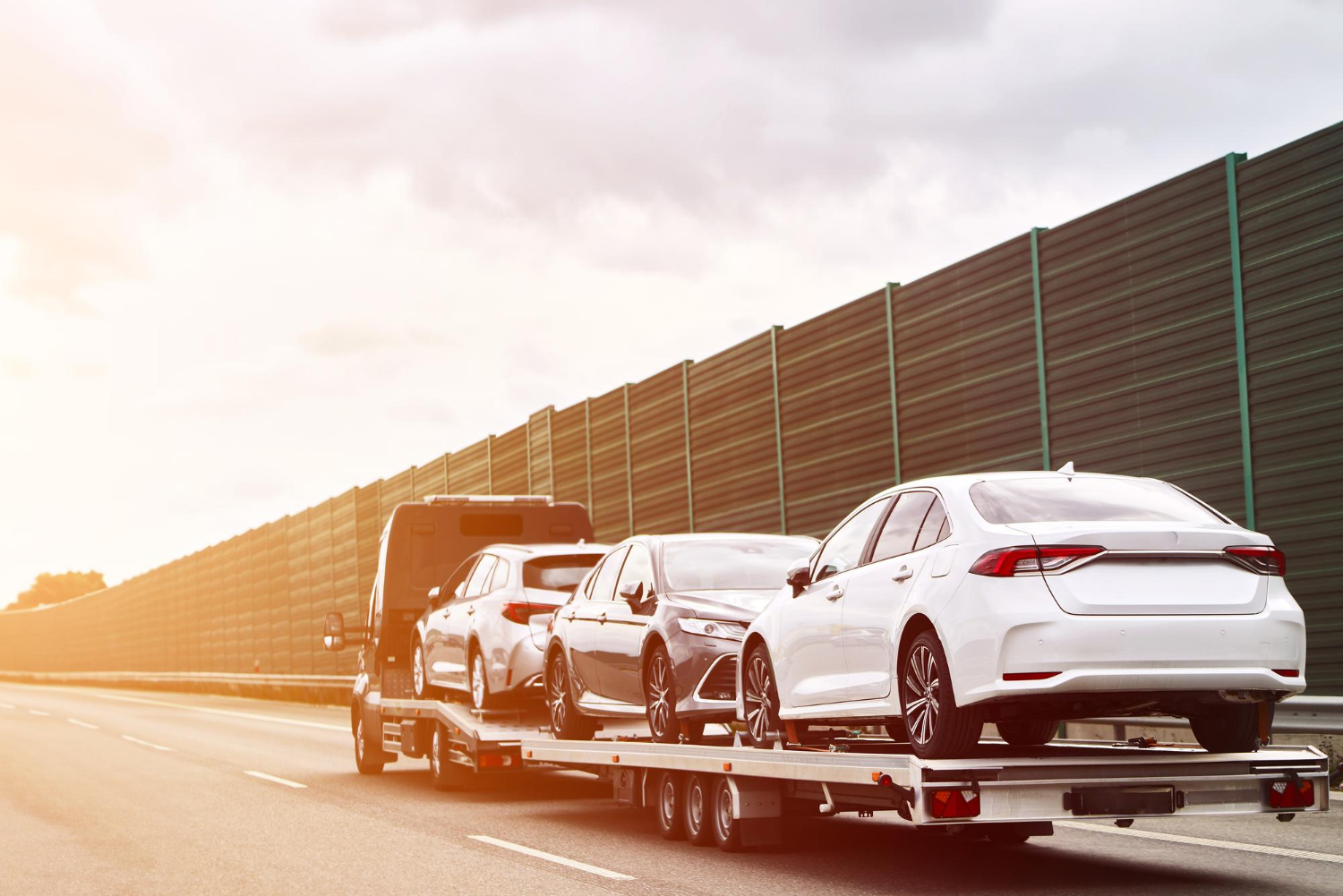
The remaining import formalities — deregistration and export certificates, certified translations of individual documents, VAT on vehicles that still count as new for tax purposes, plus customs duty and import VAT on vehicles from non-EU countries — are covered in detail in the guide to registering a vehicle from abroad. For the transfer journey itself, one rule applies: a German short-term plate is not a reliable basis for it, because it is not recognised everywhere abroad. Use the export or transfer plate of the country of origin, or move the vehicle on a trailer.
Your car gets X-rayed. More than 100 points. Systematic.
Paint measurement & accident detection
Using digital ultrasonic paint-thickness measurement, we expose filler, repaints and hidden accident damage down to the millimetre.
Comparison against the manufacturer's target values at 12+ measuring points.
OBD diagnostics
Reading out all fault memories and plausibility check of the mileage.
Detects odometer tampering, control-unit faults and deleted warnings.
Engine & drivetrain
Visual and acoustic inspection of engine, transmission and drivetrain.
Leaks, belt tension, smoothness and transmission behaviour under real conditions.
Market-value analysis
Based on the repairs factored in, we calculate the actual market value.
Data basis: ~50,000 comparable listings from the last 90 days.
Hauptuntersuchung and discrepancies between the vehicle and the COC
A factory-new vehicle is registered for the first time without a Hauptuntersuchung. For any used vehicle, by contrast, the registration office requires proof of one, because registration comes with the allocation of the German test badge. In practice, with used EU imports that almost always means a Hauptuntersuchung carried out in Germany, even if a valid test certificate from the country of origin still exists. Whether such a certificate is recognised in an individual case has to be clarified in advance with the registration office responsible — schedule the German test to be on the safe side, and put its appointment before your registration appointment.
The Hauptuntersuchung is also the first point at which the vehicle and its approval data are technically compared against one another. If tyre or wheel sizes deviate from the approved combinations, if the suspension, exhaust system, lighting, power output, wheel spacers or add-on parts have been altered, or if parts named in the approval are missing, the deviation has to be evidenced — by an Allgemeine Betriebserlaubnis (general operating permit) for the part, a parts report with a modification inspection, or an individual approval. Without that evidence, the vehicle's operating permit may have lapsed; the only remedies are then reverting to the series specification or a subsequent inspection with entry in the papers. Budget an extra appointment and extra cost for a modification inspection.
Vehicles without a usable EU type approval are a case of their own: US imports, small production runs, heavily modified cars. Here a full expert report under § 21 StVZO takes the place of the COC. The expert examines the vehicle in full against German regulations, which frequently entails modifications to the lighting, indicators or exhaust system. That costs several hundred euros upwards and takes weeks depending on how much retrofitting is needed. With a vehicle like this, the conversation with the expert belongs before the purchase, not after it.
Costs, timing and what happens if the appointment falls through
The administrative fees for a registration run to a double-digit euro figure and differ depending on the registration office and the type of application. On top of that come the pair of plates from the plate service, likewise in double digits, and optionally the reservation fee for a personalised plate, in the low double digits. For a used vehicle, the largest single item is the Hauptuntersuchung at a low three-figure amount, and correspondingly more if a modification inspection is added. With imports, a certified translation of individual documents and a duplicate of a missing COC may come on top — both in the double- to three-figure range, depending on scope and manufacturer.
At the counter, with complete documents, you are usually done in under an hour, including having the plates pressed and stamped. From the vehicle's arrival in Germany to the fitted plates, one to three weeks is realistic for a used EU import, determined by appointment availability, the test date, any translations and follow-up requests from the authority.
If the application is stopped at the counter, ask for the missing points in writing or as a note on the application form — that tells you whether you can submit them later or whether the application has to be started from scratch. Some registration offices accept missing documents at a follow-up counter without a new appointment; others allocate a new appointment, which can cost weeks when availability is tight. In that case a commercial registration service is a shortcut: it works through the documents in advance and uses its own channels to the authorities, but charges a service fee on top of the official costs. Insurance cover matters too: if registration is delayed significantly, check whether your eVB is still valid or whether you need a new one.
This text provides general information on the registration procedure and does not replace legal advice; binding information is given by the registration office responsible for you.
Before the registration appointment: what an independent inspection on the vehicle clarifies
The registration office decides on the basis of documents. Whether the vehicle identification number on the body and the type plate really matches the one in the papers, whether the fitted wheels are an approved size, whether the suspension, exhaust or lighting have been altered, and whether rust or repaired accident damage will make the Hauptuntersuchung a problem — all of that only becomes apparent on the vehicle. With an imported car there is the added issue that you do not know its history in the country of origin, and the seller often does not know it either, because he bought the car in as well.
If the vehicle is already in Germany — at a dealer with imported stock, at an intermediary after the transfer journey, or with a private seller who imported it himself — you can have these points clarified before you buy. The checkdenwagen inspector comes directly to the seller anywhere in Germany, takes approx. 1.5 hours on-site and works through over 100 points: comparing the vehicle identification number with the papers provided, checking the wheel and tyre combination, a visual inspection for modifications and add-on parts without recognisable approval, plus an assessment of rust, accident traces and wear. You get the report within 24 hours, and you do not have to be present.
For context: checkdenwagen is an independent inspection service for your buying decision — not a liability or damage assessor, not a testing organisation that issues test badges, and not a legal adviser. So the report replaces neither the Hauptuntersuchung nor a modification inspection. What it does tell you, before you transfer the money, is whether the vehicle matches what the COC and the registration certificate say.
Found the car you want? Have it inspected before you buy.
Our inspector comes straight to the seller — fixed price from 289 €, report within 24 h.
Frequently asked questions about registering with a COC
A COC has no expiry date — it documents the vehicle's as-delivered condition and remains usable in principle for transferring the data, even many years later. Its age only becomes relevant once the vehicle has been modified in the meantime: what counts for registration is what can be evidenced on the vehicle itself, not the factory specification on the paper alone. Very old vehicles often have no COC at all, because European type approval did not yet apply to that vehicle class at the time; registration then runs via a data confirmation from the manufacturer or an expert report.
Inspect first, register second
Approx. 1.5 hours on-site, report within 24 hours, and you don't have to be there. 4.9 stars from around 39 Google reviews.