





Importing a vehicle from Italy to Germany is customs-free and legal within the EU. The most important steps: first, check the condition on-site at the Italian seller before binding costs arise. Second, obtain the original Italian papers — the libretto di circolazione (vehicle registration document), the certificato di proprietà digitale (digital proof of ownership) and the COC, if available. Third, arrange the radiazione per esportazione (deregistration for export) in Italy via the ACI office or the PRA, and organise the transfer with an export or short-term plate or by transporter. Fourth, register in Germany: mostly straightforward with a COC, without a COC via an individual approval under §21 StVZO, plus a new main inspection and re-registration. For tax purposes, a private purchase usually means no additional VAT — only the tax office (Finanzamt) settles that bindingly.
Importing a car from Italy: step by step to a German number plate
Italian used cars can pay off — for certain models the prices are below the German level, and from the dry south often come surprisingly rust-free vehicles. But anyone importing has to know how the libretto di circolazione is structured, how the radiazione per esportazione runs via ACI and PRA, and which papers the German registration office wants to see in the end.
How does importing a car from Italy to Germany work?
Why importing from Italy can pay off — and for which cars
Whether importing a car from Italy is worth it comes down to a simple calculation: the price difference has to be bigger than the sum of the transfer drive, a new main inspection, registration and any adjustments. With some vehicles real room remains after that, with others the effort eats up the advantage entirely. Which countries generally suit which vehicles is set out in the guide to buying a car in the EU — here the focus is on the Italian specifics.
Italy is interesting above all for certain segments. Small cars and compact models are mass-market goods there and sometimes priced lower than here, because the market is huge and demand is distributed differently. Also in demand are Italian makes in original configuration — certain Alfa Romeo, Lancia or Fiat models that are rare in Germany and traded accordingly dearly, which you find in Italy in greater choice and often with a complete history from the brand dealer. For sought-after classics and youngtimers of Italian production the supply is deeper anyway than on the German market.
A second factor is the region. Northern Italy has a climate similar to southern Germany — with road salt in winter and damp winters in the Po Valley, so the rust advantage there is limited. Noticeably drier and lower in salt are central and southern Italy and the islands; vehicles from these areas frequently show less corrosion on the underbody, brake lines and sills than comparable cars from northern Germany. So the rust advantage is real, but tied to the region of origin — not blanket to the word "Italy". Near the coast, salty air can cause corrosion in less visible places again despite the warmth.
Against importing, on the other hand, speaks everything that turns distance into a cost risk. A young vehicle with a full German service booklet you can almost always get domestically at a comparable price, without translation and registration effort and with a statutory warranty you can barely enforce across the border in practice. And an offer well below the usual market level is rarely a bargain, but a warning sign — for undisclosed damage, a tampered odometer or unclear provenance. That is exactly what has to be checked before the transfer.
The Italian vehicle documents: libretto, certificato di proprietà and COC
Anyone buying in Italy should take the paperwork just as seriously as the technical condition — because missing or unclear documents are harder to chase up across the border than on the spot. In Italy the document structure is different from Germany's, and it has also changed over the years.
The central document is the carta di circolazione, colloquially the libretto di circolazione — the Italian vehicle registration document. It contains the technical vehicle data, the chassis number (numero di telaio), the number plate (targa) and the keeper's details. For German registration this document is the core proof of the previous registration and the technical data. Check that it is present in the original and complete, because without the libretto things get difficult at the German registration office.
Italy handles proof of ownership separately from the registration document. Historically there was the certificato di proprietà (CDP) as a paper document for this; for some years now it has been kept as a certificato di proprietà digitale (CDPD) and stored in the public vehicle register PRA (Pubblico Registro Automobilistico), which is administered by the ACI (Automobile Club d'Italia). For you that means: the transfer of ownership and the later export are handled via the ACI/PRA structure, not through the registration document alone. Get proof that the seller really is the registered owner and that no intermediary is selling without authorisation.
The COC (Certificate of Conformity, in Italian certificato di conformità) is the document that considerably eases German registration: it proves the vehicle's conformity with an EU-wide approved type and, as a rule, makes a costly individual approval unnecessary. For vehicles built for the EU market a COC is common, but not guaranteed — on older examples it is missing more often. Ask about it explicitly before you commit, because without a COC the German registration route gets longer and more expensive. What the COC is exactly and how the route without a COC via §21 StVZO works is covered in detail in the article on registering a vehicle from abroad.
The most important step with the papers is the VIN check directly on the vehicle: compare the numero di telaio in the libretto and on the COC character by character with the stamped-in chassis number in the engine bay and on the door pillar. If they differ or digits look re-stamped, walk away from the purchase.
The revisione: Italy's main inspection — and what counts in Germany
In Italy the main inspection is called the revisione (more precisely: revisione periodica). In principle it is comparable to the German HU, but it runs on different intervals and is carried out by different bodies. For your buying decision it is an indicator, but no substitute for your own inspection.
Important for the calculation: the Italian revisione is not automatically recognised in Germany. For German registration you generally need a new main inspection at a German inspection organisation — TÜV, DEKRA, GTÜ or KÜS. So even a vehicle that passed the revisione only recently has to go for the HU again here. These costs belong in the price comparison from the start, otherwise the import becomes more expensive after the fact than planned.
The revisione also tells you nothing about the overall condition or the fair market value. It is a safety-related snapshot, not an economic assessment. A vehicle can have a fresh revisione and still hide a repaired accident history, a slipping transmission or a tampered odometer — points that only a thorough on-site inspection makes visible.
radiazione per esportazione: deregistration for export
Before the vehicle may leave Italy, it has to be deregistered there for export. This process is called the radiazione per esportazione — deletion from the Italian PRA register for the purpose of export. Without this step the vehicle stays registered in Italy, which causes problems later at German registration and in the worst case leads to a double registration.
The radiazione is handled through the responsible ACI office or the PRA, often with the support of an agenzia di pratiche auto — the service providers common in Italy for vehicle administrative tasks, comparable to a registration service. The seller or such a provider usually initiates the process. As the buyer you should insist on receiving the confirmation of the radiazione per esportazione in the original — this document proves to the German registration office that the vehicle is no longer registered in Italy.
A common pitfall: the seller hands over the vehicle without a clean deregistration or with the promise to "sort that out later". Don't rely on that. Without a documented radiazione you are missing a core piece of proof in Germany, and clearing it up afterwards across the border is laborious. Before handover, settle bindingly who arranges the radiazione, when the confirmation will be available and that it matches your VIN and the last registered keeper exactly. How the deregistration confirmation fits into the German registration process is shown in the article on registering a vehicle from abroad.
Your car gets X-rayed. More than 100 points. Systematic.
Paint measurement & accident detection
Using digital ultrasonic paint-thickness measurement, we expose filler, repaints and hidden accident damage down to the millimetre.
Comparison against the manufacturer's target values at 12+ measuring points.
OBD diagnostics
Reading out all fault memories and plausibility check of the mileage.
Detects odometer tampering, control-unit faults and deleted warnings.
Engine & drivetrain
Visual and acoustic inspection of engine, transmission and drivetrain.
Leaks, belt tension, smoothness and transmission behaviour under real conditions.
Market-value analysis
Based on the repairs factored in, we calculate the actual market value.
Data basis: ~50,000 comparable listings from the last 90 days.
Transfer to Germany: drive or transport
For the stretch from Italy to Germany there are two ways — transfer it yourself or have it transported. Which is cheaper depends on the distance, condition and value of the vehicle. Both require that the radiazione is done and the car is thereby cleared for export.
| Route | When it makes sense | What to note |
|---|---|---|
| Drive it yourself | roadworthy, manageable distance | export/short-term plate, valid insurance, Alpine route |
| Transporter | not roadworthy, long distance, valuable | quote in writing beforehand, condition report at handover |
Anyone who drives it themselves needs an export or short-term plate (Ausfuhr- or Kurzzeitkennzeichen) with matching insurance cover. On a trip across several countries, the border insurance (colloquially the green card) is the proof that your liability cover also applies outside the country of issue. Calculate the distance realistically: from Milan or Turin to southern Germany it is several hundred kilometres depending on the destination, from Rome, Naples or the islands considerably more — with Alpine passes or tunnel tolls and a route you shouldn't underestimate with an unfamiliar used car. Plan in breaks and a buffer, and check in advance that the plate variant covers the planned route and entry into Germany.
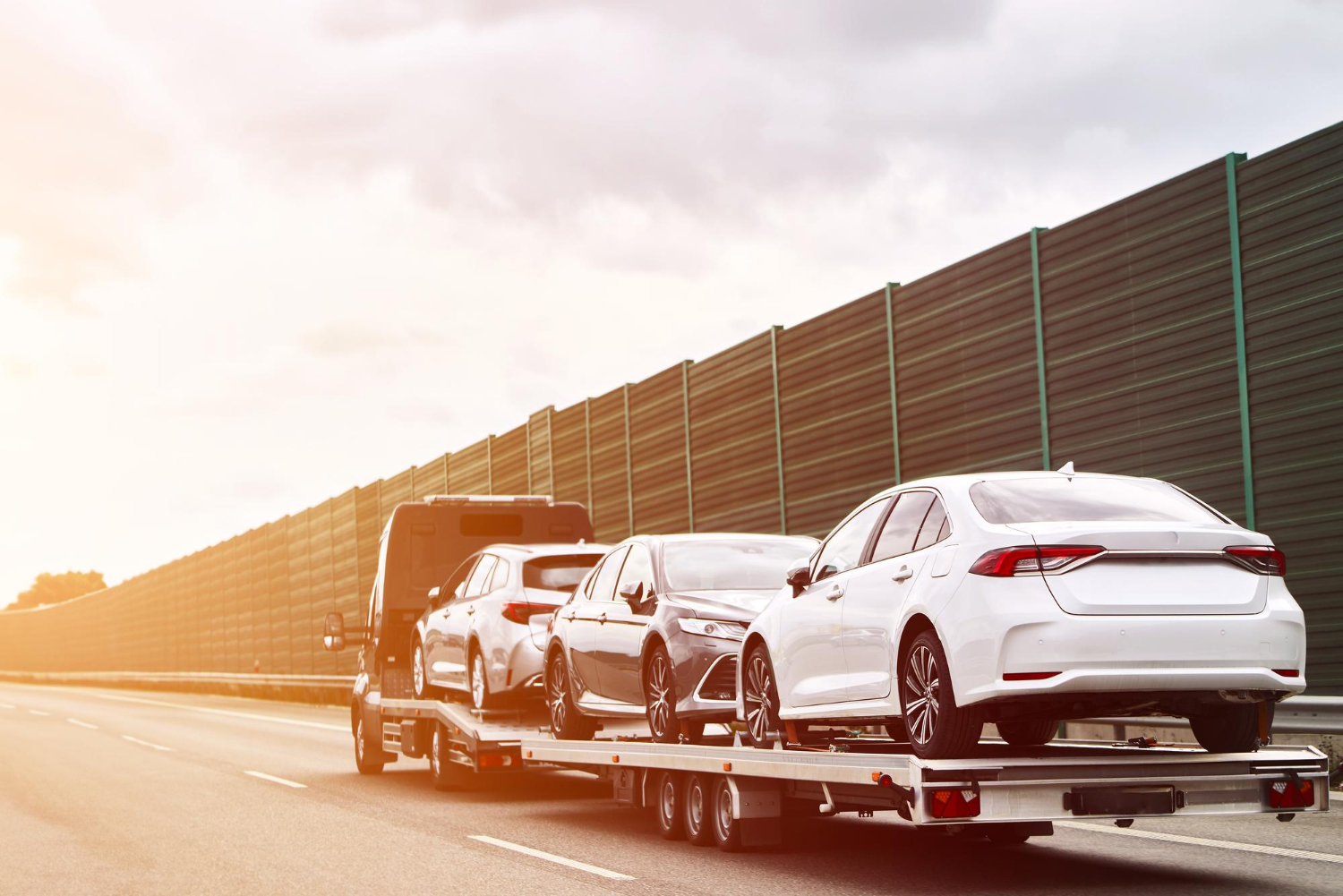
A car transporter is the right choice as soon as the vehicle is not safely roadworthy, is very far away or is so valuable that you don't want to risk any transfer damage — with sought-after Italian classics that is often the case. The price depends above all on the distance and on whether the car can be loaded and unloaded under its own power. Get the quote with a clear description of services in writing beforehand and have a condition report given to you at handover that records scratches, dents and the mileage — without this report you have no leverage in the event of transport damage. Because Italy is an EU member, no customs duty arises in all this; the customs office (Zollamt) only comes into play with an import from outside the EU.
Registration in Germany: COC makes it easier, otherwise §21
After purchase and transfer you register the vehicle at the registration office of your place of residence. The procedure depends decisively on whether a COC is available — it is the difference between a mostly smooth appointment and a costly individual approval.
With a COC the registration office can check the type approval directly; an individual approval is generally not needed, and the route via a regular German main inspection is usually straightforward. Without a COC the route runs via an individual approval under §21 StVZO — an individual technical assessment by an officially recognised inspector, whose report then forms the basis of the registration. That is the most costly and most expensive case in the whole process, which is why the COC question should be settled before the purchase. The full mechanics of the COC, §21 approval, document list and technical adjustments are described in detail in the article on registering a vehicle from abroad — this overview is enough here.
For the appointment you essentially need the following documents:
| Document | Purpose |
|---|---|
| libretto di circolazione (original) | proof of registration and technical data |
| confirmation of the radiazione per esportazione | proves deregistration in Italy |
| COC or §21 report | type approval / individual approval |
| valid German HU (TÜV/DEKRA/GTÜ/KÜS) | technical prerequisite for registration |
| eVB number from the car insurer | insurance cover from registration |
| sales contract and ID | proof of ownership and identity |
Two Italian specifics you should plan for. First, the language: the documents are issued in Italian, and the registration office may require a certified translation — this applies especially to older libretti with many handwritten entries. Second, the document structure: because ownership and registration are kept separately in Italy, the authority may want to see additional proof of ownership from the PRA alongside the libretto. Because the requirements vary regionally, a phone call to your registration office before the purchase is the best safeguard — it spares you a wasted trip.
Taxes when importing from Italy: only roughly, binding is the tax office
For tax purposes, the same basic logic applies when importing from Italy as with any EU purchase, and it depends heavily on whom and what you buy from. No reputable party names fixed amounts in advance — binding is solely the information from the responsible tax office (Finanzamt).
With a private purchase from a private individual in Italy, no additional VAT usually arises in Germany; private individuals do not charge VAT. When buying from an Italian dealer, Italian VAT (IVA) may be included in the price, and depending on the constellation different rules apply — in particular the question of whether it is sold under the margin scheme (Differenzbesteuerung) for used cars or regularly with VAT shown separately. A special case is the vehicle that counts as new for tax purposes: if the first registration or the mileage do not exceed certain limits, acquisition tax can arise in Germany, even though in everyday terms you would hardly call the car new. The exact rules on the margin scheme and the new-vehicle definition are a topic in their own right — they are covered in the article on VAT when importing a car.
Independent of acquisition taxation is the ongoing vehicle tax: it is based on the engine displacement and emission class of the vehicle and applies after registration just as it does for a car bought domestically — regardless of the fact that the vehicle originally ran in Italy. For the correct registration the tax office is likewise responsible.
Typical pitfalls when importing from Italy
Most disappointments when importing from Italy have the same cause: the distance makes every overlooked point expensive, because putting things right and complaining across the border are cumbersome. These pitfalls come up especially often.
Missing COC. Without a certificate of conformity, a smooth registration appointment turns into an individual approval under §21 — the most expensive and most drawn-out route. Settle the COC question before you commit, not only once the car is already standing in Germany.
Unclear ownership. Because Italy keeps ownership and registration separate via the PRA, the keeper in the libretto is not automatically also the owner. If an intermediary sells without authorisation, or if the certificato di proprietà is not cleanly registered to the seller, the export and later the German registration get complicated. Have the proof of ownership from the PRA shown to you.
Language barrier with the documents. Italian libretti — especially older ones — contain handwritten entries, stamps and notes that are hard to interpret without knowledge of Italian. The registration office may require a certified translation; and anyone who cannot read the papers themselves easily overlooks a note about modifications, previous owners or usage restrictions.
Mileage and prior damage from a distance. The Italian market too is not free of odometer tampering, and a sun-favoured exterior sometimes conceals a repaired accident. From seller photos this cannot be assessed reliably. Demand at least an uncut video walkaround with a cold start, sharp close-ups of the sills, wheel arches and transitions, plus the libretto and the latest invoices to cross-check the mileage. That is no substitute for an on-site inspection, but it filters out the obvious dead ends.
Region of origin overestimated. Not every Italian vehicle is low on rust. From the north, with road salt and the damp Po Valley, come cars that barely differ from German condition; near the coast, salty air can cause corrosion despite the warmth. Don't rely on the "from Italy" label — rely on the actual underbody.
The most effective protection against these points is a neutral inspection before money changes hands. checkdenwagen inspects on-site nationwide and arranges cross-border checks on request — as an independent authority with no interest in the sale, going through over 100 points, cross-checking the mileage for plausibility and reviewing the paperwork before flight, transfer and registration costs even arise.
Found the car you want? Have it inspected before you buy.
Our inspector comes straight to the seller — fixed price from 289 €, report within 24 h.
Frequently asked questions about importing a car from Italy
Only if the price difference is bigger than the sum of all extra costs. Weigh the transfer drive or transport, a new main inspection, registration, possible translations and your own time against the saving. On cheap everyday cars the effort often eats up the advantage entirely; on sought-after Italian models, youngtimers or vehicles from the dry south there can still be real room. An honest full-cost calculation protects you from disappointment.
Found a car in Italy? Have it inspected independently before you buy.
checkdenwagen comes to the seller — fixed price from €289 incl. VAT and travel. Italy on request.