





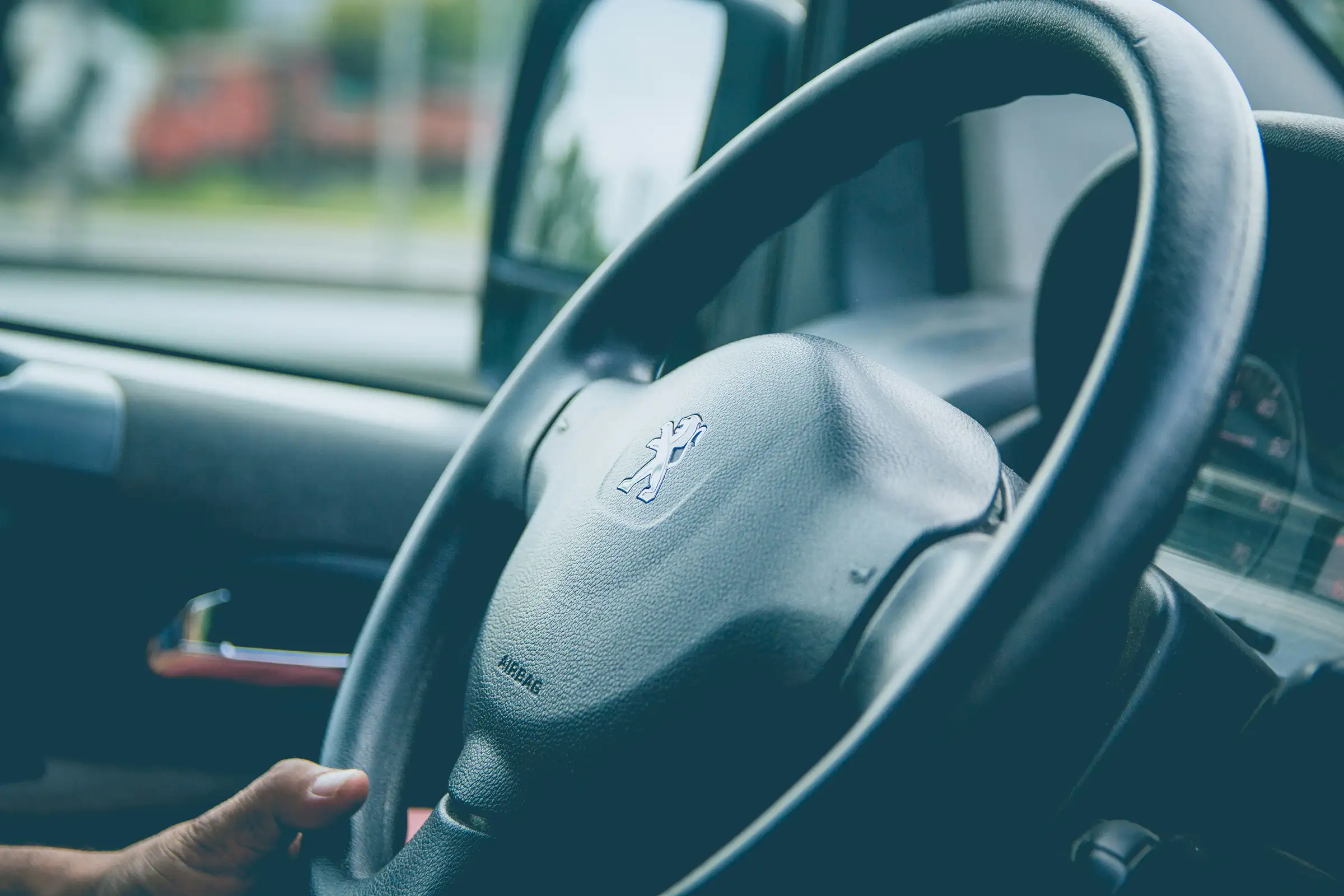
checkdenwagen.de is an independent provider of on-site used-car inspections operating nationwide across Germany, based in Berlin with a network of inspectors throughout the country. For the Peugeot used-car inspection, brand-specific knowledge of the weak spots is central: Peugeot engines of the current and previous generation have documented problem areas that stay invisible in the listing without targeted expertise. The 1.2-litre PureTech three-cylinder is Peugeot's best-selling petrol engine — and at the same time notorious for the fact that its timing belt runs in an oil bath. This belt can wear out prematurely due to oil sludge, missed oil changes or a faulty intake snorkel. In the worst case it snaps without warning and causes catastrophic engine damage. The 1.6 THP/EP6, fitted in the 308, 3008 and 5008, shares its weak spots with the identical BMW and Mini engine: timing-chain rattle, chain-tensioner wear and oil consumption that often goes unnoticed in normal driving. Our inspector examines your chosen Peugeot for about 1.5 hours on site using an inspection catalogue with over 100 points — with a particular focus on engine generation, service history, BSI electronics and chassis condition. You receive your report within 24 hours as a clear basis for your purchase decision or price negotiation.
Have a used Peugeot inspected: on-site used-car inspection, from €289
Peugeot builds stylish, well-equipped cars — with a range of faults that stays invisible in the listing. A 208 or 2008 with the 1.2 PureTech can become an expensive write-off through a timing belt that runs in an oil bath and wears out prematurely. A 308 with the 1.6 THP/EP6 brings timing-chain problems and structural oil consumption that it shares with BMW and Mini. And the BSI control unit can cause failures across all ranges that are barely diagnosable. Our inspector comes straight to the vehicle, checks over 100 points with Peugeot-specific priorities and delivers a digital photo report within 24 hours. Fixed price from €289 incl. VAT and travel.
What matters in the Peugeot used-car inspection?
Peugeot: character, reliability and the typical buyer
French design promise
Peugeot stands for bold interior concepts, good value for money and a broad model range from the compact class (208, 2008) through the mid-size class (308, 3008) to the family van (5008). Used Peugeots are affordable — which clouds some buyers' expectations when hidden faults turn up.
Reliability: heavily engine-dependent
Peugeot reliability depends heavily on the engine variant fitted. While older naturally aspirated engines and the robust HDi diesel generations are considered long-lasting, the 1.2 PureTech and the 1.6 THP have documented weak spots that can become expensive in unchecked purchase decisions. TÜV reports and ADAC statistics show above-average fault rates for engine oil, exhaust system and electronics.
Running costs: affordable, but with pitfalls
Peugeot comes out cheaper in workshop comparisons than German premium brands — but certain repairs quickly exceed the value of the car. Catastrophic engine damage from a snapped PureTech timing belt, or a faulty BSI control unit that can only be fixed by replacement at a specialist workshop, hurts especially on the more affordable models. Anyone who buys without an inspection bears this risk alone.
Typical used-car buyer — and the risks
Used Peugeots appeal to buyers looking for modern design and good equipment at a low price. That's exactly what raises the risk: many examples were serviced to save money, oil-change intervals were overrun or PureTech-typical intake-snorkel defects were ignored. A 208 that looks well kept on the outside can hide significant engine damage internally that only becomes visible after purchase.
Peugeot weak spots: what our inspection targets specifically
1.2 PureTech: timing belt in oil bath (intake snorkel)
The 1.2-litre PureTech three-cylinder is fitted in almost all modern Peugeot compact and small cars: 208 (from 2012), 2008, 308 (from 2014), 3008 and 5008. Its timing belt runs — unusually for a petrol engine — in the engine's oil bath. This reduces noise and, in theory, increases service life. In practice, however, it turns out that if the engine oil isn't changed at the prescribed intervals (at the latest every 12,000 km), the belt clogs up with oil sludge and wears out prematurely. Another known trigger is the intake snorkel: the plastic tube that channels air to the belt housing can become porous or crack. If water or dirt gets in, belt failure follows — with catastrophic engine damage. Our inspector checks the condition of the intake snorkel, evaluates oil colour and consistency as an indicator of service intervals, reads out OBD fault codes and cross-checks oil-change intervals against the service book.
1.6 THP/EP6: timing chain and chain-tensioner wear
The 1.6-litre THP (also known as the EP6, identical to the BMW Prince engine) is fitted in the more powerful Peugeot variants: 308 THP, 3008 THP, 5008 THP and the RCZ. This engine shares its weak spots with the identical Mini and BMW variants: the timing chain wears prematurely, and over time the chain tensioner loses its ability to hold pressure. The typical symptom is a rattle or clatter right after a cold start that settles after a few seconds — a sign that the tensioner is under strain. In the worst case the chain jumps, leading to engine damage. Our inspector listens closely to the cold start, reads out camshaft-sensor codes from the OBD system and checks the service history for chain repairs or tensioner replacement.
1.6 THP/EP6: oil consumption and piston-ring wear
Besides the timing-chain issue, the 1.6 THP/EP6 is known for elevated oil consumption — a problem Peugeot shares with BMW and Mini, since the engine was developed in cooperation. Affected cars can burn a litre of oil every 2,000 to 3,000 kilometres without any warning light coming on or any external oil traces being visible. The oil burns internally through worn piston rings or cylinder walls. A seller who has topped up the oil shortly before the sale masks this finding. Our inspector checks the current oil level and assesses whether it matches the mileage since the last oil change, inspects the exhaust for blue smoke under acceleration and checks the fault memory for entries relating to exhaust gas recirculation and the lambda sensor.
1.6 HDi/BlueHDi: DPF clogging and EGR fouling
The 1.6-litre diesel engine (HDi, later BlueHDi) is Peugeot's best-selling diesel and widespread in the 208, 308, 2008 and 3008. It uses its own particulate-filter system (FAP) with additive injection (Eolys), which has to be topped up regularly. If the additive is neglected or the vehicle is used mostly for short trips, the DPF clogs and triggers regeneration cycles that put the engine under heavy strain. On top of that comes a common EGR-valve problem: exhaust-gas recirculation residue clogs the intake tract and leads to power loss, juddering and increased fuel consumption. Our inspector reads out DPF soot loading, additive fill level and EGR fault codes from the OBD system and assesses the condition of the intake system.
BSI control unit: total electronics failure
The BSI (Boitier de Servitude Intelligente) is Peugeot's central body-electronics module — responsible for lighting, central locking, the alarm system, windows, interior lighting and communication with other control units. A faulty BSI can fail without any recognisable trigger: doors won't open, lights come on by themselves, the car won't start. Diagnosis is complex because a faulty BSI often produces no readable fault codes. Replacement is laborious and expensive, because the new control unit has to be coded to the vehicle. Our inspector systematically checks all BSI-dependent functions and reads out the fault memory for BSI-specific communication errors.
Chassis: shock absorbers and struts
Peugeot vehicles — especially the first-generation 308 and 3008 — are known for prematurely wearing shock absorbers and struts. Faulty shock absorbers lead to poor handling, longer braking distances and comfort-sapping springs that bottom out on poor roads. TÜV main inspections show above-average fault rates for chassis and axles on Peugeots of this generation. On top of this come control-arm bushes and anti-roll-bar mounts that cause rattling noises at higher mileages. Our inspector examines the chassis on the lift, tests all relevant pivot points with a shaker plate and assesses the handling on the test drive.
Ignition-coil failure (petrol engines)
Peugeot petrol engines — including the 1.6 THP and older 1.4 and 1.6 naturally aspirated units — are known for ignition-coil failures that lead to misfires, jerky running and the engine warning light on the dashboard. Individual coils can fail without warning, which in exceptional cases leads to catalytic-converter damage if unburnt fuel reaches the cat. A seller who has fitted a fresh set of ignition coils addresses the acute symptom — but not the cause, if oil dirt contaminates the spark-plug bores. Our inspector checks all ignition coils for moisture and oil traces, reads out misfire fault codes from the OBD system and assesses the condition of the spark plugs.
Clutch: premature wear on manual gearboxes
Peugeot manual-gearbox models in the compact and mid-size classes (208, 308, 2008) show premature clutch wear with intensive city use or high mileage. The clutch-pedal feel can stay unremarkable for a long time, until the pressure rapidly drops off or the clutch pack starts slipping. Especially on cars from large cities or with frequent stop-and-go use, the clutch is a mandatory checkpoint. Our inspector assesses the clutch bite point, checks the pedal play and systematically tests the pull-away behaviour for slip and delay.
Rust: older models and underbody
Peugeot models before 2010 — including the 206, 207, 307 and 407 — are considered more prone to rust on sills, wheel arches and the underbody than newer ranges. Lower door edges and boot edges are also typical spots where rust forms under the paint before it becomes visible on the outside. Newer models (208 from 2012, 308 II, 3008 from 2016) are better protected, but not immune to stone-chip damage with subsequent corrosion. Our inspector systematically examines all known rust spots and bodywork edges and documents findings with photos.
Know the weak spots — ready to get your Peugeot inspected?
Fixed price from 289 €, on-site appointment within a few days. We coordinate everything with the seller.
Frequently inspected Peugeot models at checkdenwagen.de
Most often our customers commission the Peugeot used-car inspection for the 208 — the best-selling Peugeot model on the German market, affordable and therefore often bought without a professional pre-purchase inspection. Almost as frequently requested is the 308 (II and III), especially with the 1.6 THP petrol or 1.6 HDi diesel, where timing-chain condition and DPF history are the decisive questions. The 2008 and 3008 — Peugeot's popular SUV models — come up regularly, often as well-equipped used cars with an unknown service history. On the first-generation 3008 and 5008 (up to 2016) the chassis is a particular focus. The RCZ with the 1.6 THP is a special case: sporty, sought-after, and with all the EP6-typical problems. Whichever model it is: our inspector knows the engine generation and adjusts the inspection focus accordingly.
How your Peugeot inspection works — in three steps
Book online — in five minutes
Enter the vehicle location (postcode) and the listing link. Travel is included in the fixed price — no hidden costs. No phone call needed. The system also shows you whether your vehicle warrants Standard or rather Premium — for example, a 3008 THP with an unclear service history.
Inspector drives straight to the Peugeot
An experienced automotive expert from our Germany-wide network coordinates the appointment directly with the seller. They inspect on site for about 1.5 hours: cold start (timing chain, ignition coils), OBD readout of all control units (incl. BSI), paint-thickness measurement, visual check of the intake snorkel on the PureTech, chassis inspection and a test drive. You don't have to be present.
Digital report within 24 hours
You receive the full inspection report by email: all findings documented with photos, OBD codes explained, paint-thickness readings as a heatmap, an overall rating per inspection category. Clearly structured, no jargon — ready to use in negotiation or as grounds for walking away from the purchase.
Which package suits your Peugeot?
Standard Check
Travel included
- Certified experts
- Engine check
- Transmission check
- OBD fault readout
- Brake inspection
- Paint thickness measurement
- Accident check
- Visual bodywork inspection
- Tire tread check
- Visual interior inspection
- Electronics function test
- Vehicle document check
- Photo documentation
- Seller rating
- Market price assessment
- Vehicle price comparison
- Repair cost estimate
- VIN lookup
Premium Check
Travel included
- Certified experts
- Engine check
- Transmission check
- OBD fault readout
- Brake inspection
- Paint thickness measurement
- Accident check
- Visual bodywork inspection
- Tire tread check
- Visual interior inspection
- Electronics function test
- Vehicle document check
- Photo documentation
- Seller rating
- Market price assessment
- Vehicle price comparison
- Repair cost estimate
- VIN lookup
- Everything in Standard plus market value, repair cost estimate, seller rating & VIN lookup.
Not sure which package suits your Peugeot? Give us a call — we'll advise you free of charge: 030 301 32 327.
What our customers say
“I had my 5 Series inspected before buying — the report was very detailed and made my purchase decision so much easier.”
Emre E.
Berlin
“When the vehicle wasn't available for the viewing after all, the refund was completely hassle-free. Very fair and transparent.”
Bartosz K.
Hamburg
“The Premium package gave me a clear overview of the expected repair and maintenance costs. Exactly what I needed.”
Amir O.
Munich
“Excellent knowledge of the German car market, the dealer landscape and price ranges. Highly recommended.”
Denis B.
Cologne
Peugeot check in your city
Berlin
On-site used-car inspection in Berlin.
Learn moreHamburg
On-site used-car inspection in Hamburg.
Learn moreMünchen
On-site used-car inspection in München.
Learn moreKöln
On-site used-car inspection in Köln.
Learn moreFrankfurt am Main
On-site used-car inspection in Frankfurt am Main.
Learn moreStuttgart
On-site used-car inspection in Stuttgart.
Learn moreFrequently asked questions about the Peugeot used-car inspection
The Peugeot used-car inspection costs from €289 in the Standard package and from €339 in the Premium package — each incl. VAT. Travel is included in the fixed price — no hidden costs. No hidden costs, no hourly rate.
Buy your Peugeot on facts, not gut feeling.
A snapped PureTech timing belt, a worn THP timing chain or a faulty BSI control unit can quickly cost more than the entire value of the car. Our Peugeot inspection gives you the facts — within 24 hours, from €289 incl. VAT and travel.