





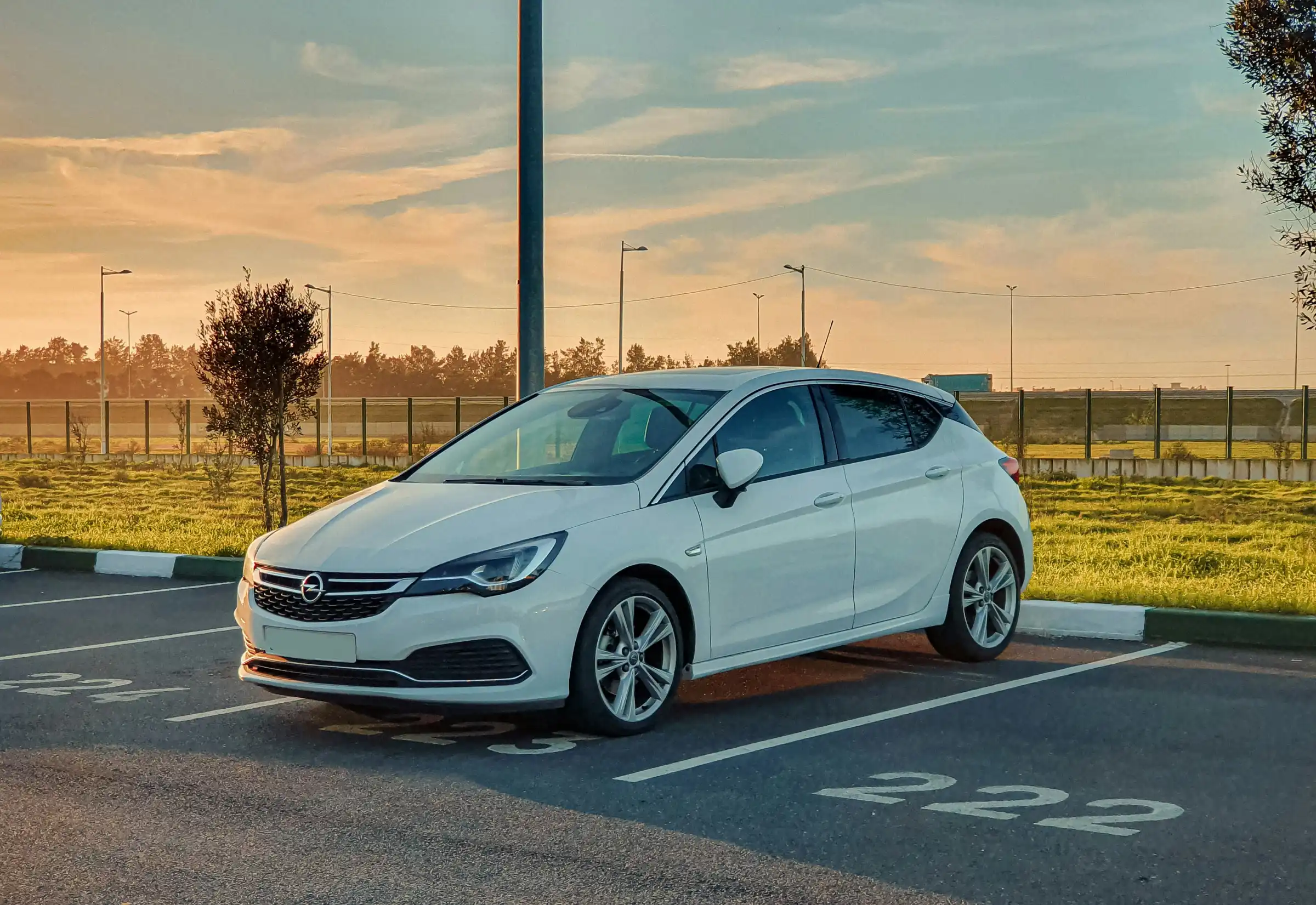
checkdenwagen.de is an independent provider of on-site used-car inspections operating throughout Germany, based in Berlin with a network of inspectors across the whole country. In the Opel used-car inspection, brand-specific knowledge of weak spots takes centre stage: Opel models from the past two decades have well-documented problem areas that remain completely invisible in the listing without targeted know-how. These include the timing chain of the 1.6 CDTI diesel, which causes high repair costs when worn, the Easytronic transmission with its well-known jerking and creeping behaviour, and the pronounced tendency to rust of older Astra and Corsa generations on the wheel arches, sills and tailgates. Our inspector assesses your prospective Opel on-site for around 1.5 hours against a checklist of over 100 points — with a particular focus on the engine generation, transmission type, body condition and the typical Opel onboard electronics. You receive your report within 24 hours as a clear basis for your purchase decision or price negotiation.
Have a used Opel inspected: on-site used-car inspection, from €289
Opel is the Volkswagen for pragmatists — cheap to get into, but with a clear profile of weak spots that never appears in the listing. A 1.6 CDTI with a snapped timing chain, a Corsa D with rust breakthroughs on the wheel arches and tailgate, or an Astra with a jerky Easytronic transmission can get expensive before the first roadworthiness test (HU) is even due. Our inspector comes directly to the vehicle, checks over 100 points with Opel-specific priorities and delivers a digital photo report within 24 hours. Fixed price from €289 incl. VAT and travel.
What matters in the Opel used-car inspection?
Opel: character, reliability and the typical buyer
Solid everyday cars — with a known spectrum of defects
Opel stands for practical compact and mid-size vehicles: the Corsa, Astra, Insignia, Mokka and Zafira cover the bulk of everyday mobility. Used Opels are cheap to buy — which attracts buyers, but also tempts them to skip the inspection. That's exactly where the risk lies.
Reliability: depends on model and engine
Opel reliability varies widely depending on model year and engine variant. ADAC breakdown statistics show that older models (Astra H, Corsa D, Zafira B) stood out as above-average for engine problems, transmission failures and electrical faults. Newer series (Astra K, Mokka B) fare better — but have been on the market for less time and are therefore less well documented.
Running costs: cheap, but repairs can add up
Opel spare parts and workshop costs are comparatively moderate. Even so, specific damage — a timing-chain replacement on the 1.6 CDTI, an Easytronic actuator swap, rust treatment — can quickly run into several thousand euros. A low entry price is no protection against expensive follow-up costs when the vehicle's history is unknown.
The typical used-car buyer — and the risks
Used Opels appeal to buyers looking for a reliable everyday car on a small budget. The budget is often tight — which means unexpected repairs hurt straight away. An independent inspection costs a fraction of the potential follow-up costs and gives you negotiating certainty or the chance to walk away in time.
Opel weak spots: what our inspection specifically examines
1.6 CDTI timing chain (diesel, instead of a timing belt)
The 1.6 CDTI diesel engine (fitted in the Astra J/K, Insignia A/B, Mokka, Zafira C from around 2012) uses a timing chain instead of a timing belt — which sounds maintenance-friendly at first, but carries an elevated wear risk when oil-change intervals are neglected. A stretched or snapped timing chain causes engine damage that can cost several thousand euros. Typical warning signs: rattling or knocking right after a cold start, an engine warning light with camshaft-specific fault codes. Our inspector listens carefully to the cold start, reads out the fault memory and checks the service history for regular oil changes.
1.4 Turbo: timing chain and water pump
The 1.4 Turbo petrol engine (A14NET, fitted in the Astra J, Corsa E, Mokka, Insignia) is a serviceable engine with optimal care — but has two known weak spots: the timing chain can show symptoms similar to the 1.6 CDTI when worn, and the water pump (driven off the timing-chain sprocket) occasionally fails at higher mileages, leading to overheating. Our inspector checks the cold-start acoustics, the coolant level and colour, the temperature-sensor behaviour, and OBD fault codes for cooling-system and camshaft entries.
Easytronic and Easytronic 3.0: jerking and actuator wear
The Easytronic transmission (an automated manual, fitted in the Corsa C/D, Astra G/H, Meriva A/B) is notorious for jerky pulling away, awkward shift transitions and a wearing transmission actuator. Easytronic 3.0 (Corsa E, Adam, Karl) was improved, but is no complete free pass. Typical symptoms: jerking on pulling away, late or harsh gear engagement, an error message in the instrument cluster. Our inspector tests the transmission systematically on the test drive — pulling-away behaviour, gear changes under various load conditions, and an OBD read-out of the transmission control unit.
Rust: Astra G/H, Corsa C/D — tailgate and wheel arches
Older Opel models (Astra G model years 1998-2004, Astra H 2004-2010, Corsa C 2000-2006, Corsa D 2006-2014) are known for a pronounced tendency to rust — above all on the inside of the tailgate (water channel, hinge area), on the rear wheel arches, on the sills and on underbody areas behind the front wheels. Rust on the tailgate often means the panel gives way when touched, even though it still looks painted from the outside. Our inspector systematically examines all known rust spots, taps the body and documents findings photographically.
Alternator and onboard electronics
Opel vehicles from model years 2000-2015 (Astra H, Zafira B, Vectra C, Corsa D) are known for alternator failures, which announce themselves through a battery warning, flickering lights or starting difficulties. Alongside this, there are mounting reports of failed window-lift motors, failed central locking and sporadic instrument-cluster faults. Our inspector checks the alternator charging voltage directly at the electrical system, tests all electrical functions systematically and reads out all accessible control units for stored fault codes.
DPF wear with short-trip use (diesel)
Opel diesels (1.3 CDTI, 1.6 CDTI, 2.0 CDTI) are prone to DPF problems when the vehicle has mainly been used for short trips. A clogged diesel particulate filter that can no longer actively regenerate requires a costly replacement. Typical symptoms: frequent DPF warnings in the instrument cluster, a raised engine-oil level from diesel ingress (oil dilution), reduced power delivery. Our inspector checks the DPF status via OBD (loading level, soot mass), assesses the engine-oil level and reads out the driving-history codes from the engine control unit.
Zafira B: climate-blower resistor (fire recall)
The Opel Zafira B (2005-2014) became the subject of a European recall over an overheating climate-blower resistor, which in isolated cases caused vehicle fires. Many affected vehicles were retrofitted — but not all. Our inspector cross-checks the vehicle identification number against the recall status, tests the climate blower on all settings and inspects the wiring in the blower area for heat damage or signs of repair.
Cooling system and thermostat
Several Opel engine variants (1.4, 1.6, 1.8 petrol as well as older diesels) are known for coolant loss through leaking radiator hoses, faulty expansion-tank caps or failing thermostats. A thermostat that opens too early keeps the engine permanently too cold, which increases consumption and wear; one that opens too late leads to overheating. Our inspector checks the coolant level and colour, assesses the operating temperature while driving using the temperature sensor and looks around the engine bay for traces of coolant.
EGR valve: sooting up on diesels
The exhaust gas recirculation valve (EGR) in Opel diesels (1.3 CDTI, 1.6 CDTI, 2.0 CDTI) is prone to sooting up from soot and oil deposits during short-trip use. A jammed or faulty EGR valve triggers the engine warning light, limits power delivery and can in extreme cases force the engine into limp-home mode. Our inspector reads out EGR-specific fault codes from the engine control unit and assesses the acceleration behaviour from low engine speeds — an early indicator of EGR restrictions.
Timing-belt interval: older petrol and diesel engines
Older Opel petrol engines (1.2, 1.4, 1.6 naturally aspirated, 1.8) as well as earlier CDTI diesel generations (Z17DTH, Z19DTH) are timing-belt engines — no self-renewing free pass like a timing chain. If the replacement interval (typically 60,000-120,000 km or 6-8 years, depending on the model) is missed, total engine failure looms. Our inspector specifically checks the service-history records for timing-belt replacement entries and assesses the condition of the ancillary components (tensioner pulley, idler pulley, water pump), which should be replaced together with the belt.
Know the weak spots — ready to get your Opel inspected?
Fixed price from 289 €, on-site appointment within a few days. We coordinate everything with the seller.
Frequently inspected Opel models at checkdenwagen.de
Most often our customers commission the Opel used-car inspection for the Corsa — in its C, D and E generations by far the brand's best-selling small car and correspondingly plentiful on the used market. The Corsa D (2006-2014) is the most frequent inspection candidate, owing to its tendency to rust and the Easytronic issues. Behind it comes the Astra, above all the Astra H (2004-2010) and Astra J (2009-2015): solid compact cars with known weak spots on the timing chain, transmission and body. The Astra K (from 2015) comes with the 1.6 CDTI diesel, which calls for more targeted inspection. The Insignia (A and B) is in demand as a mid-size alternative to the Passat and as the Vectra's successor — here the focus is on the 2.0 CDTI diesel (EGR, DPF) and the electronics of the infotainment system. The Mokka (A, from 2012) has a known weak spot in the 1.4 Turbo and attracts many inspection requests from buyers looking for a compact SUV under €10,000. The Zafira B (2005-2014) is a special case because of the blower recall — here we cross-check the recall status before we begin the rest of the inspection. Whichever model it is: our inspector knows the generation-specific quirks and sets the priorities accordingly.
How your Opel inspection works — in three steps
Book online — in five minutes
Enter the vehicle location (postcode) and the listing link. Travel is included in the fixed price — no hidden costs. No phone call needed, no form chaos. The booking system also shows you whether your vehicle warrants Standard or rather Premium.
Inspector drives straight to the Opel
An experienced automotive expert from our Germany-wide network coordinates the appointment directly with the seller. They inspect on-site for around 1.5 hours: engine cold start (timing chain, turbocharger), OBD scan of all control units, paint-thickness measurement, body and rust inspection, transmission test on the test drive. You don't need to be there.
Digital report within 24 hours
You receive the full inspection report by email: every finding documented photographically, OBD codes explained, paint-thickness readings as a heatmap, an overall rating for each inspection category. Clearly structured, free of jargon — ready to use straight away in the negotiation or as grounds for pulling out of the purchase.
Which package suits your Opel?
Standard Check
Travel included
- Certified experts
- Engine check
- Transmission check
- OBD fault readout
- Brake inspection
- Paint thickness measurement
- Accident check
- Visual bodywork inspection
- Tire tread check
- Visual interior inspection
- Electronics function test
- Vehicle document check
- Photo documentation
- Seller rating
- Market price assessment
- Vehicle price comparison
- Repair cost estimate
- VIN lookup
Premium Check
Travel included
- Certified experts
- Engine check
- Transmission check
- OBD fault readout
- Brake inspection
- Paint thickness measurement
- Accident check
- Visual bodywork inspection
- Tire tread check
- Visual interior inspection
- Electronics function test
- Vehicle document check
- Photo documentation
- Seller rating
- Market price assessment
- Vehicle price comparison
- Repair cost estimate
- VIN lookup
- Everything in Standard plus market value, repair cost estimate, seller rating & VIN lookup.
Not sure which package suits your Opel? Give us a call — we'll advise you free of charge: 030 301 32 327.
What our customers say
“I had my 5 Series inspected before buying — the report was very detailed and made my purchase decision so much easier.”
Emre E.
Berlin
“When the vehicle wasn't available for the viewing after all, the refund was completely hassle-free. Very fair and transparent.”
Bartosz K.
Hamburg
“The Premium package gave me a clear overview of the expected repair and maintenance costs. Exactly what I needed.”
Amir O.
Munich
“Excellent knowledge of the German car market, the dealer landscape and price ranges. Highly recommended.”
Denis B.
Cologne
Opel check in your city
Berlin
On-site used-car inspection in Berlin.
Learn moreHamburg
On-site used-car inspection in Hamburg.
Learn moreMünchen
On-site used-car inspection in München.
Learn moreKöln
On-site used-car inspection in Köln.
Learn moreFrankfurt am Main
On-site used-car inspection in Frankfurt am Main.
Learn moreStuttgart
On-site used-car inspection in Stuttgart.
Learn moreFrequently asked questions about the Opel used-car inspection
The Opel used-car inspection costs from €289 in the Standard package and from €339 in the Premium package — each incl. VAT. Travel is included in the fixed price — no hidden costs. There is no hourly rate and no fine print.
Buy your Opel on facts, not gut feeling.
A snapped 1.6 CDTI timing chain, a worn Easytronic actuator or rusted-through wheel arches can quickly cost more than the entire price negotiation could ever save you. Our Opel inspection gives you the facts — within 24 hours, from €289 incl. VAT and travel.