





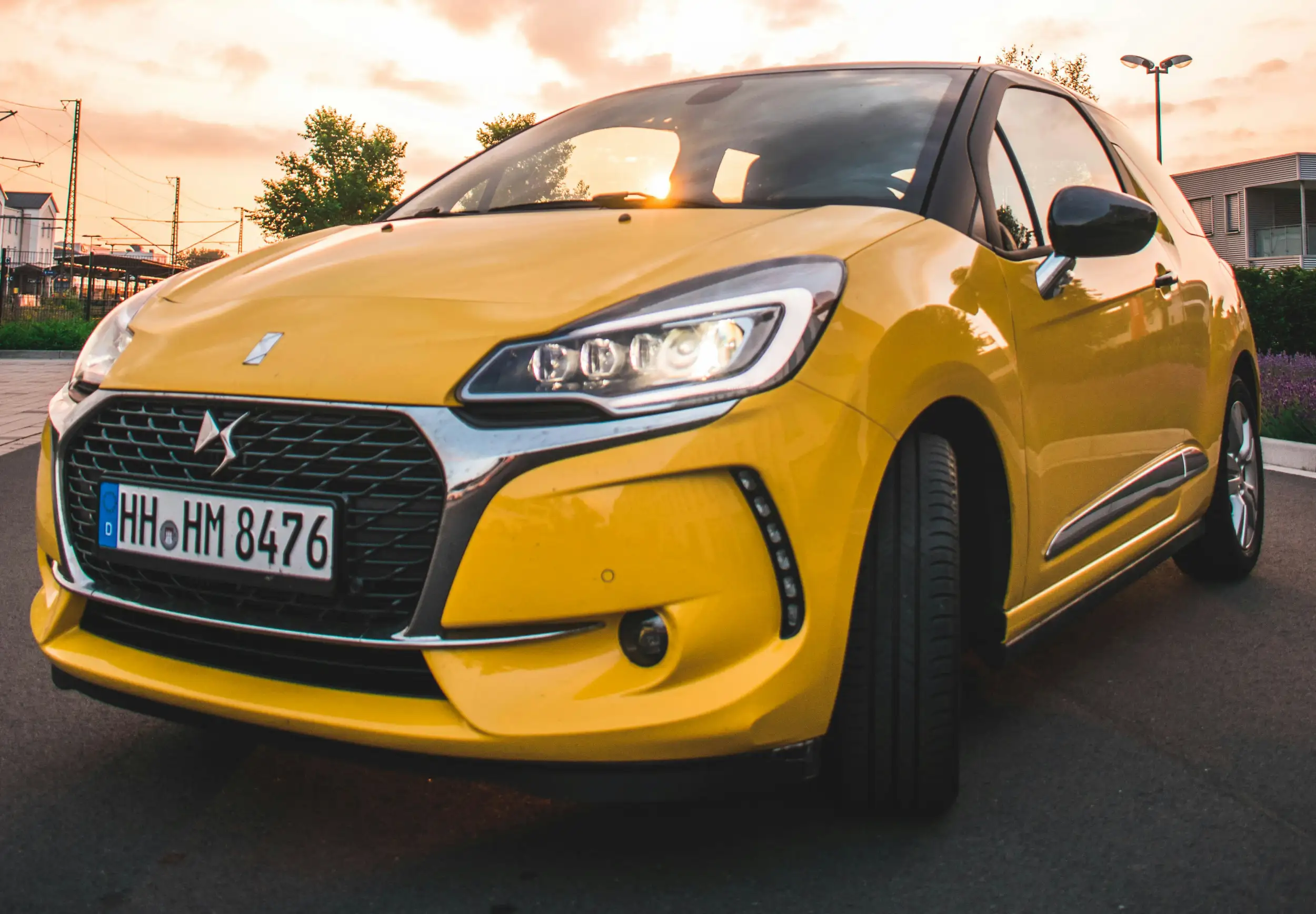
checkdenwagen.de is an independent, Germany-wide provider of on-site used-car inspections, based in Berlin with a network of inspectors across all of Germany. The Citroën used-car inspection centres on brand-specific weak-spot knowledge: Citroën models of the last ten to fifteen years are built on PSA technology shared with Peugeot — and therefore on the same well-known trouble zones. Foremost among them is the 1.2-litre PureTech three-cylinder, which in the C3, C4 Cactus or Berlingo runs with a timing belt in an oil bath: this belt ages faster than a dry timing belt or a timing chain, and its failure leads directly to engine damage. On the diesel side, the 1.6 HDi and BlueHDi are known for DPF problems, turbo damage and EGR failures — especially on vehicles driven predominantly in city traffic. Older Citroëns with hydropneumatic suspension (C5, earlier generations) have a complex hydraulic system that requires expertise to assess. Our inspector examines your prospective Citroën for around 1.5 hours on-site using an inspection catalogue of over 100 points — with particular focus on engine generation, gearbox history, suspension condition and Citroën-typical electronics failures. You receive your report within 24 hours as a clear basis for your purchase decision or price negotiation.
Have your used Citroën inspected: on-site used-car inspection, from €289
Citroën builds comfortable, characterful vehicles — with a weak-spot profile that differs considerably from German brands. A 1.2 PureTech with an oil-soaked timing belt, a 1.6 HDi with a clogged DPF or a C5 with tired hydropneumatic suspension can become a money pit shortly after purchase. Our inspector comes directly to the vehicle, checks over 100 points with Citroën-specific focus areas and delivers a digital photo report within 24 hours. Fixed price from €289 incl. VAT and travel.
What matters in the Citroën used-car inspection?
Citroën: character, reliability and the typical buyer
French comfort with its own character
Citroën stands for unmistakable design, high ride comfort and a distinctive vehicle philosophy. The model range runs from the city car C1 through the C3, C4 and the SUVs C4 Cactus and C5 Aircross to the Berlingo commercial vehicle. Used Citroëns are affordable — which attracts buyers who want a lot of car for their money. Anyone who buys blind, however, often pays the price difference back at the workshop.
Reliability: heavily dependent on engine and model year
Citroën reliability varies considerably by engine generation. The 1.2 PureTech is popular, but its oil-bathed timing belt is a known weak spot. Older 1.6 THP petrol engines and 1.6 HDi diesels have documented problems with the timing chain, DPF and turbo. ADAC evaluations show that several PSA model series perform below average in breakdown statistics, particularly with engine problems and electronics failures.
Running costs: cheap on parts, expensive on complex damage
Citroën spare parts are cheap compared with German premium brands. However, if damage occurs to the hydropneumatic system, turbocharger or DPF system, diagnosis, parts procurement and labour add up considerably. An overlooked 1.2 PureTech with an oil-soaked timing belt can, in the worst case, mean a write-off — with costs far exceeding the vehicle's value.
The typical used-car buyer — and the specific risks
Used Citroëns appeal to buyers who are pragmatic, comfort-oriented or price-conscious — families, city commuters, high-mileage drivers. Many vehicles come from fleet use or short-trip use, which puts particular strain on DPF systems. Without an independent inspection, you buy a car that looks cheap — but may carry hidden follow-up costs.
Citroën weak spots: what our inspection specifically examines
1.2 PureTech: timing belt in an oil bath
The 1.2-litre PureTech three-cylinder is Citroën's most-built petrol engine of recent years and is found in the C3, C4, C4 Cactus, Berlingo and C5 Aircross. It works with a timing belt that runs in the engine oil — a design that makes the timing drive quiet and space-saving, but has a critical weak point: the engine oil attacks the belt material. Missed oil-change intervals, the wrong oil or simply age accelerate belt wear considerably. If the belt snaps, the valves strike the pistons — the engine is a write-off. The wear is invisible from the outside, since the belt runs in a sealed oil circuit. Our inspector checks the service history for belt-replacement entries, assesses the engine oil condition for contamination, and reads the fault memory for timing-drive-related codes.
1.6 THP/EP6: timing chain and oil consumption
The 1.6-litre THP turbo petrol engine (also designated EP6, developed in a PSA partnership with BMW) was fitted in early C4, C5 and sportier variants. It is known for two problems: first, a timing chain that wears excessively under poor oil supply or neglected oil changes and that rattles or jumps on cold start. Second, increased oil consumption attributed to piston rings and valve-stem seals. The two together are insidious: anyone who fails to top up the oil consumption additionally risks the chain drive through oil starvation. Our inspector evaluates the cold start acoustically, reads chain-status and camshaft codes from the engine control unit, and assesses the oil level and oil colour.
1.6 HDi/BlueHDi: DPF, the Eolys FAP additive and turbo
The 1.6-litre HDi diesel and its further-developed successor, the BlueHDi, are Citroën's most-built diesel units — fitted in the C3, C4, Berlingo, C1 and numerous other PSA models. Citroën handles DPF regeneration with the Eolys additive system: a dedicated reservoir doses a fluid into the fuel that enables soot burn-off in the DPF at lower temperatures. If this reservoir is empty or faulty, the DPF no longer regenerates cleanly and clogs up. Added to this are turbo damage from missed oil changes, EGR valve coking from short-trip use and pressure loss in the charge-air system. Our inspector checks the Eolys fill level, reads the DPF pressure-differential value from the engine control unit, assesses the exhaust quality and listens to the turbo under load.
Hydropneumatic suspension (C5, older models): spheres, pump, leaks
Older Citroën models — foremost the first- and second-generation C5 — use the hydropneumatic suspension system, in which gas-pressure spheres carry the body instead of metal springs. The system offers exceptional ride comfort but is complex and maintenance-intensive. Typical weak spots: worn or burst hydraulic spheres that let the ride height sag and ruin the comfort; leaking high-pressure lines and connections; weakening hydraulic pumps. The system runs at very high pressure and requires a special fluid (LHM). Our inspector assesses the ride height at rest and on the test drive, looks specifically for signs of leakage at the spheres and lines, and evaluates the pump function based on the ride-height behaviour.
BSI electronics: body control unit and system failures
The BSI (Boîtier de Servitude Intelligent) is Citroën's central body control unit and controls central locking, lighting, window lifters, electrical-system management and more. With moisture in the vehicle — through leaking window seals or missing cable-gland sealing — or after a deep discharge of the battery, the BSI can enter inconsistent states or permanently store faults. The symptoms are sometimes hard to pin down: sporadic failures, central-locking faults or warning lights without a clear cause. Our inspector reads all accessible control units, including the BSI, for stored fault codes and systematically tests the function of all comfort systems.
Clutch: the ETG5 dual-clutch gearbox and manual clutches
In several models, Citroën relies on the automated ETG5 dual-clutch gearbox — fitted, among others, in the C3 and C4 Cactus. Common complaints: jerky, hesitant pull-away in city traffic and premature clutch wear. The ETG5 handles stop-and-go operation worse than a classic torque-converter automatic, and clutch damage is documented in the PSA world. Manual gearboxes, too, can show weakening synchroniser rings or leaking gearbox bearings at high mileage. Our inspector tests the gearbox systematically on the test drive — pull-away behaviour, shift quality and gearbox fault codes via OBD read-out.
EGR valve and intake-tract coking (diesel)
The exhaust gas recirculation (EGR) valve is a classic short-trip casualty on the 1.6 HDi and BlueHDi: in city operation, soot builds up in the EGR valve and the intake tract until the valve no longer fully closes or opens. Symptoms: loss of power, increased fuel consumption, jerking under part load, black smoke under acceleration. In advanced stages, the ingress of soot into the cylinders can cause piston damage. Our inspector checks the EGR behaviour via OBD read-out, assesses the engine behaviour in the part-load range on the test drive, and examines the mass air-flow sensor for contamination.
Turbocharger leaks and loss of boost pressure
Turbocharged Citroën engines — both HDi diesels and PureTech and THP petrol engines — can develop turbo damage from inadequate oil supply, neglected oil changes or overheating. On the 1.6 HDi, leaks at intercooler hoses and charge-air lines are a common finding that causes power loss and increased fuel consumption. On the 1.2 PureTech, bearing wear and oil loss at the turbo are documented weak spots. Our inspector checks all charge-air lines for cracks and leaks, listens to the turbo under load, and reads boost-pressure fault codes from the engine control unit.
Rust: sills, underbody, wheel arches (older models)
Older Citroën models — in particular the first-generation C3 and C4 (model years before 2010) as well as the Berlingo — are prone to rust on the sills, wheel arches and in the underbody area. The rust often starts invisibly beneath plastic trim or on weld seams that cannot be inspected, and progresses rapidly when vehicle care is lacking. Newer models (C3 III, C4 III, C5 Aircross) have improved corrosion protection but are not immune to stone chips and untreated spots. Our inspector systematically examines all known rust spots on the lift and documents findings photographically.
Comfort functions and sensors: air conditioning, parking sensors, window lifters
Citroën vehicles are comfort-focused in their equipment — which means many electrical comfort systems can develop problems over the course of use. Typical findings: faulty parking sensors after minor damage, weakening air-conditioning compressors, sluggish or jamming window-lifter motors, and seat heaters with broken heating mats. On vehicles with a panoramic roof (C4, C5 Aircross), there are additional sealing problems and mechanical damage to the sunroof frame. Our inspector systematically tests all comfort and assistance systems and documents every defect in the photo report.
Know the weak spots — ready to get your Citroën inspected?
Fixed price from 289 €, on-site appointment within a few days. We coordinate everything with the seller.
Frequently inspected Citroën models at checkdenwagen.de
Most often, our customers commission the Citroën used-car inspection for the C3 — Citroën's best-selling model, both in the second generation (2002–2009, with the 1.4 and 1.6 HDi) and the third generation (from 2016, with the 1.2 PureTech). The PureTech timing belt is the dominant inspection topic here. Also frequently requested: the C4 in both generations as well as the C4 Cactus with its unusual Airbump design and the widely fitted 1.2 PureTech or ETG5 gearbox. The Berlingo — a versatile family van and commercial vehicle — comes with PSA diesel and PureTech variants and deserves special attention, because many examples come from commercial use. The C5 Aircross, as the current compact SUV, is increasingly often requested, especially in the PureTech 130 variant. Older requests regularly concern the C5 (saloon and Tourer) with hydropneumatic suspension and the C1, which justifies an inspection despite its modest vehicle value — because engine damage on the tiny power unit is relatively expensive. Our inspector knows the respective generation, the engine variant and the model-specific weak spots, and adjusts the inspection focus accordingly.
How your Citroën inspection works — in three steps
Book online — in five minutes
Enter the vehicle location (postcode) and the listing link. Travel is included in the fixed price — no hidden costs. No phone call needed. The system also shows you whether your Citroën warrants the Standard or Premium package — for example, in the case of a PureTech without a complete service record or a C5 with hydropneumatic suspension.
Inspector drives directly to the Citroën
An experienced vehicle appraiser from our Germany-wide network coordinates the appointment directly with the seller. He inspects for around 1.5 hours on-site: cold engine start (PureTech belt acoustics, THP chain behaviour), OBD read-out of all control units including the BSI, paint-thickness measurement, suspension behaviour and a test drive. You don't have to be present.
Digital report within 24 hours
You receive the full inspection report by email: all findings documented photographically, OBD codes explained, paint-thickness readings as a heatmap, an overall rating per inspection category. Clearly structured, without technical jargon — ready to use as a basis for your purchase decision or price negotiation.
Which package suits your Citroën?
Standard Check
Travel included
- Certified experts
- Engine check
- Transmission check
- OBD fault readout
- Brake inspection
- Paint thickness measurement
- Accident check
- Visual bodywork inspection
- Tire tread check
- Visual interior inspection
- Electronics function test
- Vehicle document check
- Photo documentation
- Seller rating
- Market price assessment
- Vehicle price comparison
- Repair cost estimate
- VIN lookup
Premium Check
Travel included
- Certified experts
- Engine check
- Transmission check
- OBD fault readout
- Brake inspection
- Paint thickness measurement
- Accident check
- Visual bodywork inspection
- Tire tread check
- Visual interior inspection
- Electronics function test
- Vehicle document check
- Photo documentation
- Seller rating
- Market price assessment
- Vehicle price comparison
- Repair cost estimate
- VIN lookup
- Everything in Standard plus market value, repair cost estimate, seller rating & VIN lookup.
Unsure which package suits your Citroën? Give us a call — we'll advise you free of charge: 030 301 32 327.
What our customers say
“I had my 5 Series inspected before buying — the report was very detailed and made my purchase decision so much easier.”
Emre E.
Berlin
“When the vehicle wasn't available for the viewing after all, the refund was completely hassle-free. Very fair and transparent.”
Bartosz K.
Hamburg
“The Premium package gave me a clear overview of the expected repair and maintenance costs. Exactly what I needed.”
Amir O.
Munich
“Excellent knowledge of the German car market, the dealer landscape and price ranges. Highly recommended.”
Denis B.
Cologne
Citroën check in your city
Berlin
On-site used-car inspection in Berlin.
Learn moreHamburg
On-site used-car inspection in Hamburg.
Learn moreMünchen
On-site used-car inspection in München.
Learn moreKöln
On-site used-car inspection in Köln.
Learn moreFrankfurt am Main
On-site used-car inspection in Frankfurt am Main.
Learn moreStuttgart
On-site used-car inspection in Stuttgart.
Learn moreFrequently asked questions about the Citroën used-car inspection
The Citroën used-car inspection starts at €289 for the Standard package and €339 for the Premium package — each incl. VAT. Travel is included in the fixed price — no hidden costs. There is no hourly rate and no fine print.
Buy your Citroën on facts, not gut feeling.
A snapped PureTech timing belt, a clogged HDi DPF or failing hydropneumatic suspension can quickly cost more than the entire price negotiation could ever save you. Our Citroën inspection gives you the facts — within 24 hours, from €289 incl. VAT and travel.