





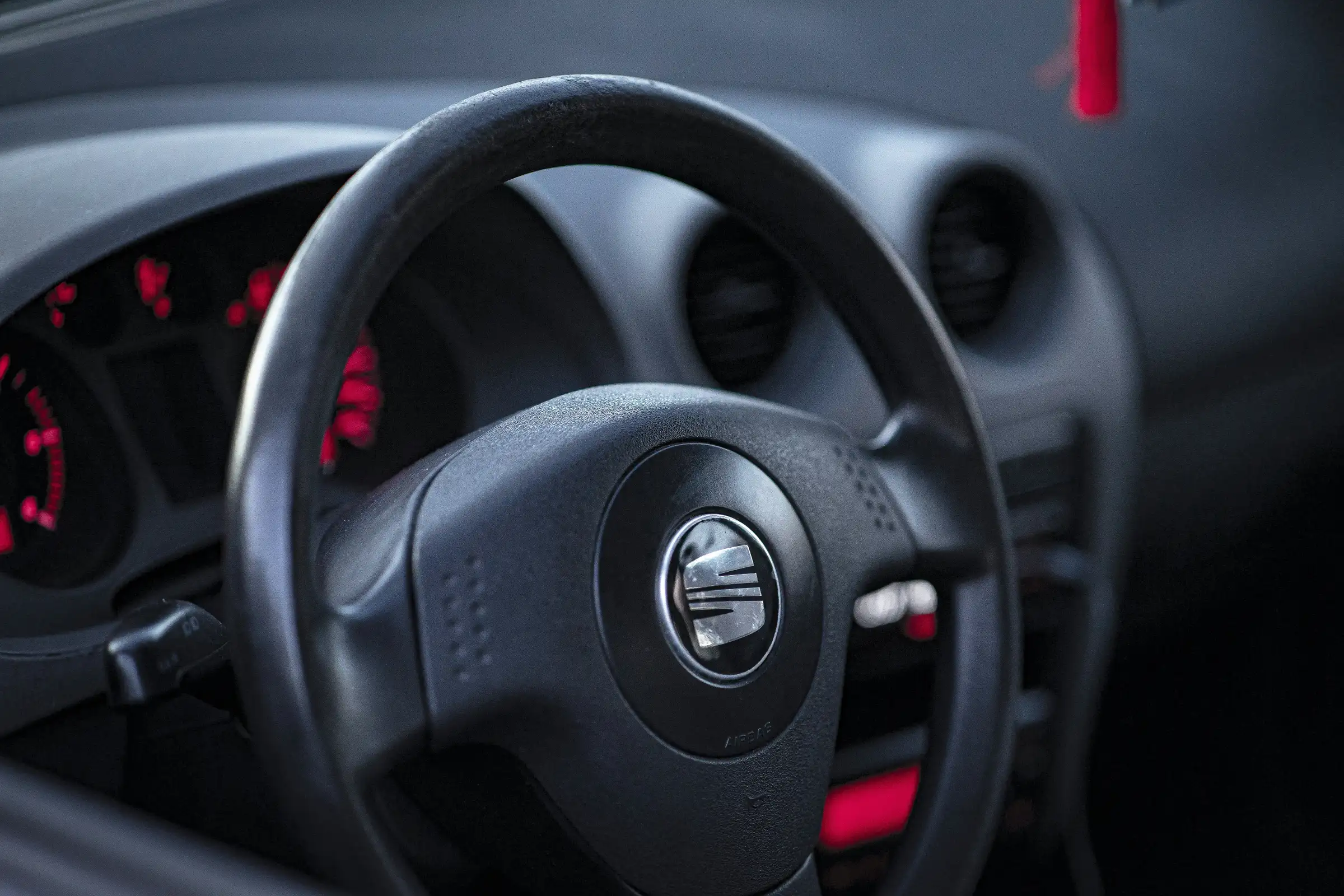
checkdenwagen.de is an independent, Germany-wide provider of on-site used-car inspections, based in Berlin with a network of inspectors across Germany. The Škoda used-car inspection centres on understanding the VAG group platforms: for years, Škoda has built on the same engines, transmissions and platforms as Volkswagen, Audi and SEAT. This means that all the known weak points of the VAG drivetrains — from TSI timing-chain wear to DSG clutch problems to the TDI diesel particulate filter — occur in Škoda vehicles just as they do in their group siblings. On Škoda reliability: in a European comparison, Škoda regularly scores well. The brand benefits from high manufacturing quality and is considered above-average reliable relative to its purchase price. That does not change the fact, however, that certain engine and transmission combinations carry documented weak points that must be specifically checked when buying a used car. Our inspector examines your desired Škoda on site for about 1.5 hours against an inspection checklist of 100+ points — with particular focus on engine generation, transmission type, diesel or petrol variant, and vehicle-specific risks. You receive your report within 24 hours as a clear basis for your purchase decision or price negotiation.
Get your used Škoda inspected: on-site used-car inspection, from €289
Škoda is regarded as an affordable and reliable alternative to Volkswagen — and shares its entire drivetrain technology with VW. That means: anyone buying a used Octavia, Fabia or Kodiaq also buys VAG-typical weak points. A 1.4 TSI with a worn timing chain, a 7-speed DSG transmission with faulty mechatronics or a 2.0 TDI with a clogged DPF can quickly eat up the savings over a new car. Our inspector comes directly to the vehicle, checks 100+ points with Škoda-specific priorities and delivers a digital photo report within 24 hours. Fixed price from €289 incl. VAT and travel.
What matters in the Škoda used-car inspection?
Škoda: character, reliability and the typical buyer
A sensible car with a good reputation
Over the past two decades, Škoda has transformed from a budget brand into a respected sensible-choice alternative. Models like the Octavia are regarded as spacious, practical and well built. In European quality rankings and in ADAC breakdown statistics, Škoda regularly lands in the upper midfield — significantly better than many brands in the same price segment.
Reliability: good — but engine-dependent
Škoda's reliability depends heavily on which engine is fitted. The more robust units, such as the 1.6 MPI naturally aspirated petrol engine or the 2.0 TDI EA288 (successor to the diesel-scandal engine), are considered durable. More critical are the direct-injection turbo petrol engines (TSI) of older generations and the dry-clutch 7-speed dual-clutch transmission DSG 7 (DQ200). Anyone who blindly trusts the brand's reputation overlooks this distinction.
Running costs: low — unless a major repair comes up
Thanks to the VAG group strategy, Škoda spare parts are readily available and cheaper than for Audi or BMW. Routine servicing is affordable. The risk lies in a few but expensive repairs: a DSG mechatronics replacement, a TSI timing chain or turbocharger damage can mean four-figure bills. Without a check, the buyer bears this risk alone.
Good residual values — and sought-after models
The Škoda Octavia and Kodiaq are among the most value-stable vehicles in their segment. That makes them attractive on the used market — but also expensive relative to their age. Well-maintained third-generation Octavias (A7, from 2013) are frequently traded at prices that absolutely justify a professional check.
Škoda weak points: what our check specifically examines
1.4 TSI (EA111): timing chain and chain tensioner
The first-generation 1.4 TSI (engine code EA111, e.g. in the Octavia II, Fabia II, Yeti, model years roughly 2006-2012) has a well-known weak point: the plastic chain tensioner can come loose or break, leading to timing-chain rattle and, in the worst case, engine damage. Typical warning signs are rattling on a cold start and a characteristic crackling from the engine bay that eases off once the engine warms up. VAG has partly addressed this problem with chain-tensioner updates, but not all affected vehicles were rectified. Our inspector listens specifically to the cold start, reads out camshaft-related OBD codes and checks the service history for chain repairs.
1.2 / 1.4 TSI (EA211): oil consumption
The successor EA211 (from roughly 2012, e.g. in the Octavia III, Fabia III, Karoq) is considered fundamentally more robust than the EA111 — but in certain early variants has a documented elevated oil consumption attributed to piston-ring wear. Affected vehicles can far exceed the manufacturer-tolerated consumption of 0.5 litres per 1,000 kilometres. In severe cases an engine internal overhaul or a replacement engine is necessary. Our inspector checks the current oil level relative to the last oil-change entry in the service book, assesses the oil's colour and consistency, and looks for oil traces on the spark plugs and in the crankcase ventilation system.
DSG 7-speed DQ200: mechatronics and dry clutch
The 7-speed dry dual-clutch DSG (DQ200) is the most-built dual-clutch transmission in the VAG group — and the most problematic. Unlike the wet-running DSG 6 (DQ250), the DQ200 lacks the cooling oil bath for the clutch plates. This leads to characteristic symptoms: judder when pulling away from a standstill or at low speeds, delayed engagement of first gear after stopping, and in extreme cases transmission-overheating warnings. The mechatronics — the electro-hydraulic control unit — is a known failure point and can cause four- to five-figure repair costs. Our inspector tests the transmission systematically on a cold start, when pulling away, during slow manoeuvring and on the test drive, and reads transmission fault codes from the control unit.
1.6 / 2.0 TDI (EA189): DPF, EGR valve and swirl flaps
The 1.6 and 2.0 TDI of the EA189 engine family were at the heart of the diesel scandal. Beyond the software issue, which was largely addressed through recalls and updates, these engines are known for mechanical problems: the EGR valve (exhaust gas recirculation) cokes up and sticks, causing power loss, jerking and, in extreme cases, an engine idle problem. The diesel particulate filter (DPF) clogs — especially on predominantly short-trip vehicles, since the regeneration temperature is not reached. Swirl flaps in the intake tract can break and introduce debris into the engine. Our inspector reads out all diesel-relevant fault-code memories, assesses soot load and DPF regeneration status, and checks the EGR valve for free movement.
Plastic water pump: impeller failure
Many TSI engines in the VAG group — including the 1.8 and 2.0 TFSI as well as some 1.4 TSI variants — are fitted with a water pump whose impeller is made of plastic. This impeller can come loose from the metal shaft without the pump appearing defective from the outside: the engine overheats because no coolant circulates any more, even though the pump is turning. Overheating can lead to cylinder-head damage costing several thousand euros. Our inspector checks the coolant temperature during driving for unusual fluctuations, assesses the coolant level and condition, and reads out temperature-sensor-related fault codes.
TDI cam-belt interval: overlooked and consequential
Most VAG TDI engines — including the 1.9 TDI (ALH, BXE and others) and the 2.0 TDI EA189 in certain variants — are driven by a cam belt rather than a timing chain. Cam belts are wear parts with a prescribed replacement interval that is often not correctly observed or simply not recorded in the service book. A snapped cam belt means, in almost all cases, a total economic loss due to valve collision. Our inspector checks the cam-belt replacement entry in the service book, assesses the mileage relative to the replacement interval of the particular engine, and inspects the visible condition of the belt.
Haldex all-wheel drive (Octavia estate 4x4, Kodiaq, Karoq 4x4)
Škoda models with all-wheel drive use the Haldex clutch system — an electro-hydraulic clutch that engages the rear axle when needed. Haldex is fundamentally a robust system, but maintenance-intensive: the Haldex gear oil must be changed at prescribed intervals (often ignored), and the Haldex pump and the filter are wear parts. A neglected Haldex system can gradually lose its all-wheel-drive effect or, in extreme cases, end in bearing damage. Our inspector checks the Haldex oil condition, assesses the service history for Haldex entries, and tests the all-wheel-drive engagement on the test drive.
Comfort and on-board electronics
Škoda vehicles from the third generation onward increasingly use VAG-typical infotainment and comfort electronics — including the MIB platform (modular infotainment matrix), seat-heating controls, window regulators and central-locking components. Typical failures affect the touchscreen at high or low temperatures, driver-assistance systems such as lane-keeping assist or the parking aid, and problems with the start-stop system. Older examples in particular can show many stored but inactive codes in the fault memory that point to earlier or intermittent problems. Our inspector systematically reads out all reachable control units and documents both active and stored codes.
Body and rust: generally low, but with checkpoints
Compared with some other European brands, Škoda is considered relatively rust-resistant. Even so, there are inspection points that deserve particular attention: sill areas, wheel arches and the underbody on older model years (Octavia I and II, Fabia I and II), areas around the lower door edges and window frames, and tailgate opening areas on heavily used estates. Paint damage from stone chips at the front can lead to rust if left untreated. Our inspector systematically examines all known rust spots and body areas and documents findings with photos and paint-thickness measurements.
2.0 TDI EA288 and turbocharger wear
The EA288 TDI (successor to the EA189, from roughly 2012) is considered significantly more robust and is not affected by the diesel scandal. It can, however, develop turbocharger damage at high mileage or with neglected oil-change intervals. Typical warning signs: bluish smoke from the exhaust when accelerating, audible play in the turbine wheel's bearing, and reduced boost pressure. Our inspector checks the intercooler for oil-film traces, listens to the turbo under load, and reads boost-pressure fault codes from the engine control unit.
Know the weak spots — ready to get your Škoda inspected?
Fixed price from 289 €, on-site appointment within a few days. We coordinate everything with the seller.
Frequently inspected Škoda models at checkdenwagen.de
Most often our customers commission the Škoda check for the Octavia — Germany's most popular Škoda and one of the best-selling cars overall. Whether the Octavia II (type 1Z, 2004-2013) with the 1.9 TDI or 1.4 TSI, the Octavia III (A7, 2013-2020) with the 1.6 TDI or 2.0 TSI, or the current Octavia IV: we know all the generations and their typical weak points. Behind it come the Fabia (especially the Fabia II with EA111 TSI timing-chain problems and the Fabia III with the EA211), the Superb (often a company car and with high mileage), the Kodiaq (Haldex all-wheel drive, 2.0 TDI and 2.0 TSI) and the Karoq. The Yeti is considered robust but, depending on the engine variant, carries the known VAG weak points. Whatever the model and generation: our inspector tailors the inspection focus precisely to the engine, transmission and model year.
How your Škoda check works — in three steps
Book online — in five minutes
Enter the vehicle location (postcode) and the listing link. Travel is included in the fixed price — no hidden costs. No phone call needed, no form chaos. The booking system also shows you whether your vehicle calls for Standard or Premium — a newer Octavia 4x4 estate or a high-priced Kodiaq benefits from the market-price analysis in the Premium package.
Inspector drives directly to the Škoda
An experienced vehicle appraiser from our Germany-wide network coordinates the appointment directly with the seller. They inspect for about 1.5 hours on site: cold-engine start (TSI timing chain, oil consumption), OBD readout of all control units, DSG behaviour when pulling away, paint-thickness measurement, suspension and all-wheel-drive checks, plus a test drive. You don't have to be there.
Digital report within 24 hours
You receive the full inspection report by email: every finding documented with photos, OBD codes explained, paint-thickness readings as a heat map, an overall rating per inspection category. Clearly structured, without jargon — ready to use in the negotiation or as grounds for walking away from the purchase.
Which package suits your Škoda?
Standard Check
Travel included
- Certified experts
- Engine check
- Transmission check
- OBD fault readout
- Brake inspection
- Paint thickness measurement
- Accident check
- Visual bodywork inspection
- Tire tread check
- Visual interior inspection
- Electronics function test
- Vehicle document check
- Photo documentation
- Seller rating
- Market price assessment
- Vehicle price comparison
- Repair cost estimate
- VIN lookup
Premium Check
Travel included
- Certified experts
- Engine check
- Transmission check
- OBD fault readout
- Brake inspection
- Paint thickness measurement
- Accident check
- Visual bodywork inspection
- Tire tread check
- Visual interior inspection
- Electronics function test
- Vehicle document check
- Photo documentation
- Seller rating
- Market price assessment
- Vehicle price comparison
- Repair cost estimate
- VIN lookup
- Everything in Standard plus market value, repair cost estimate, seller rating & VIN lookup.
Not sure which package suits your Škoda? Give us a call — we'll advise you free of charge: 030 301 32 327.
What our customers say
“I had my 5 Series inspected before buying — the report was very detailed and made my purchase decision so much easier.”
Emre E.
Berlin
“When the vehicle wasn't available for the viewing after all, the refund was completely hassle-free. Very fair and transparent.”
Bartosz K.
Hamburg
“The Premium package gave me a clear overview of the expected repair and maintenance costs. Exactly what I needed.”
Amir O.
Munich
“Excellent knowledge of the German car market, the dealer landscape and price ranges. Highly recommended.”
Denis B.
Cologne
Škoda check in your city
Berlin
On-site used-car inspection in Berlin.
Learn moreHamburg
On-site used-car inspection in Hamburg.
Learn moreMünchen
On-site used-car inspection in München.
Learn moreKöln
On-site used-car inspection in Köln.
Learn moreFrankfurt am Main
On-site used-car inspection in Frankfurt am Main.
Learn moreStuttgart
On-site used-car inspection in Stuttgart.
Learn moreCommon questions about the Škoda used-car inspection
The Škoda used-car inspection costs from €289 in the Standard package and from €339 in the Premium package — each incl. VAT. Travel is included in the fixed price — no hidden costs. There is no hourly rate and no fine print.
Buy your Škoda on facts, not gut feeling.
One DSG mechatronics failure, a stretched timing chain or a clogged DPF can quickly cost more than the entire price negotiation saves you. Our Škoda check gives you the facts — within 24 hours, from €289 incl. VAT and travel.