





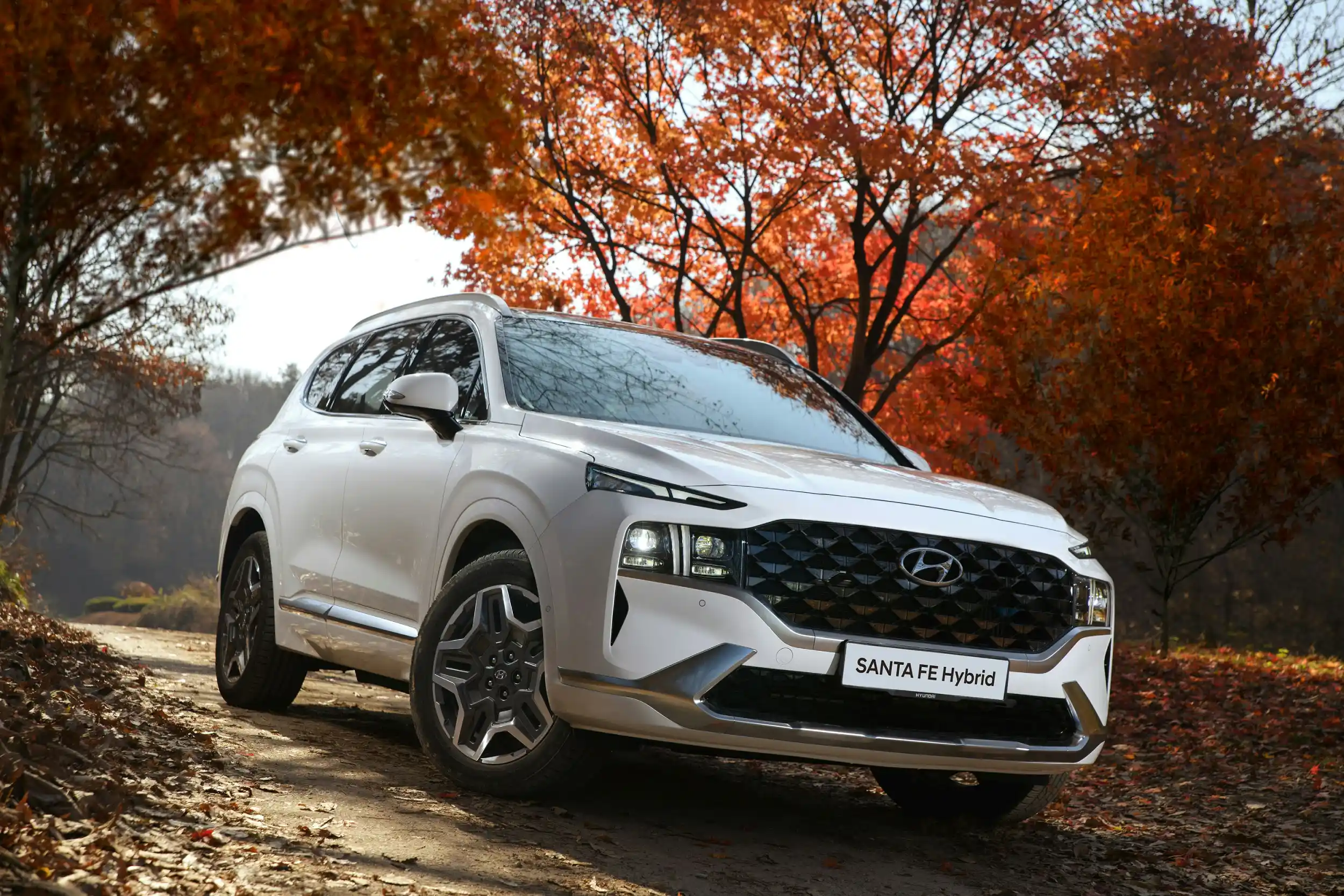
checkdenwagen.de is an independent provider of on-site used-car inspections operating throughout Germany, based in Berlin with a network of inspectors across the country. With the Hyundai used-car inspection, one aspect that many buyers overlook moves especially into focus: Hyundai offers up to 5 years of manufacturer warranty — but this is tied to conditions. Was the vehicle consistently serviced at an authorised workshop? Is the warranty transferable to private individuals? Are all service intervals documented without gaps? Without this check, you may buy a vehicle in the belief that you still have years of manufacturer protection — only to discover after the purchase that the warranty has already lapsed. Technically, Hyundai has caught up significantly since the early 2010s. Nevertheless, there are model-specific weak spots that remain invisible in the listing without targeted knowledge: the 1.0 and 1.4 T-GDI turbo engine (i10, i20, i30, Kona) has timing-chain wear as a documented problem. The 7-speed dual-clutch transmission (DCT) tends to judder and overheat at low speeds and in stop-and-go traffic. CRDi diesel engines bring DPF clogging and EGR problems, as occur with almost all modern diesels. Our inspector examines your desired Hyundai on-site for around 1.5 hours using an inspection catalogue of 100+ points — with a particular focus on engine generation, transmission type, warranty status and service history. You receive your report within 24 hours as a clear basis for your purchase decision or price negotiation.
Have a used Hyundai inspected: on-site used-car inspection, from €289
Hyundai is considered a reliable, well-equipped brand — and rightly so. But even an i30 with a 1.0 T-GDI can hide a worn timing chain or a 7-speed DCT with juddering problems that go unmentioned in the listing. On top of that: the up-to-5-year manufacturer warranty only applies under certain conditions — service booklet, transferability, gap-free maintenance. Our inspector comes directly to the vehicle, checks 100+ points with Hyundai-specific priorities and delivers you a digital photo report within 24 hours. Fixed price from €289 incl. VAT & travel.
What matters in the Hyundai used-car inspection?
Hyundai: character, reliability and the typical buyer
Solid brand promise with a genuine warranty
Over the past 15 years, Hyundai has transformed from a budget brand into a serious volume brand. Models such as the i30, Tucson and Kona offer good standard equipment, sound build quality and a manufacturer warranty of up to 5 years that can be a genuine selling point on the used market — if it is still valid and transferable.
Reliability: better than its reputation, but not flawless
ADAC breakdown statistics have placed Hyundai in the upper midfield for years. Older model years (before 2015) sometimes had weaknesses in the transmission and electronics; newer models perform noticeably better. Reliability is less engine-dependent than with German premium brands — but the 7-speed DCT and the T-GDI turbo engines have documented problem areas that require targeted inspection.
Running costs: cheap to mid — with exceptions
Hyundai spare parts and maintenance costs are in the lower-to-mid segment. Exceptions: DCT repairs (transmission replacement or overhaul) and timing-chain changes can reach four-figure sums here too. Anyone who buys a vehicle without an inspection and relies on a warranty that lapsed long ago bears the full cost risk alone.
The typical buyer — and the warranty trap
Used Hyundais appeal to buyers looking for a reliable, well-equipped car without a premium surcharge. The warranty argument is especially enticing: '2 years of manufacturer warranty remaining' sounds attractive. What many do not know: the warranty lapses with non-authorised workshops, gaps in service intervals or if the buyer does not register the transfer within the deadline. Our inspection clarifies this.
Hyundai weak spots: what our inspection specifically examines
1.0 and 1.4 T-GDI: timing chain and turbo
The small T-GDI turbo petrol engines (three-cylinder 1.0 and four-cylinder 1.4, fitted in the i10, i20, i30, Kona and Tucson from around 2015) are fundamentally economical and lively — but the timing chain is a documented weak spot. With insufficient oil care or overly long change intervals, the chain wears prematurely, which can become audible as a rattle on cold start. In addition, the small turbo units are prone to deposits in the intake tract under short-trip-heavy use. Our inspector listens specifically to the cold start, evaluates OBD fault codes for camshaft-specific entries and checks whether oil-change intervals were consistently observed.
7-speed DCT dual-clutch: juddering and overheating
The 7-speed dual-clutch transmission (DCT) that Hyundai fits in the i30, Kona, Tucson and other models is efficient under sporty use — but in city traffic and at low speeds it shows a known judder that occurs above all in the first minute of driving and when pulling away gently from a standstill. On older examples and with high mileage, the clutch can overheat, leading to harsh shifting and, in extreme cases, to costly clutch wear. Hyundai has issued software updates that improve the behaviour — but not all vehicles were updated. Our inspector tests the transmission in stop-and-go operation, checks the shift behaviour from a standstill and reads out transmission fault codes.
CRDi diesel: DPF clogging and EGR valve
Hyundai's CRDi diesels (fitted in the i30, i40, Tucson, Santa Fe) are fundamentally solid units — but as with almost all modern diesel cars, the particulate filter (DPF) suffers especially under short-trip use. Anyone who drives the diesel predominantly in city traffic risks a clogged DPF, which makes an expensive forced regeneration or, in the worst case, a replacement necessary. The EGR valve (exhaust gas recirculation) also shows a tendency to clog at higher mileage, leading to a rough idle and increased fuel consumption. Our inspector checks DPF back-pressure values via OBD, evaluates the usage history for a short-trip profile and reads out EGR-related fault codes.
Manufacturer warranty: transferability and gaps in the service booklet
Up to 5 years of manufacturer warranty is one of Hyundai's strongest selling points — and on the used market a frequently used buying argument. What often remains unclear: the warranty requires gap-free maintenance at authorised Hyundai service centres. Anyone who had even a single service carried out at an independent garage risks a loss of warranty for certain assemblies. In addition, the warranty transfer must be actively registered with the dealer — a step many buyers fail to take. Our inspector checks the service booklet for completeness and authorised stamps, clarifies the warranty status and documents whether a transfer is possible.
Ioniq Electric and Hybrid: battery health and charging system
The Ioniq (electric, hybrid, plug-in hybrid) is one of the best-selling Hyundai alternatives for environmentally conscious buyers. With used examples, the battery condition (State of Health, SoH) is the decisive variable: a battery degraded to 75% means drastically reduced range and can make a replacement necessary, which on full electric vehicles involves considerable costs. On the plug-in hybrid, the charging system is an added factor: defective onboard chargers or damaged charging-cable feedthroughs are documented problems. For the Ioniq Electric, we recommend our specialised electric-car inspection. Our inspector reads the SoH value from the battery management system and checks all charging-system-related fault codes.
Nu/Gamma engines: knocking and bearing damage (older model years)
On Hyundai models of older model years (before around 2014), the Nu and Gamma engines (1.6 and 2.0 litre naturally aspirated petrol) were the subject of knocking and bearing-damage reports in certain markets — a problem linked above all to irregular oil care and certain manufacturing tolerances, which led to recall campaigns in the USA. On vehicles registered in Germany the problem is rarer and less pronounced, but not ruled out. On vehicles from around 2015 with revised engine variants (Gamma II, Kappa) the risk is considerably lower. Our inspector checks the engine acoustics, evaluates OBD codes for engine-specific knock-sensor entries and assesses the oil-change history.
Brakes: rear-axle caliper seizing and automatic handbrake
Hyundai models from the mid-2010s onwards (i30 N-Line, Tucson, Santa Fe) frequently use electrically operated parking brakes (EPB) on the rear axle, which are more expensive to repair in the event of actuator or sensor defects than classic handbrake cables. In addition, brake calipers — especially on the rear axle — show a tendency to seize with infrequent vehicle use, leading to uneven braking behaviour and disc wear. Our inspector checks all four brake calipers for free movement, measures disc thickness and pad thickness and tests the EPB for correct function.
Air conditioning and infotainment (Bluelink, connectivity)
Hyundai's Bluelink connectivity system and the CarPlay/Android Auto integration drew attention in older generations (up to around 2019) with freezes, crashes and update problems. Air-conditioning compressors are a classic wear item on vehicles with high mileage or little-used air conditioning. Our inspector checks all infotainment functions for correct response, tests the air conditioning for cooling performance and compressor noise and evaluates climate-related OBD codes.
Bodywork: rust on older model years and paint ageing
Hyundai is considered relatively rust-resistant by industry standards — newer vehicles (from around 2012) are predominantly well protected against corrosion. Older examples (before 2010), on the other hand, occasionally show rust at the wheel-arch edges, sill ends and underbody areas. Paint quality and UV resistance are lower on some models than with European brands: paint ageing, oxidation and clear-coat flaking occur on older examples. Our inspector examines all known rust spots, measures paint-thickness for signs of accidents and documents all bodywork findings photographically.
Know the weak spots — ready to get your Hyundai inspected?
Fixed price from 289 €, on-site appointment within a few days. We coordinate everything with the seller.
Frequently inspected Hyundai models at checkdenwagen.de
Most often, our customers commission the Hyundai used-car inspection for the i30 — Hyundai's best-selling model in Germany and accordingly well represented on the used market. The i30 is available in all body variants (hatchback, estate, fastback) and comes with the 1.0 T-GDI turbo petrol as well as the CRDi diesel and the 7-speed DCT transmission — all the weak-spot combinations that make an independent inspection worthwhile. Also frequently requested: the Tucson (first and second generation, an SUV with CRDi and an all-wheel-drive option), the Kona (compact SUV with T-GDI and as a full-hybrid variant), the i20 (small car with the 1.0 T-GDI and 7-speed DCT) and the i10 (city car, predominantly with a small naturally aspirated petrol engine, but also the T-GDI in the newer generation). The Ioniq as an electric and hybrid vehicle is a growing category in our inspection requests — here the battery condition is the decisive criterion. Whichever model it is: our inspector adapts the inspection focus to the engine generation, transmission type and warranty status.
How your Hyundai inspection works — in three steps
Book online — in five minutes
Enter the vehicle location (postcode) and the listing link. Travel is included in the fixed price — no hidden costs. No phone call needed, no form chaos. The booking system helps you assess whether Standard or Premium is the better choice for your Hyundai.
Inspector drives directly to the Hyundai
An experienced vehicle appraiser from our Germany-wide network coordinates the appointment directly with the seller. They inspect for around 1.5 hours on site: engine cold start (timing chain, turbo), OBD readout of all control units, DCT test in stop-and-go operation, paint-thickness measurement, service-booklet analysis (warranty status) and a test drive. You don't need to be present.
Digital report within 24 hours
You receive the full inspection report by email: all findings documented photographically, OBD codes explained, warranty status clearly assessed, paint-thickness readings as a heatmap, an overall rating per inspection category. Clearly structured, easy to understand — ready to use in the negotiation or as a basis for walking away from the purchase.
Which package suits your Hyundai?
Standard Check
Travel included
- Certified experts
- Engine check
- Transmission check
- OBD fault readout
- Brake inspection
- Paint thickness measurement
- Accident check
- Visual bodywork inspection
- Tire tread check
- Visual interior inspection
- Electronics function test
- Vehicle document check
- Photo documentation
- Seller rating
- Market price assessment
- Vehicle price comparison
- Repair cost estimate
- VIN lookup
Premium Check
Travel included
- Certified experts
- Engine check
- Transmission check
- OBD fault readout
- Brake inspection
- Paint thickness measurement
- Accident check
- Visual bodywork inspection
- Tire tread check
- Visual interior inspection
- Electronics function test
- Vehicle document check
- Photo documentation
- Seller rating
- Market price assessment
- Vehicle price comparison
- Repair cost estimate
- VIN lookup
- Everything in Standard plus market value, repair cost estimate, seller rating & VIN lookup.
Unsure which package suits your Hyundai? Give us a call — we'll advise you free of charge: 030 301 32 327.
What our customers say
“I had my 5 Series inspected before buying — the report was very detailed and made my purchase decision so much easier.”
Emre E.
Berlin
“When the vehicle wasn't available for the viewing after all, the refund was completely hassle-free. Very fair and transparent.”
Bartosz K.
Hamburg
“The Premium package gave me a clear overview of the expected repair and maintenance costs. Exactly what I needed.”
Amir O.
Munich
“Excellent knowledge of the German car market, the dealer landscape and price ranges. Highly recommended.”
Denis B.
Cologne
Hyundai check in your city
Berlin
On-site used-car inspection in Berlin.
Learn moreHamburg
On-site used-car inspection in Hamburg.
Learn moreMünchen
On-site used-car inspection in München.
Learn moreKöln
On-site used-car inspection in Köln.
Learn moreFrankfurt am Main
On-site used-car inspection in Frankfurt am Main.
Learn moreStuttgart
On-site used-car inspection in Stuttgart.
Learn moreFrequently asked questions about the Hyundai used-car inspection
The Hyundai used-car inspection costs from €289 in the Standard package and from €339 in the Premium package — each incl. VAT. Travel is included in the fixed price — no hidden costs. There is no hourly rate and no fine print.
Buy your Hyundai with facts instead of promises.
A worn T-GDI timing chain, a DCT with clutch damage or a warranty that lapsed long ago — risks like these stay invisible in the listing. Our Hyundai inspection gives you the facts — within 24 hours, from €289 incl. VAT & travel.