





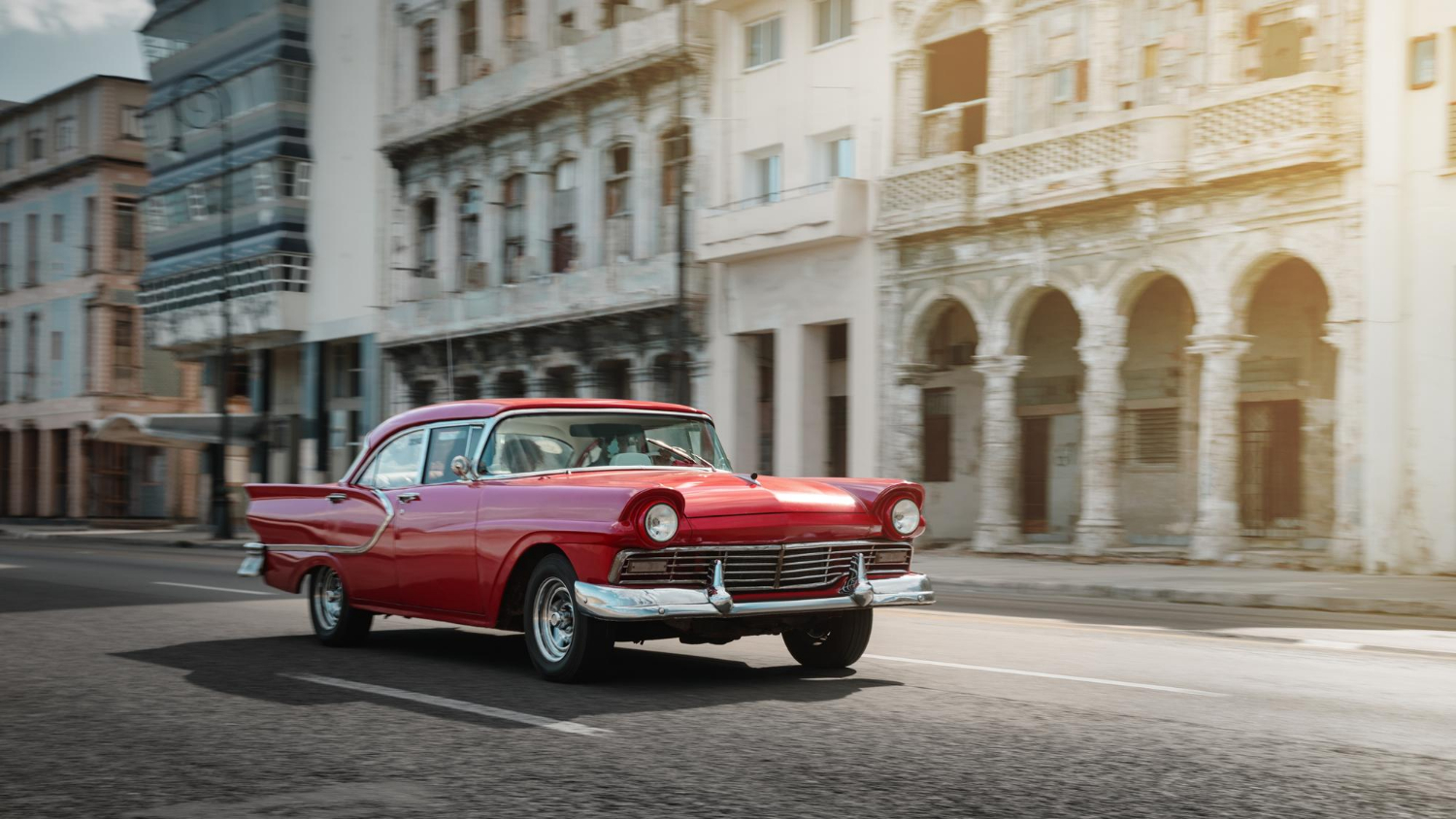
A classic car check is a specialised, purchase-oriented on-site condition inspection of a historic vehicle by an independent appraiser — directly at the seller's or dealer's, with no sales interest whatsoever. checkdenwagen.de is an independent provider of on-site used-car inspections operating across Germany, based in Berlin and with a network of inspectors throughout the country. For vehicles aged 25 to 30 years and older, the yardsticks of the classic used-car market fail: mileage and year of first registration say little when a vehicle has stood in a barn for years, been restored several times or come from a damp storage space. Our classic car check focuses on the decisive questions: What is the actual substance of the load-bearing body parts — floor panels, sills, wheel arches, chassis rails? Which parts are original, which are reproduction parts or temporary fixes? Are there hidden welds, filler layers or rust bubbles beneath fresh paint? What is the condition of the engine and carburettor — as far as it can be assessed without disassembly? Do the documents, original logbook and vehicle identification number match? What our classic car check expressly is not: it is not a valuation report under BVSK, DAT or Schwacke, and not a binding H-plate assessment. The H-plate requires an official assessment by a recognised appraiser, TÜV or DEKRA — as part of the check we can give a non-binding assessment of whether a vehicle could meet the requirements, but the relevant inspection organisations make that decision bindingly. The inspection checklist comprises over 100 points; on-site, the inspection usually takes longer than for a modern used car — we take the time a historic vehicle deserves.
Classic Car Check Before You Buy: Price on Request · On-Site
A freshly polished classic can hide an extensive restoration — or years of standing damage beneath fresh paint. Our independent classic car check examines the substance, not the looks: floor panels, sills, chassis rails, carburettor, compression, original parts and vehicle history — systematically, on-site, with no sales interest. Over 100 inspection points, report within 24 hours. Price on request.
What is a classic car check — and why is it fundamentally different from a passenger-car check?
The critical weak points when buying a classic
Substance vs. looks: glossy paint hides no structural damage
A professional polish or a fresh respray can make a classic look flawless — while at the same time concealing that load-bearing body components are structurally compromised by rust or improper repairs. Our check measures the paint thickness at all relevant points, assesses the substance of the bodywork independently of its looks, and documents every anomaly photographically.
Rust on floor panels, sills, wheel arches and chassis rails
Corrosion is the number-one classic-car killer. Model-typical rust spots are often well known — floor panels under carpet and rubber mats, the ends of the sills, wheel arches from the inside, chassis rails at the weld seams, and cross-member mounts. What looks like a restoration from the outside can already be hole upon hole inside. Our inspector knows the model-typical weak points and systematically checks all critical zones.
Original vs. restored: repro parts and aftermarket components
For many classics there are good-quality reproduction parts — for others, every original part is a treasure. The difference affects the purchase price and is decisive for any claim to originality. Our check assesses which components are original or period-correct and which have been replaced by aftermarket parts — without claiming to be a forensic report, but as a realistic assessment of the degree of restoration.
Hidden welds and filler layers
Improper bodywork interventions on old vehicles are often concealed with filler and a fresh respray. Paint-thickness measurement reveals unusual build-ups that point to filler or multiple repaints. Weld seams that don't match the vehicle's design, or adhesive joints in place of welded connections, are serious warning signs — they indicate accident damage or rust holes that were not repaired properly.
Engine compression and carburettor condition (without disassembly)
An engine that runs smoothly with a good cold start is a positive sign — but no proof of its internal health. As far as possible without disassembly, our check examines compression differences between the cylinders, the cold-run character, oil-bubble formation and consumption, carburettor condition and the appearance of the coolant. Faulty head gaskets, worn piston rings and carburettor leaks usually show up in the process.
Electrics on older and pre-war vehicles
Electrical problems are one of the most common reasons old vehicles cause trouble in everyday use. An old copper wiring harness with brittle insulation, voltage-dependent contacts, outdated fuse concepts without short-circuit protection and improvised additional wiring are typical findings — especially on vehicles with a 6-volt system or from the pre-war era. Our inspector assesses the condition of the wiring harness and documents any visible interventions.
Patina vs. problematic decay
Genuine patina on an unrestored original vehicle is a quality feature — problematic decay is not. Our check distinguishes between the two: stable surface oxidation without rust-through is to be judged differently from active rust that destroys the substance. We document both clearly and give an assessment of whether the condition is stable or calls for costly work.
Documents, vehicle history, original logbook and periods off the road
A complete service history is the exception with classics, not the rule — but the original logbook, registration certificate and matching vehicle identification number are indispensable. Periods off the road in the vehicle history — recognisable from the first registration vs. the current mileage — are important context for the substance findings. Missing or implausible paperwork is a buyer's warning sign.
H-plate eligibility: assessment only, not a report
Whether a vehicle can be granted the H-plate depends on the vehicle's age, its originality and the judgement of a recognised inspection organisation. As part of the check, our inspector can give a non-binding assessment — of whether the vehicle could meet the typical requirements. Only TÜV, DEKRA or another officially recognised appraiser can decide bindingly. This service is expressly not part of our check.
Standing damage: flat spots, oil leaks, seized brakes, rodent damage
Years of standing without movement leave a typical damage pattern: oval flat spots on the tyres (standing flats), oil leaks from hardened seals, corroded-stuck brake calipers and drums, gummed-up fuel lines, and rodent damage to cables and insulation mats. Our inspector knows the standing-damage pattern and systematically checks all relevant components — even when the vehicle has previously been 'freshened up'.
Have your dream car inspected on-site
No-obligation enquiry, tailored quote — straight from the inspector on-site.
What the classic car check covers
Over 100 inspection points — classic-specific
The inspection checklist covers all safety- and substance-relevant areas of a historic vehicle: bodywork substance, corrosion status at model-typical spots, paint-thickness measurement, engine and drivetrain, suspension, brakes, electrics, interior, documents and vehicle history — systematically, with no points left out.
Paint-thickness measurement and bodywork analysis
Digital paint-thickness measurement on all body components identifies filler layers, multiple repaints and accident repairs. In addition, the panel gaps and alignment of the bodywork, as well as all accessible underbody areas, are assessed for rust pattern and weld-seam condition.
Engine cold start, test drive and carburettor check
The cold start shows the engine's character unvarnished: starting behaviour, cold-run stability, carburettor function, oil-pressure build-up and acoustic anomalies in the first seconds of operation. The test drive checks driving behaviour, the manual gearbox, braking effect and steering tracking. Everything that can be assessed without disassembly is documented.
Underbody and structural visual inspection
Floor panels, chassis rails, cross members, sills and wheel arches are systematically checked from below for active rust, weld repairs, filler and structural compromise — as far as accessible without a lift or pit. The findings are documented photographically.
Document and history plausibility
The original logbook or Part II registration certificate, vehicle-identification-number match, service booklet and maintenance records are checked for completeness and plausibility. Periods off the road, number of previous owners and proof of provenance are evaluated and transparently shown in the report.
Digital photo report within 24 hours
All findings are documented with annotated photos. You receive the full digital report within 24 hours by email — structured by inspection category, written in plain language and ready to use directly as a basis for your buying decision or price negotiation.
Choose your package for a reliable used-car inspection
Standard Check
Travel included
- Certified experts
- Engine check
- Transmission check
- OBD fault readout
- Brake inspection
- Paint thickness measurement
- Accident check
- Visual bodywork inspection
- Tire tread check
- Visual interior inspection
- Electronics function test
- Vehicle document check
- Photo documentation
- Seller rating
- Market price assessment
- Vehicle price comparison
- Repair cost estimate
- VIN lookup
Premium Check
Travel included
- Certified experts
- Engine check
- Transmission check
- OBD fault readout
- Brake inspection
- Paint thickness measurement
- Accident check
- Visual bodywork inspection
- Tire tread check
- Visual interior inspection
- Electronics function test
- Vehicle document check
- Photo documentation
- Seller rating
- Market price assessment
- Vehicle price comparison
- Repair cost estimate
- VIN lookup
- Everything in Standard plus market value, repair cost estimate, seller rating & VIN lookup.
What the classic car check is not — an important distinction
The classic car check from checkdenwagen.de is an independent, purchase-oriented condition assessment — not an official report, not a roadworthiness test (HU) and not a valuation report under BVSK, DAT or Schwacke. It makes no legally binding statement about the vehicle's market value and is not suitable as evidence in a legal dispute or as a basis for an insurance valuation.
Expressly not part of the check is the binding H-plate assessment. Whether a vehicle can be granted the H-plate is decided solely by officially recognised appraisers, TÜV or DEKRA on the basis of an official assessment. Our inspector can — as a non-binding indication, without warranty and without liability — give an assessment of whether the typical requirements may be met. This is no substitute for the official assessment.
Also not included are engine or gearbox teardowns: an endoscopy of the cylinders or the disassembly of engine components require a separate arrangement and are not part of the standard check. Where there is a concrete suspicion of serious engine damage, we agree the extension with you in advance.
Questions about a vehicle's authenticity — such as VIN decoding, matching-numbers status or homologation proof — can be assessed as indications in our check, but cannot be certified in a forensic, expert capacity. Anyone who needs a binding authenticity report should turn to an appraiser specialising in historic vehicles. We're happy to name contacts: 030 301 32 327.
How your classic car check works
Submit an enquiry — no obligation and free of charge
Send us the listing link or a vehicle description, the postcode of the location and your most important questions. Feel free to tell us if you have any particular suspicions — such as doubts about originality, a known rust-prone model or a hint of an extended period off the road. We'll get in touch personally and agree the scope of the check with you.
An experienced inspector goes out on-site
An appraiser from our network with experience in historic vehicles arranges the appointment directly with the seller. On-site, the inspection takes longer than for modern vehicles — we take the time a classic requires. You don't have to be there, but you can be.
Digital report within 24 hours
You receive your full inspection report by email: annotated photos of all findings, paint-thickness documentation, a substance assessment, engine and electrics findings, and the plausibility check of the documents. Clearly structured, with no jargon — ready to use directly as a basis for your buying decision or price negotiation.
What our customers say
“I had my 5 Series inspected before buying — the report was very detailed and made my purchase decision so much easier.”
Emre E.
Berlin
“When the vehicle wasn't available for the viewing after all, the refund was completely hassle-free. Very fair and transparent.”
Bartosz K.
Hamburg
“The Premium package gave me a clear overview of the expected repair and maintenance costs. Exactly what I needed.”
Amir O.
Munich
“Excellent knowledge of the German car market, the dealer landscape and price ranges. Highly recommended.”
Denis B.
Cologne
Classic car check in your city
Frequently asked questions about the classic car check
A standard used-car inspection is designed for modern cars with OBD diagnostics, electronics and standardised service intervals. A classic car has no OBD system, and the focus of the inspection shifts fundamentally: examining the structural integrity of the bodywork at model-typical rust spots, assessing the originality of components, checking the carburettor and ignition, inspecting the wiring on dated installations, and critically evaluating restoration quality versus the vehicle's actual condition. Our classic car check is tailored to these requirements.
More inspection services from checkdenwagen
Sports Car Check
Specialised pre-purchase inspection for Porsche, BMW M, Mercedes-AMG and other performance vehicles — including track-use detection and clutch assessment.
Learn moreUsed-Car Inspection
The independent on-site check for all used cars — over 100 inspection points, OBD diagnostics, photo report within 24 hours.
Learn morePricing & Services
All inspection packages and scopes of service at a glance — transparent and with no hidden costs. Price on request for specialist checks.
Learn moreAll vehicle types
From classics to vans — checkdenwagen inspects all vehicle classes with specialised inspection checklists.
Learn moreBuying a classic blind — you don't have to.
Hidden rust, concealed accident damage or a restoration that only holds up from the outside: what the listing leaves out, our check reveals. Price on request. Phone 030 301 32 327.