





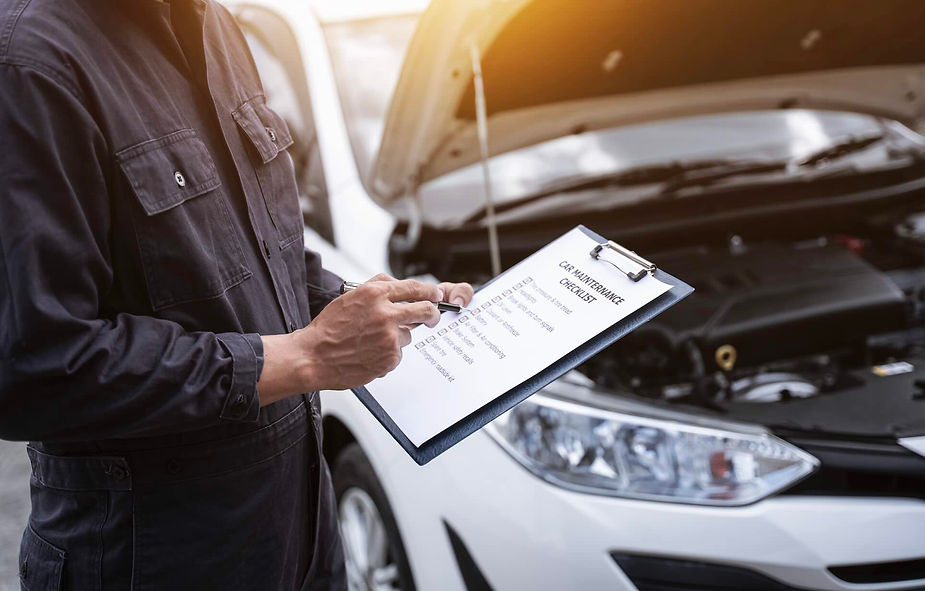
A complete used-car checklist covers four areas: first the vehicle history (previous owners, accident and service history, mileage plausibility); second the technical condition (engine, gearbox, brakes, suspension, fluid levels, tyres); third the test drive (steering, suspension, clutch, noises under load); and fourth the documents (vehicle title, vehicle registration, HU inspection report, service booklet, sales contract). Working carefully through all four areas minimises the risk of buying a vehicle with hidden defects. In cases of doubt or for larger purchases, an additional independent on-site check by a specialist is recommended.
Independent · On-site · Own report · Fixed price
Used-Car Checklist: What You Really Need to Inspect Before Buying
A used car can be a smart decision — or an expensive trap. The difference often comes down to preparation. This checklist takes you step by step through every inspection point: from the vehicle history through the engine bay and the test drive to the documents and the sales contract.
4.9
Google · 39+ reviews
100+
Checked points
What belongs on a used-car checklist?
Why a used-car inspection matters so much
The used-car market offers a huge selection — and a correspondingly large number of risks. Hidden defects, manipulated mileage, undeclared accident damage or missing service history can turn a supposed bargain into a costly mistake. With a structured checklist, you stay on the safe side.
The majority of used-car purchases in Germany take place between private individuals — and in those cases the statutory warranty does not apply. That makes a thorough inspection before the purchase all the more important: whatever you discover after the handover is, as a rule, your problem.
Preparation: finding the right vehicle
Before you head off to the viewing, it pays to do a clear needs analysis:
- Intended use: A commuter car, a family car or a weekend vehicle? This affects the body style and the equipment you need.
- Budget: Calculate realistically — including insurance, road tax, fuel and possible repairs in the first few months.
- Equipment: Which features do you really need? Air conditioning, navigation, heated seats — prioritising helps you filter.
On platforms such as mobile.de, AutoScout24 and Kleinanzeigen.de it pays to set price alerts and check listings regularly. Specific search filters (year, mileage, fuel type) save time.
Step 1: Read the listing critically
Even before you make first contact, the listing offers important clues about how trustworthy the offer is:
- Is the description detailed — with information on equipment, mileage, previous owners and known defects?
- Are there enough photos (exterior, interior, engine bay, tyres)?
- Does the price line up with the market for comparable models?
- Are the service booklet and a current HU inspection mentioned as being available?
A patchy listing with no photos and no information on the vehicle's history is often a warning sign. Reputable sellers answer questions openly and without dodging them.
Step 2: Making contact and the first questions
Get in touch before the viewing — by phone is better than in writing, because you can gauge the reaction directly. Important questions to ask up front:
- Why is the vehicle being sold?
- How many previous owners has it had?
- Has the vehicle been in any accidents or undergone major repairs?
- Is there a complete, gap-free service booklet?
- When was the last main inspection (HU)?
An open and transparent seller answers readily. Hesitant or evasive answers are a reason for caution — and sometimes the best reason to skip the offer.
Your car gets X-rayed. More than 100 points. Systematic.
Paint measurement & accident detection
Using digital ultrasonic paint-thickness measurement, we expose filler, repaints and hidden accident damage down to the millimetre.
Comparison against the manufacturer's target values at 12+ measuring points.
OBD diagnostics
Reading out all fault memories and plausibility check of the mileage.
Detects odometer tampering, control-unit faults and deleted warnings.
Engine & drivetrain
Visual and acoustic inspection of engine, transmission and drivetrain.
Leaks, belt tension, smoothness and transmission behaviour under real conditions.
Market-value analysis
Based on the repairs factored in, we calculate the actual market value.
Data basis: ~50,000 comparable listings from the last 90 days.
Step 3: Checking the vehicle history
Before you physically inspect the vehicle, get an overview of its past:
- Accident history: Ask specifically about accidents and request proof (repair invoices, appraisal reports). Digital VIN reports can surface reported accidents.
- Service history: Has the vehicle been serviced regularly? A complete, gap-free service booklet with stamps is the best proof. Any missing entries need to be explained.
- Mileage: Do the entries in the service booklet match the current odometer reading? Implausible jumps or declining figures are warning signs.
- Previous owners: Fewer previous owners does not automatically mean better care — but many changes of owner in a short period can point to problems.
Step 4: Checking the technical condition
A thorough on-site vehicle inspection covers:
Engine and engine bay
- Does the engine run smoothly and without noises when started?
- Are there oil traces, fluid leaks or signs of rust in the engine bay?
- Is the exhaust smoke-free? White, blue or black smoke points to different engine problems.
Fluids
- Engine oil: check the level and colour — dark or foamy oil is a warning sign.
- Coolant: cloudy or yellowish-discoloured coolant can indicate a faulty head gasket.
- Brake fluid: a low level or heavily discoloured fluid points to neglected maintenance.
Brakes and suspension
- Check the brake discs for deep grooves or uneven wear.
- Shock absorbers: push the vehicle down at one corner — does it rebound properly without bouncing afterwards?
- Tyres: is the tread even on all four wheels? Uneven wear can point to wheel alignment problems.
Bodywork and paint
- Examine scratches, dents and rust spots closely — especially the wheel arches, sills and lower door edges.
- Uneven panel gaps between the door and the wing, or between the bonnet and the headlight, can indicate accident repairs.
- Colour mismatches between adjacent surfaces are a sign of respraying.
Step 5: The test drive
The test drive is one of the most important parts of any used-car inspection — allow plenty of time and drive on a variety of roads:
- Steering: Does it respond precisely, does the vehicle pull to one side or does the steering wheel vibrate?
- Clutch and gearbox: Do the gears engage easily and cleanly? Is the clutch slipping? With automatic gearboxes, the shifts should be barely noticeable.
- Suspension: Does the vehicle thud, bounce or sway over bumps more than expected?
- Brakes under load: Does the vehicle brake in a straight line, evenly and without squealing or vibration?
- Noises: Any rattling, clattering or whistling at certain speeds or during load changes?
Take the test drive in daylight — in the dark, damage is barely visible.
Step 6: Checking the documents
Before the purchase, all documents must be complete and correct:
- Vehicle title (registration certificate part II): Do the chassis number, date of first registration and vehicle data match the vehicle? The title should be available in the original.
- Vehicle registration (registration certificate part I): Up to date and made out to the seller.
- HU report (main inspection): When was the last HU? Are there any defects recorded?
- Service booklet: Complete and gap-free, with stamps from garages or dealers? Stamps alone, without a date or mileage, are worthless.
- Keys: Are all keys (including the spare key) present?
Step 7: Sales contract and legal protection
A solid written sales contract is a must when buying a used car. It should include:
- The full personal details of buyer and seller
- Vehicle data (brand, model, chassis number, colour)
- The current mileage at the time of handover
- The purchase price and payment terms
- A description of the condition and any known defects
- A clause on warranty (in a private sale it is often excluded — and that must be stated explicitly in the contract)
- The date and signatures of both parties
Verbal agreements do not count. Everything you agree must be set down in the contract.
Dealer vs. private sale: what you need to know
Buying from a dealer: A statutory warranty of at least 12 months, often a larger selection and inspected vehicles. The price is usually higher than on the private market, with less room to negotiate.
Buying privately: Often a lower price and more room to negotiate. No statutory warranty — whatever surfaces after the handover is, as a rule, your risk. An independent on-site check is especially advisable here.
When a professional check makes sense
If you do not have much technical experience yourself, if you are buying from far away or if you are considering a vehicle in the higher price bracket, you should bring in an independent inspector. checkdenwagen sends an inspector directly to the seller — anywhere in Germany, at a fixed price from €289 incl. VAT and travel. You save yourself the journey and receive a structured report on the bodywork, mechanics, documents and overall condition within 24 hours.
Found the car you want? Have it inspected before you buy.
Our inspector comes straight to the seller — fixed price from 289 €, report within 24 h.
Frequently asked questions about the used-car checklist
The four key inspection areas are: vehicle history (previous owners, accidents, servicing), technical condition (engine, brakes, suspension, fluids), the test drive (handling, noises, shifting) and documents (vehicle title, HU inspection report, service booklet, sales contract). Working through all four areas systematically significantly reduces the risk of a bad purchase.
Checklist done — and still unsure? Have it inspected.
An experienced inspector spots more than any checklist ever could. checkdenwagen comes to the seller — anywhere in Germany, at a fixed price.