





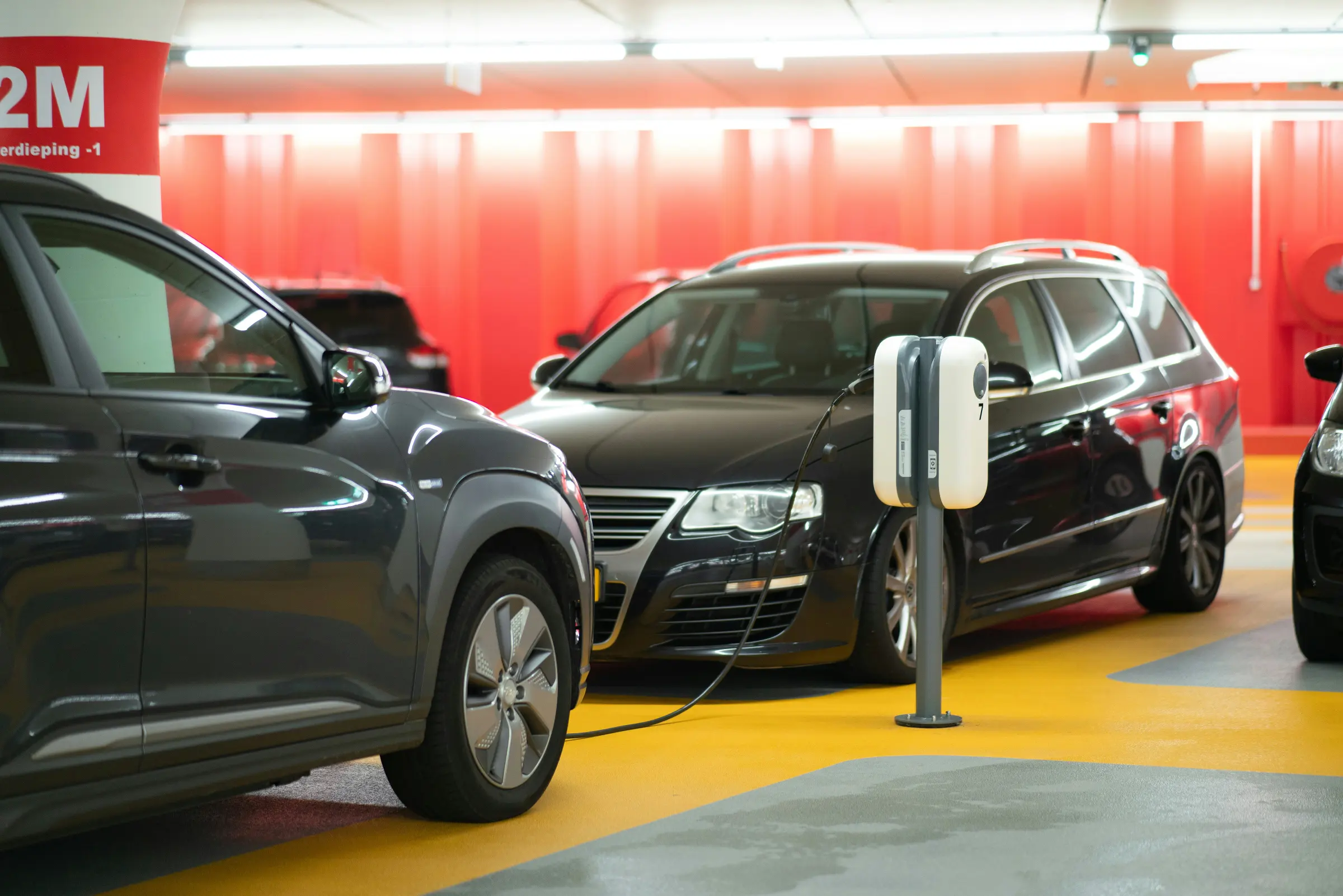
The Volkswagen Polo is a mass-market vehicle in Germany with high volumes on the used market — which makes it an ideal candidate for reconditioned accident cars, wiped fault memories and concealed engine damage. Anyone buying a Polo with 80,000 to 130,000 km is often right at the threshold of the typical and cost-intensive weak-point intervals. checkdenwagen.de is an independent provider of on-site used-car inspections operating across Germany, based in Berlin and with a network of inspectors throughout the country. The Polo's risk profile is well documented by series: on the Polo 6R (model years 2009–2014, PQ25 platform) the 1.2 TSI of the EA111 series is the most critical engine choice — timing-chain stretch with a characteristic cold-start rattle and increased oil consumption of up to 0.5 litres per 1,000 km are known problems. Combined with the 7-speed dual-clutch transmission DQ200, which shows mechatronics failures in city use, this creates an expensive twin risk in the low-priced small-car segment. The 1.2 TDI variant (CR diesel) suffers from DPF clogging and premature EGR wear in short-distance use. On the 9N (2001–2009) the timing chain of the 1.2 three-cylinder is a known issue, while the 1.4 16V is regarded as more robust. The current Polo AW (from 2017, MQB A0) with the revised 1.0 TSI of the EA211 series is significantly less problematic — yet the check is still worthwhile for oil condition, DSG function and paint. Our inspector examines your prospective Polo on site for about 1.5 hours — systematically, against a catalogue of over 100 points. Within 24 hours you receive a digital photo report with all findings: a concrete basis for the purchase decision or the price negotiation.
Get a used Volkswagen Polo inspected: on-site used-car inspection, from €289
The Polo is Germany's most popular small car — and it has a clearly defined risk profile: the 1.2 TSI (EA111, model years 2009–2014) is considered one of the most critical engine variants in the small-car segment due to timing-chain stretch and increased oil consumption. The 7-speed DSG DQ200 with dry clutch shows mechatronics weaknesses in city use. Older series (9N, 6R) struggle with rust on the tailgate and sills. Our inspector comes directly to the vehicle, checks over 100 points and delivers the report within 24 h. From €289 incl. VAT and travel.
Why does a VW Polo need an independent used-car inspection?
Buying a used VW Polo: what you need to know before you buy
Series reliability: Polo AW clearly beats the 6R
The Polo AW (from 2017) with the 1.0 TSI or 1.0 MPI (EA211) is considered the most reliable Polo generation of the last 15 years. The three-cylinder runs with low maintenance and, with regular oil changes, holds up well at high mileages. Critical, by contrast, is the Polo 6R with the 1.2 TSI (EA111): engine and transmission risk are high, and the purchase price often suggests a security the car doesn't offer.
Market prices: the Polo often costs more than it's worth
Used Polos are traded in the affordable price segment — but the repair costs for DSG mechatronics or engine damage quickly exceed the car's residual value. Anyone buying a Polo 6R with the 1.2 TSI for €6,000 to €9,000 may have no financial headroom left in the event of a transmission failure. In the small-car segment, the check pays off particularly quickly in purely arithmetical terms.
Typical concealment tactics in a Polo sale
Oil-consumption problems are masked by a freshly topped-up oil level before the sale. DSG jerking can be temporarily dampened shortly before the sale by a software reset on the control unit. Rust on the tailgate and sills is hidden by reconditioning and respraying. These patterns show up in Polo listings with above-average frequency — and our inspector knows them.
Best Polo used: 1.0 TSI (AW) or 1.4 16V (9N)
The 1.0 TSI in the Polo AW is the most recommendable engine choice for the used market: robust, economical, with no known structural weak points. As an alternative in the older segment, the 1.4 16V in the Polo 9N is considered significantly more reliable than the three-cylinder. Both variants benefit from an independent check — especially to verify DSG condition and paint-thickness measurement.
Polo 9N, 6R/6C and AW: series compared in the used-car check
Polo 9N (2001–2009): The first Polo generation on the PQ24 platform with the familiar 1.2 three-cylinder (40 kW/54 hp) and a timing chain — whose stretch grows louder at higher mileage. The 1.4 16V (55 kW/75 hp) is the far more relaxed choice in this generation. Typical issues on the 9N: rust on the tailgate and wheel arches, air-conditioning compressor wear, interior electronics. The transmission is a conventional manual or an older automatic — the DSG plays no role here yet.
Polo 6R/6C (2009–2017): The critical generation. PQ25 platform, the newly introduced 1.2 TSI (EA111, 63 kW/86 hp and 77 kW/105 hp) with chain drive and the well-known stretch as well as oil consumption. The 6C facelift (2014) brings minor detail changes, but the fundamental EA111 problem remains. For the first time with the 7-speed DSG DQ200 paired with TSI engines — the combination of a dry clutch and stop-and-go operation is the main cause of transmission damage. The 1.6 TDI (CR) as an alternative: solid on long distances, DPF-prone in city use. The 1.4 TSI in the 6R is rare, but carries the typical TSI risks.
Polo AW (from 2017): A switch to the MQB A0 platform. The new 1.0 TSI (EA211, three-cylinder, 70 kW/95 hp and 85 kW/115 hp) and the 1.0 MPI without turbo — both significantly more robust than the EA111 predecessor. A higher-spec variant with the 1.5 TSI (110 kW/150 hp) is also available. The DSG (DQ200) remains on offer — the mechatronics risk stays relevant with frequent short-distance use. New: the MIB infotainment system with its typical software faults. Overall the most recommendable Polo generation on the used market.
VW Polo weak points: what our inspector puts under the microscope
1.2 TSI (EA111) — timing chain and chain tensioner (6R)
The 1.2 TSI of the EA111 series (Polo 6R, model years 2009–2014) is considered one of the most problematic small-car engines on the German used market. The timing chain stretches at higher mileage and produces a characteristic metallic rattle at cold start. The cause is a weak chain tensioner that fails to maintain the necessary chain pressure over time. Our inspector deliberately drives to a vehicle that is still cold and listens to the engine closely right at start-up — the cold-start noise is the most reliable early indicator.
1.2 TSI (EA111) — increased oil consumption (6R)
Alongside the timing chain, increased oil consumption is the second main weakness of the EA111. Figures of up to 0.5 litres per 1,000 km are deemed 'within tolerance' by the manufacturer. In practice this leads, with inattentive drivers, to a critically low oil level between services and, in the worst case, to engine damage from oil starvation. Sellers top up the oil level shortly before the viewing — the freshly topped-up level is misleading. Our inspector checks oil quality, the freshness of the oil level and assesses the engine for signs of pressure loss.
7-speed DSG DQ200 — mechatronics and dry clutch (6R/AW)
The 7-speed dual-clutch transmission DQ200 is fitted to the Polo with TSI engines from the 6R onward and remains on offer in the AW as well. The dry clutch is sensitive to frequent stop-and-go operation — jerking when pulling away and delay jolts when downshifting are the typical early symptoms. A complete mechatronics failure is the most expensive form of damage. In the small-car segment, where the DSG Polo is often used in city traffic, the risk is particularly high. Our inspector tests all gear ranges for shift quality and reads out the transmission control unit via OBD.
Rust on the tailgate, sills and wheel arches (9N/6R)
The Polo 9N and 6R develop rust as they age at specific weak points: the tailgate around the window seal and the lower edge, the sills on both sides and the rear wheel arches. Professional reconditioning can temporarily mask rust — filler beneath freshly painted surfaces is invisible to a layperson. Our digital paint-thickness measurement shows to the millimetre which parts have been treated with filler or resprayed.
1.2 TDI and 1.6 TDI (CR) — DPF and EGR (6R)
The diesel variants of the Polo 6R with common-rail injection (1.2 TDI and 1.6 TDI) are fundamentally economical and well suited to long distances. With typical small-car use — short city trips, few motorway kilometres — the diesel particulate filter (DPF) clogs because active regeneration is never completed. The result: DPF fault codes, increased fuel consumption and, in the worst case, a DPF replacement. In addition, the EGR valve cokes up with short-distance use. Our inspector reads out all DPF fault codes and assesses the condition of the EGR.
Water pump with plastic impeller (TSI engines)
As in other VW models, Volkswagen fits water pumps with a plastic impeller in the Polo with TSI engines. As they age, the impeller vanes come loose — the pump spins freely, the coolant no longer circulates, and the engine overheats. The problem often occurs between 80,000 and 130,000 km and gives little warning. Our inspector monitors the coolant-temperature curve during warm-up and checks the engine control unit for temperature-related fault entries.
Timing chain on the 1.2 three-cylinder (Polo 9N, model years 2001–2009)
Even in the Polo 9N the 1.2 three-cylinder engine is fitted with a timing chain — and chain stretch at higher mileage is a known issue when the oil-change interval has not been consistently observed. Vehicles with an incomplete service history or extended oil-change intervals are particularly prone. The 1.4 16V in the 9N is significantly more robust in this respect. Our inspector listens closely to the 9N three-cylinder at cold start and assesses the continuity of the service history.
Accident damage and reconditioning in the small-car segment
Because of the high volumes on the Polo used market, the number of reconditioned accident vehicles is above average. Professional polishing, respraying and filler can make bodywork damage completely invisible to a layperson. The front end, tailgate and sills in particular are frequent repair areas after parking accidents. Our digital paint-thickness measurement identifies resprayed parts and filler zones to the millimetre — without damaging any surfaces.
MIB infotainment and onboard electronics (Polo AW)
The Polo AW (from 2017) features the MIB infotainment system with a touchscreen, digital assistance systems and networked control units. Typical fault patterns: software crashes of the infotainment system, fault codes on the lane-keeping assistant and front camera, connection drops with CarPlay/Android Auto. Older software versions can be fixed by updates — but only if the buyer is aware of the fault. Our inspector reads out all accessible control units via OBD and checks whether fault codes were cleared shortly before the sale.
Which Polo engine is the best buy — and which the biggest risk?
The choice of engine matters more when buying a Polo than with almost any other model, because the risk spread between the variants is exceptionally large.
Recommended: The 1.0 TSI (EA211) in the Polo AW (from 2017) is the safest choice on the used market. The three-cylinder turbo is quiet, economical and, compared with the EA111 predecessor, shows no structural weak points. Assuming oil changes at the manufacturer's intervals, high mileages are well within reach. The same applies to the 1.0 MPI without turbo — even simpler mechanically, lower power, but maximum robustness.
Acceptable with a check: The 1.4 16V in the Polo 9N is a proven engine without the timing-chain issues of the three-cylinder successor. The 1.6 TDI (CR) in the 6R is solid with verified long-distance use — but the DPF condition and the EGR must be checked via OBD.
With heightened caution: The 1.2 TSI (EA111) in the Polo 6R is the most risk-laden variant. Timing-chain stretch and oil consumption are structural problems of this engine generation — not isolated cases. A check here is mandatory, not optional. Buy this engine only after a positive inspection result and with a complete service history. The same applies to the 1.2 TDI on a short-distance profile.
VW Polo used: market price, residual-value stability and price-to-risk ratio
On the used market the Polo sits in a price segment that looks modest at first glance — and that is precisely where the risk lies. A well-kept Polo 6R with the 1.2 TSI from 2013 and 100,000 km on the clock changes hands at prices that barely cover the typical repair cost for the timing chain or the DSG mechatronics. Anyone who looks at the price of a Polo without knowing its condition is buying blind.
The Polo AW has better residual-value stability than the 6R and is traded accordingly higher — rightly so, since the engine and transmission base is significantly more robust. Even so: overdue DSG services and cleared fault codes can't be read off the listing price here either.
As a rule in the small-car segment: the price headroom for undiscovered defects is small. Damage to the DSG or the timing chain can exceed the purchase price of the entire vehicle. The independent check gives you the facts you need to negotiate the price — or to walk away from the car.
How your Polo check works — in three steps
Book online — in five minutes
Tell us the vehicle location (postcode) and the listing link. Travel is included in the fixed price — no hidden costs. No phone call needed, no form chaos.
Inspector drives directly to the Polo
An automotive expert from our nationwide network arranges the appointment directly with the seller and inspects your prospective Polo on site for about 1.5 hours — systematically, with their own measuring equipment. You don't have to be present. The inspector deliberately listens to the engine from a cold start, tests all DSG gear ranges and measures the paint thickness on the relevant parts.
Digital report within 24 hours
You receive the full inspection report by email: a paint-thickness heatmap, OBD findings, photos of every conspicuous spot and a rating per inspection category. Clearly structured, without technical jargon — ready to use in the price negotiation or as a basis for your decision.
What our customers say
“I had my 5 Series inspected before buying — the report was very detailed and made my purchase decision so much easier.”
Emre E.
Berlin
“When the vehicle wasn't available for the viewing after all, the refund was completely hassle-free. Very fair and transparent.”
Bartosz K.
Hamburg
“The Premium package gave me a clear overview of the expected repair and maintenance costs. Exactly what I needed.”
Amir O.
Munich
“Excellent knowledge of the German car market, the dealer landscape and price ranges. Highly recommended.”
Denis B.
Cologne
Volkswagen Polo check in your city
Berlin
On-site used-car inspection in Berlin.
Learn moreHamburg
On-site used-car inspection in Hamburg.
Learn moreMünchen
On-site used-car inspection in München.
Learn moreKöln
On-site used-car inspection in Köln.
Learn moreFrankfurt am Main
On-site used-car inspection in Frankfurt am Main.
Learn moreStuttgart
On-site used-car inspection in Stuttgart.
Learn moreMore Volkswagen models
Volkswagen Golf
Weak points & inspection for the Volkswagen Golf.
Learn moreVolkswagen Passat
Weak points & inspection for the Volkswagen Passat.
Learn moreVolkswagen Tiguan
Weak points & inspection for the Volkswagen Tiguan.
Learn moreVolkswagen T-Roc
Weak points & inspection for the Volkswagen T-Roc.
Learn moreVolkswagen Touran
Weak points & inspection for the Volkswagen Touran.
Learn moreFrequently asked questions about the VW Polo used-car inspection
The check starts at €289 in the Standard package and from €339 in the Premium package — both incl. VAT. Travel is included in the fixed price — no hidden costs. In the small-car segment in particular, where the Polo's purchase price is often modest, the check pays for itself especially quickly — a DSG failure or a timing-chain repair costs many times the price of the check.
Buy your Polo on facts, not gut feeling.
A stretched timing chain or a faulty DSG can cost more than half the car's residual value. The Polo check gives you the facts — within 24 hours, from €289 incl. VAT and travel.